Cost-Effectiveness and Evidence Gaps Surrounding PSMA-PET for Recurrent Prostate Cancer Evaluation
Natalia Kunst, Jessica B. Long, Preston C. Sprenkle, Isaac Y. Kim, Lawrence Saperstein, Maximilian Rabil, Umar Ghaffar, R. Jeffrey Karnes, Xiaomei Ma, Cary P. Gross, Shi-Yi Wang, Michael S. Leapman

TL;DR
This study evaluates whether PSMA-PET scans for recurrent prostate cancer are cost-effective in the US, finding potential benefits for some patients but highlighting the need for more data.
Contribution
The study introduces a decision-analytic model to assess PSMA-PET cost-effectiveness in biochemical recurrent prostate cancer, identifying evidence gaps.
Findings
PSMA-PET had an incremental cost-effectiveness ratio of $113,000/QALY in patients with lower PSA levels, suggesting potential cost-effectiveness.
High decision uncertainty was identified, indicating a need for additional data on diagnostic characteristics to reduce uncertainty.
Up-front PSMA-PET was associated with higher costs and QALYs compared to CTBS, but exceeded the $150,000/QALY willingness-to-pay threshold in general cases.
Abstract
This economic evaluation estimates health and cost outcomes and cost-effectiveness associated with use of prostate-specific membrane antigen positron emission tomography (PSMA-PET) for evaluating biochemical recurrent prostate cancer. Is the use of prostate-specific membrane antigen (PSMA) positron emission tomography (PET) for the evaluation of biochemical recurrent (BCR) prostate cancer cost-effective in the US? This economic evaluation of modeled patients with prostate cancer found that PSMA-PET had an incremental cost-effectiveness ratio below the willingness-to-pay threshold in patients with BCR and lower prostate-specific antigen levels. However, the decision-analytic model indicated high decision uncertainty and identified that additional data on diagnostic characteristics may be associated with reduction of this uncertainty. This study found that PSMA-PET has the potential to…
Genes, proteins, chemicals, diseases, species, mutations and cell lines named across the full text — each resolved to its canonical identifier and authoritative record.
Click any figure to enlarge with its caption.
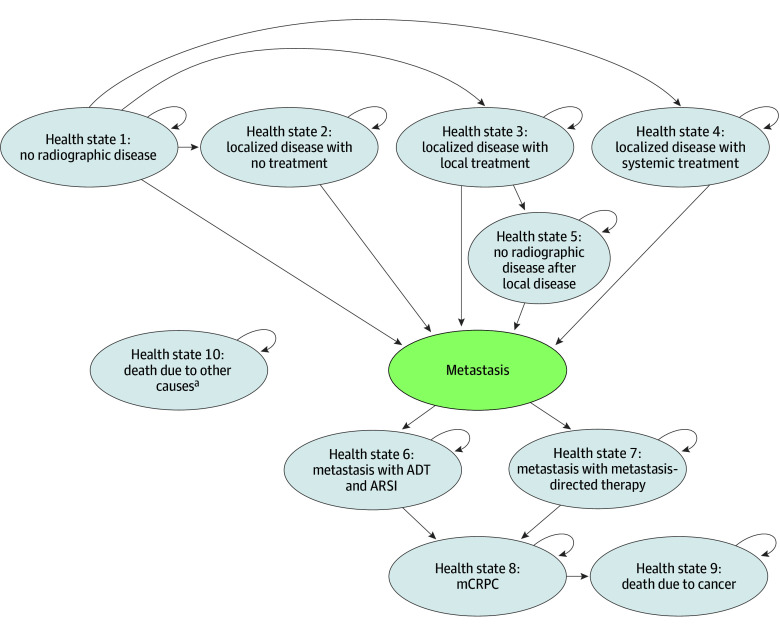 Figure 1
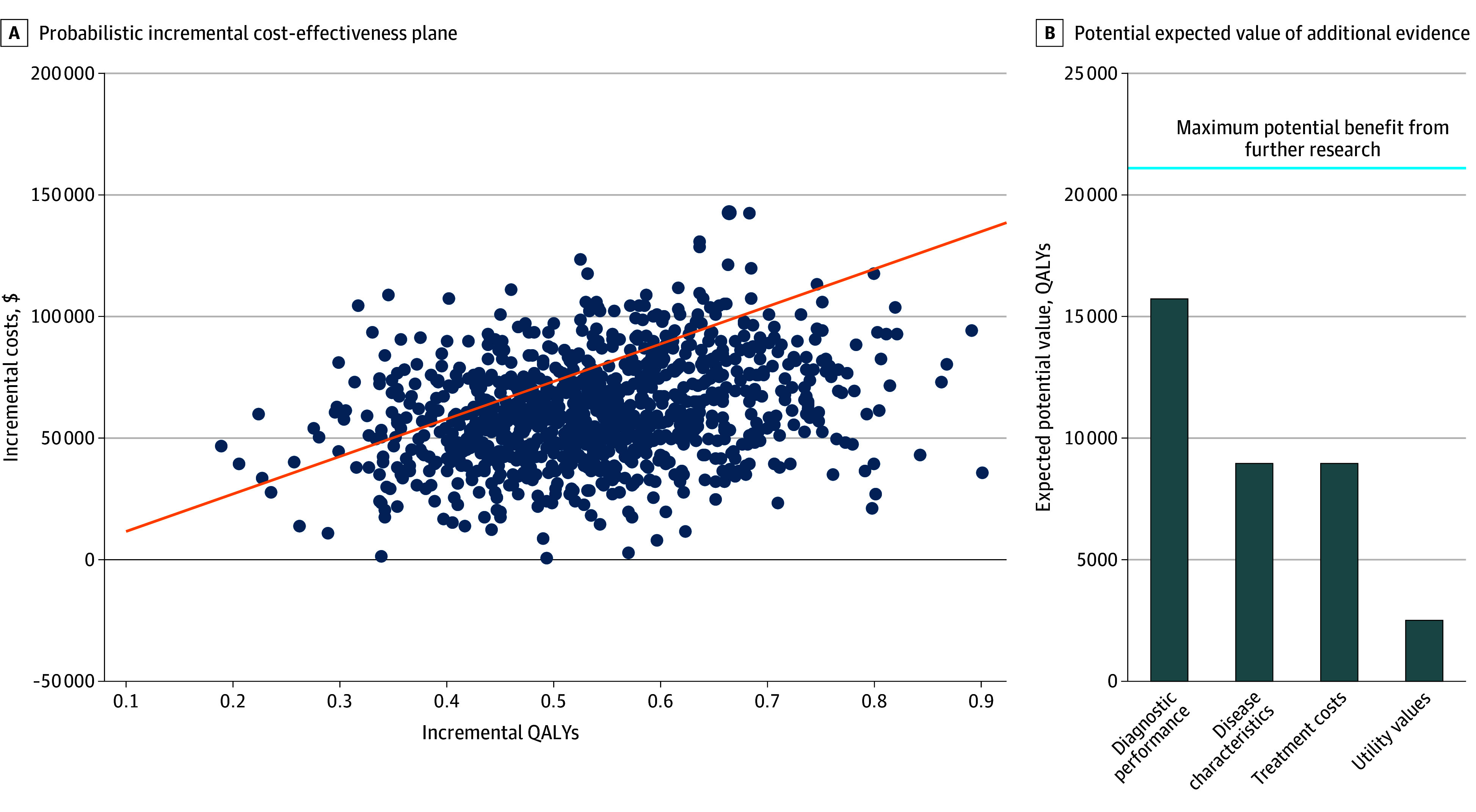 Figure 2
Peer Reviews
No public reviews on file for this paper yet. If you reviewed it on a platform where reviews are public (OpenReview, ICLR, NeurIPS, ICML), you can paste yours below so the community can read it here.
Videos
No videos yet. Explain this paper in a talk, walkthrough, or lecture? Add one.
Taxonomy
TopicsProstate Cancer Treatment and Research · Health Systems, Economic Evaluations, Quality of Life · Statistical Methods in Clinical Trials