High-Throughput Computing to Detect Harmful Drug-Drug Interactions in Older Adults: Protocol for a Population-Based Cohort Study
Neda Rostamzadeh, Rishabh Sharma, Sheikh S Abdullah, Eric McArthur, Niaz Chalabianloo, Jessica M Sontrop, Matthew A Weir, Kamran Sedig, Amit X Garg, Flory T Muanda

TL;DR
This study aims to use high-throughput computing to efficiently detect harmful drug interactions in older adults using real-world health data.
Contribution
The study introduces a novel, high-throughput approach to identify harmful drug-drug interactions using population-based data and advanced statistical methods.
Findings
Approximately 3.8 million older adults with over 500 unique medications were identified for analysis.
The study will evaluate 74 acute outcomes within 30 days of starting a new drug combination.
The protocol outlines rigorous methods to control for false discoveries and ensure clinical relevance.
Abstract
Drug-drug interactions (DDIs) are a major concern, especially for older adults taking multiple medications. Although Health Canada and the US Food and Drug Administration (FDA) use population-based studies to identify adverse drug events, detecting harmful DDIs is challenging due to the millions of potential drug combinations. Traditional pharmacoepidemiologic studies are slow and inefficient, often missing important harmful DDIs. This protocol outlines a novel approach to efficiently identify harmful DDIs using administrative health care data. Using high-throughput computing, we will conduct multiple population-based, new-user cohort studies using Ontario’s linked administrative health care data. The cohorts will be selected from the population of Ontario residents aged 66 years and older who filled at least one oral outpatient drug prescription from 2002 to 2023. In each cohort, the…
Genes, proteins, chemicals, diseases, species, mutations and cell lines named across the full text — each resolved to its canonical identifier and authoritative record.
Click any figure to enlarge with its caption.
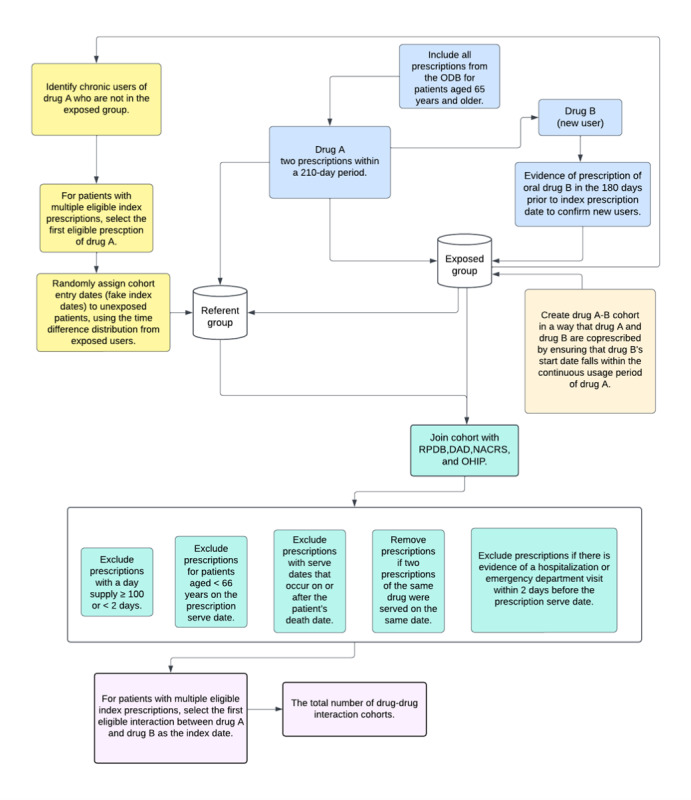 Figure 1
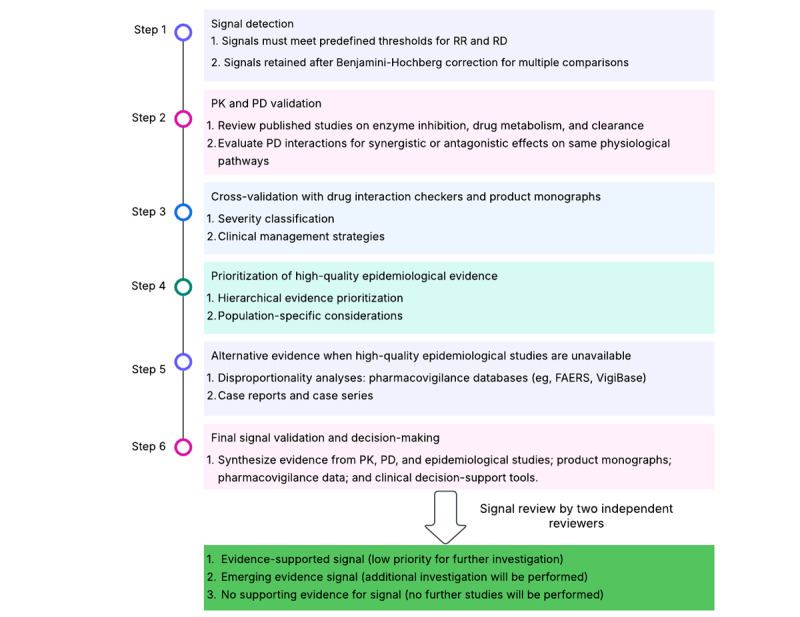 Figure 2
Peer Reviews
No public reviews on file for this paper yet. If you reviewed it on a platform where reviews are public (OpenReview, ICLR, NeurIPS, ICML), you can paste yours below so the community can read it here.
Videos
No videos yet. Explain this paper in a talk, walkthrough, or lecture? Add one.
Taxonomy
TopicsMachine Learning in Healthcare · Pharmacovigilance and Adverse Drug Reactions · Pharmaceutical Practices and Patient Outcomes