Smartphone App–Based Survey Deployment Patterns and Longitudinal Response Rate: Randomized Controlled Trial
Yuankai Zhang, Jian Rong, Xuzhi Wang, Eric Schramm, Chathurangi H Pathiravasan, Belinda Borrelli, Jamie M Faro, Emelia J Benjamin, Ludovic Trinquart, Chunyu Liu, Joanne M Murabito

TL;DR
A study found that giving smaller batches of surveys every two weeks instead of all at once every four weeks improved long-term response rates in a smartphone app-based health study.
Contribution
The study introduces a novel survey deployment strategy to combat survey fatigue in longitudinal digital health research.
Findings
The experimental group had higher response rates over time compared to the control group.
Stratified analyses showed younger participants had higher response rates in the experimental group.
The proportion of participants not returning any surveys increased more in the control group.
Abstract
Survey fatigue is a common challenge in longitudinal studies, particularly when using smartphone apps to collect survey data. Evidence-based strategies are needed to maintain longitudinal response rates. This study aims to evaluate the effect of a more frequent smartphone-administered survey deployment strategy with smaller survey batches on participant response rates over an extended period. We conducted a randomized controlled trial (NCT04752657) embedded in the electronic Framingham Heart Study cohorts between June 2021 and December 2023. Participants were randomly allocated to receive a full set of surveys every 4 weeks (control group) or half of the survey set biweekly, such that the full set is completed every 4 weeks (experimental group). Randomization was stratified by age (≤75 y vs >75 y) and phone type (Android vs iPhone). Married couples were assigned to the same group…
Genes, proteins, chemicals, diseases, species, mutations and cell lines named across the full text — each resolved to its canonical identifier and authoritative record.
Click any figure to enlarge with its caption.
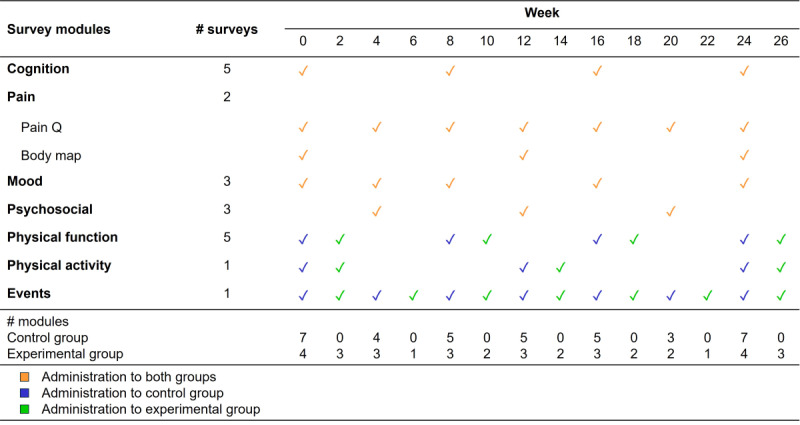 Figure 1
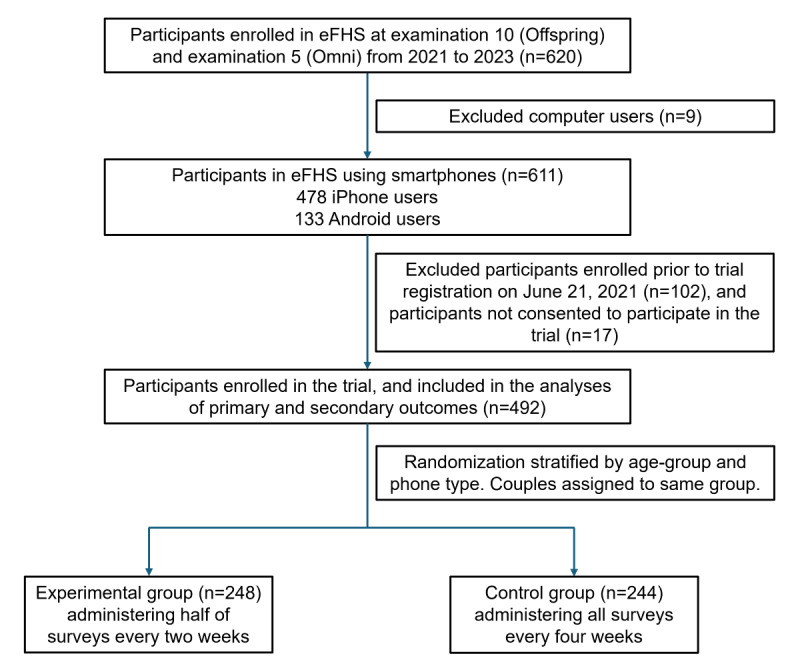 Figure 2
Peer Reviews
No public reviews on file for this paper yet. If you reviewed it on a platform where reviews are public (OpenReview, ICLR, NeurIPS, ICML), you can paste yours below so the community can read it here.
Videos
No videos yet. Explain this paper in a talk, walkthrough, or lecture? Add one.
Taxonomy
TopicsMobile Health and mHealth Applications · Digital Mental Health Interventions · Behavioral Health and Interventions