Reduced Adult Survival Estimated in Areas of Decline of Harbour Seal Populations in Scotland
M. Arso Civil, S. Tapp, J. Dickens, I. Langley, H. M. Hiley, M. Terrapon, E. Hague, R. C. Hewitt, L. S. Cordes, I. M. Graham, B. J. Cheney, P. M. Thompson, A. Hall, C. E. Sparling

TL;DR
Harbour seal populations in Scotland are declining, and the study finds that reduced adult survival, not lower reproduction, is likely the main cause.
Contribution
The study uses mark–recapture models on photo-ID data to identify demographic drivers of population decline in harbour seals.
Findings
Apparent adult survival was significantly lower at the declining site of Burray compared to stable or increasing sites.
Fecundity rates were high across all sites, suggesting that reduced reproduction is not the main driver of the decline.
The results support the hypothesis that adult survival, not fecundity, is the key demographic factor behind the population decline.
Abstract
Understanding the demographic drivers behind observed changes in wild populations is key to inferring intrinsic and extrinsic causes behind such changes. In Scotland, harbour seal populations have undergone regional declines since the early 2000s. Here, we apply mark–recapture models to photo‐identification data collected during the breeding season at haulout sites representative of three areas with contrasting population trajectories to estimate sex‐specific apparent adult survival and fecundity rates. Apparent adult survival rates were lower at the declining site of Burray, located within the North Coast and Orkney Seal Monitoring Unit (SMU), which has declined by 85% since the mid‐1990s: female survival = 0.844 (95% CI 0.803–0.878) and male survival = 0.826 (95% CI 0.751–0.883) (photo‐ID data collected in 2016–2022). At stable or increasing sites, estimated apparent adult survival…
Genes, proteins, chemicals, diseases, species, mutations and cell lines named across the full text — each resolved to its canonical identifier and authoritative record.
Click any figure to enlarge with its caption.
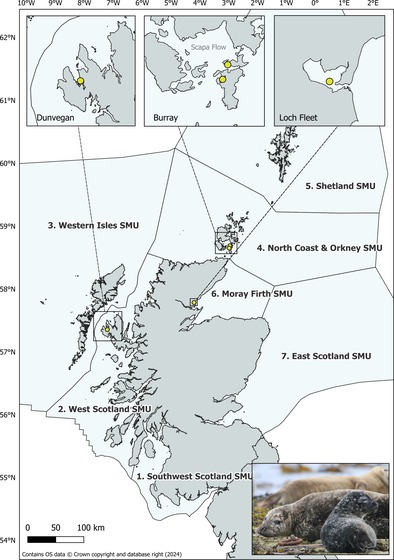 Figure 1
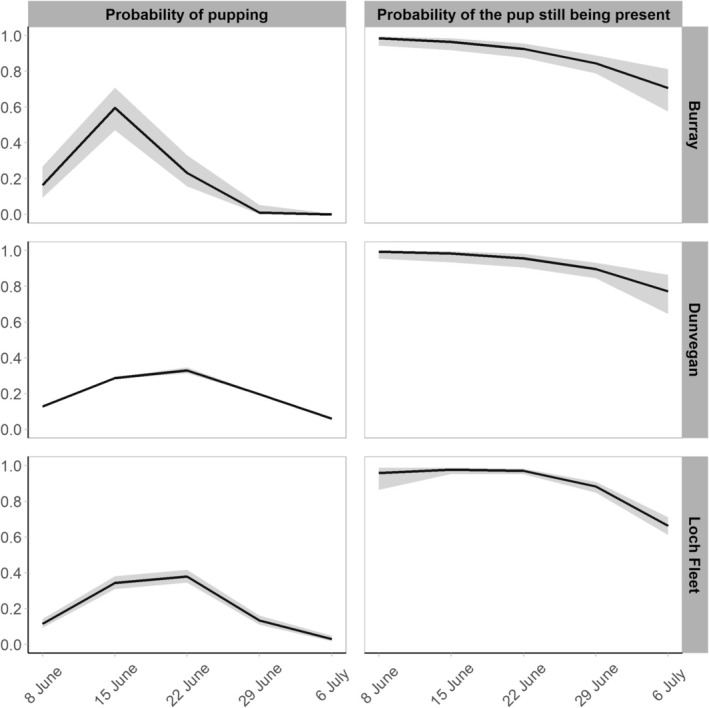 Figure 2
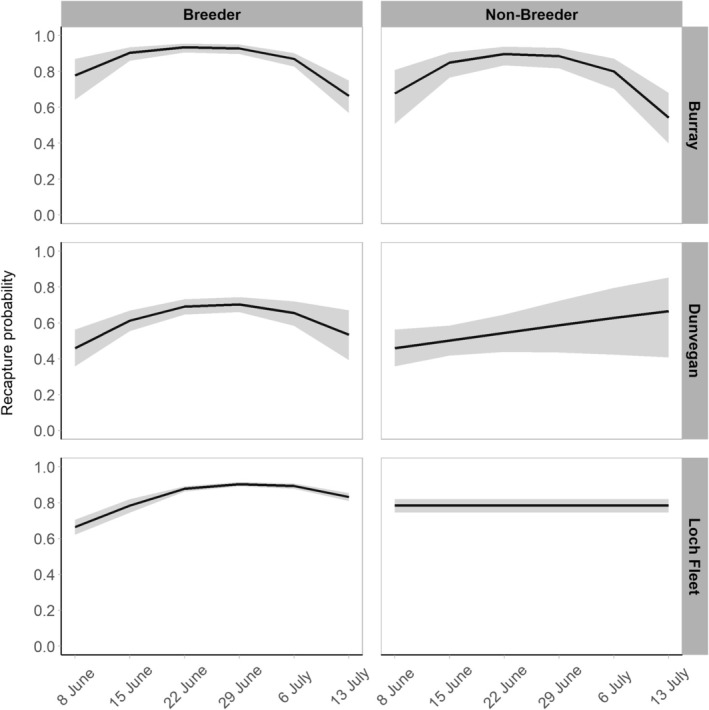 Figure 3
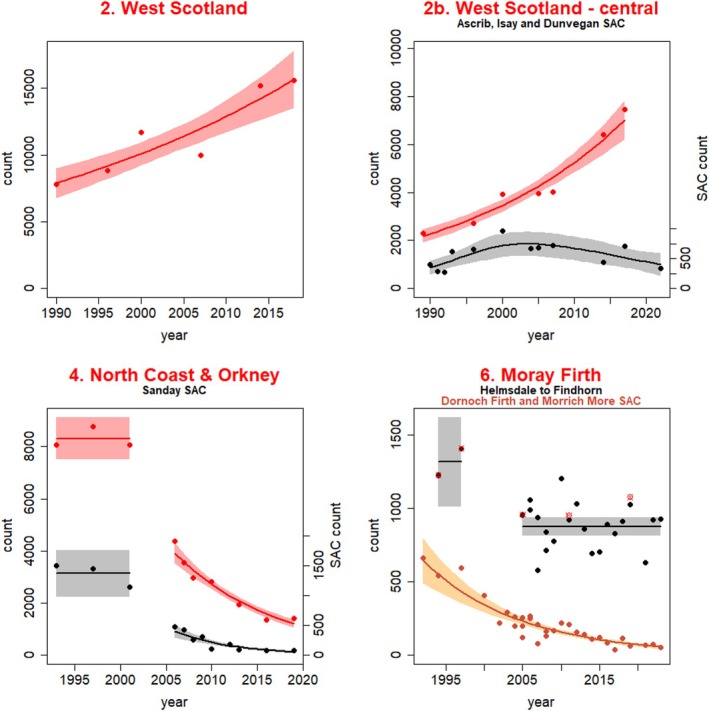 Figure 4
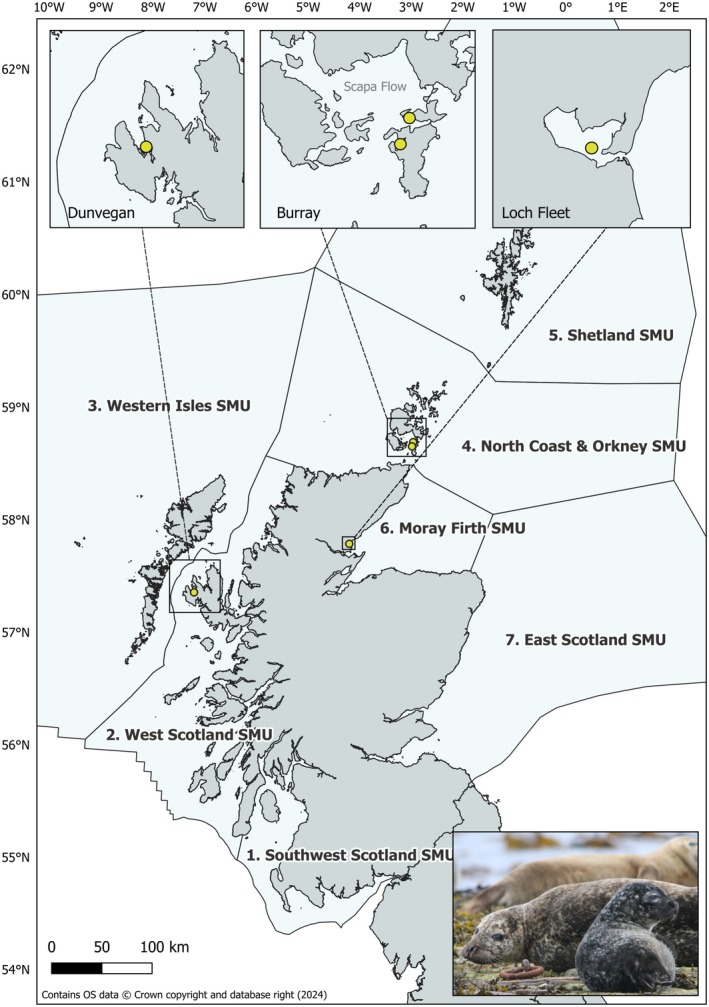 Figure 5
Peer Reviews
No public reviews on file for this paper yet. If you reviewed it on a platform where reviews are public (OpenReview, ICLR, NeurIPS, ICML), you can paste yours below so the community can read it here.
Videos
No videos yet. Explain this paper in a talk, walkthrough, or lecture? Add one.
Taxonomy
TopicsMarine animal studies overview · Coral and Marine Ecosystems Studies · Marine Ecology and Invasive Species