Speed‐Dependent Interjoint Coordination During Treadmill Running in a Poststroke Athlete: A Case Report
Noboru Chiba, Tadayoshi Minamisawa

TL;DR
A poststroke athlete's injured leg shows rigid movement patterns during treadmill running, while the healthy leg adapts with speed, suggesting a need for targeted rehabilitation.
Contribution
This case report identifies speed-dependent coordination changes in poststroke running, highlighting interjoint timing adaptations.
Findings
The paretic limb exhibits rigid distal coupling during treadmill running.
The nonparetic limb adapts its hip–ankle timing at speeds ≥ 6 km/h, with the ankle leading.
Rehabilitation should focus on distal push-off and interjoint timing retraining for improved efficiency.
Abstract
In a high‐functioning poststroke runner, the paretic limb shows rigid distal coupling, while the nonparetic limb adapts with speed; at ≥ 6 km/h, hip–ankle timing reverses (ankle leads). Prioritize distal push‐off and interjoint timing retraining to improve efficiency.
Genes, proteins, chemicals, diseases, species, mutations and cell lines named across the full text — each resolved to its canonical identifier and authoritative record.
Click any figure to enlarge with its caption.
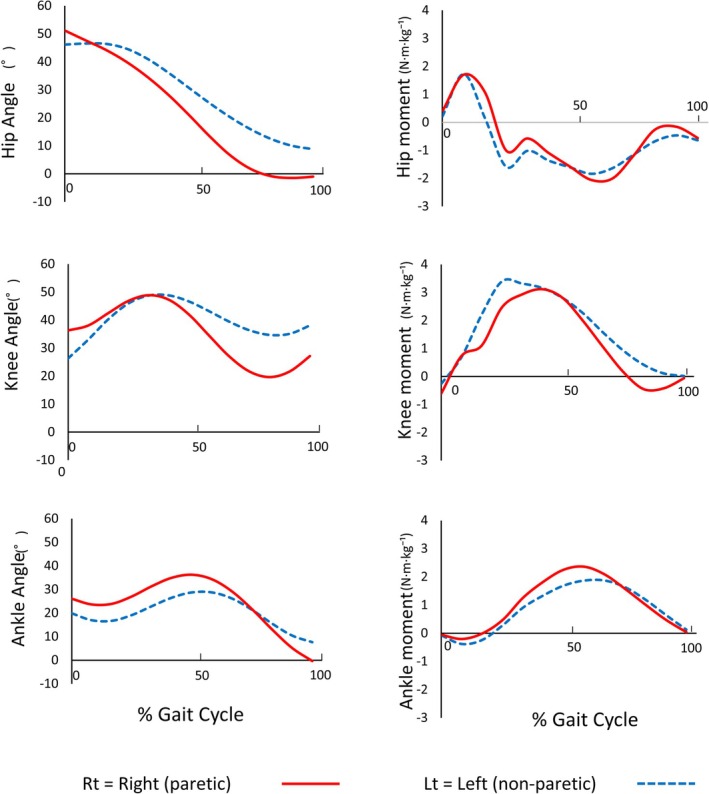 Figure 1
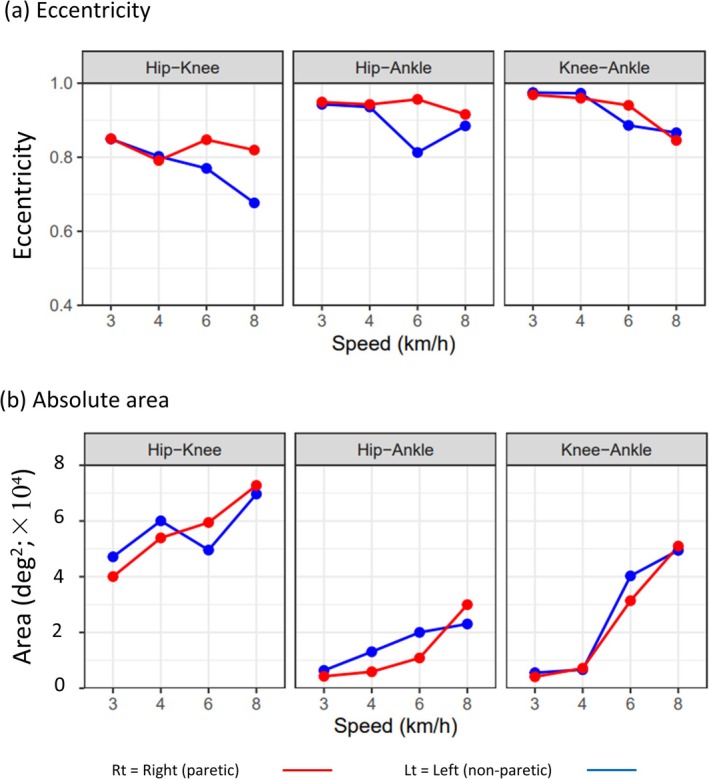 Figure 2
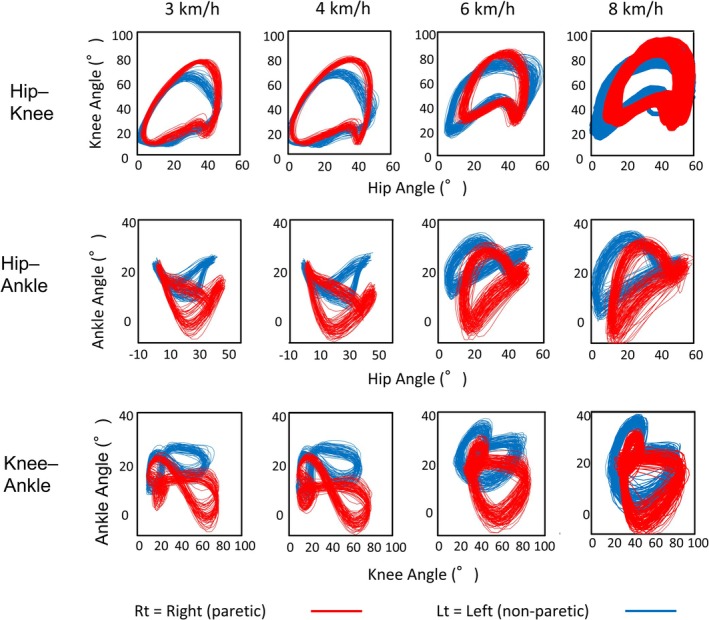 Figure 3
Peer Reviews
No public reviews on file for this paper yet. If you reviewed it on a platform where reviews are public (OpenReview, ICLR, NeurIPS, ICML), you can paste yours below so the community can read it here.
Videos
No videos yet. Explain this paper in a talk, walkthrough, or lecture? Add one.
Taxonomy
TopicsStroke Rehabilitation and Recovery · Muscle activation and electromyography studies · Balance, Gait, and Falls Prevention