Differences in Hamstring Muscle‐Tendon Unit Geometry and Function Between Elite Sprint and Jump Athletes and Recreationally Active Controls
Stephanie L. Lazarczuk, Andrea H. Hams, Phillip M. Bellinger, Ryan G. Timmins, Eline Lievens, Ben Kennedy, David Opar, Rod S. Barrett, Matthew N. Bourne

TL;DR
Elite sprinters and jumpers have larger hamstring muscles and more fast-twitch fibers than recreational athletes, which may help explain their superior performance.
Contribution
First study to compare hamstring muscle-tendon geometry and fiber type between elite sprint/jump athletes and recreational individuals.
Findings
Elite athletes had significantly larger hamstring muscles and tendon structures compared to controls.
Elite athletes had 1.5 times more Type II muscle fibers, linked to faster, explosive movements.
Hamstring structure and composition explained up to 65% of variance in sprint speed and 59% in strength performance.
Abstract
The hamstrings are critical for athletic performance; however, no study has examined differences in hamstring muscle‐tendon geometry (cross‐sectional area/volume) and muscle typology (proportion of Type I/II fibers) between elite sprinters/jumpers and recreationally active individuals. This study aimed to compare hamstring geometry and typology between these groups and examine how these characteristics relate to sprint and strength performance. Elite sprint and jump athletes (n = 15, 3 female, 21.7 ± 2.2 y, 180.6 ± 9.9 cm, 72.2 ± 9.6 kg) and recreationally active individuals (n = 15, 4 female, 25.7 ± 3.0 y, 176.0 ± 9.5 cm, 76.3 ± 17.6 kg) completed sprint and eccentric knee flexor strength testing. Magnetic resonance imaging and spectroscopy were used to assess hamstring muscle‐tendon geometry and typology, respectively. Compared to recreationally active individuals, elite athletes had…
Genes, proteins, chemicals, diseases, species, mutations and cell lines named across the full text — each resolved to its canonical identifier and authoritative record.
Click any figure to enlarge with its caption.
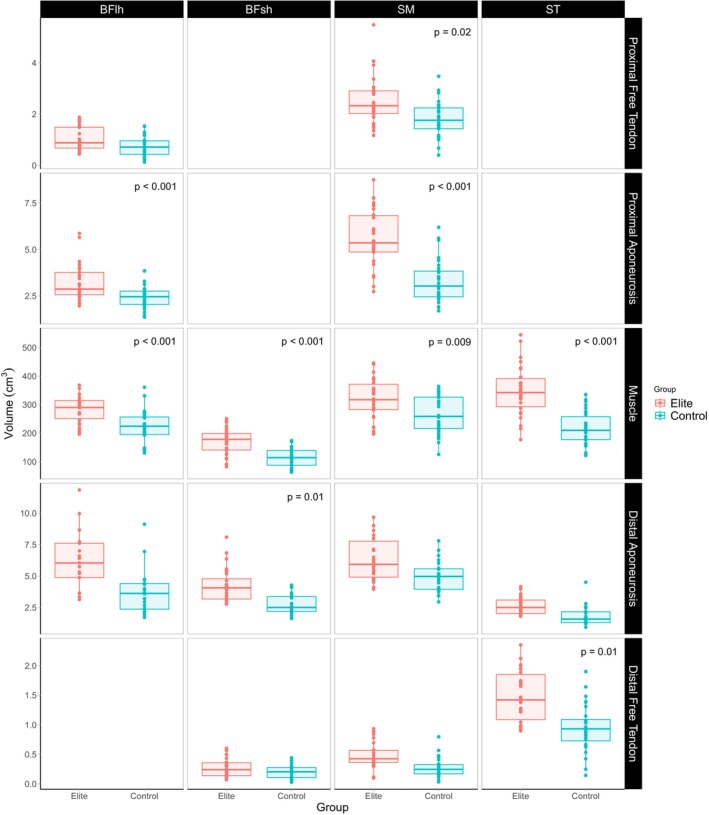 Figure 1
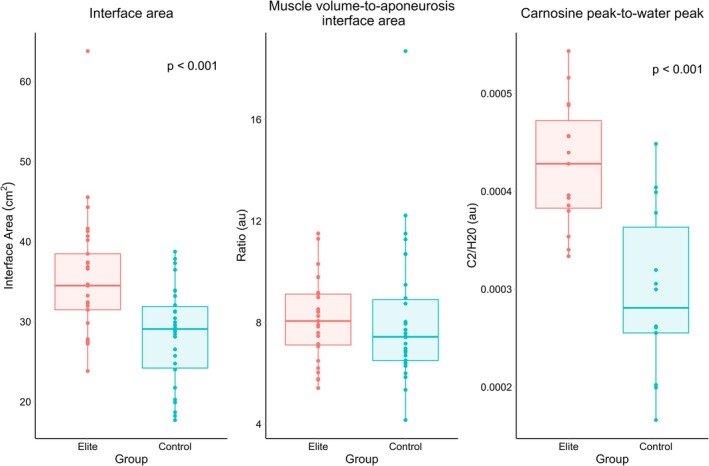 Figure 2
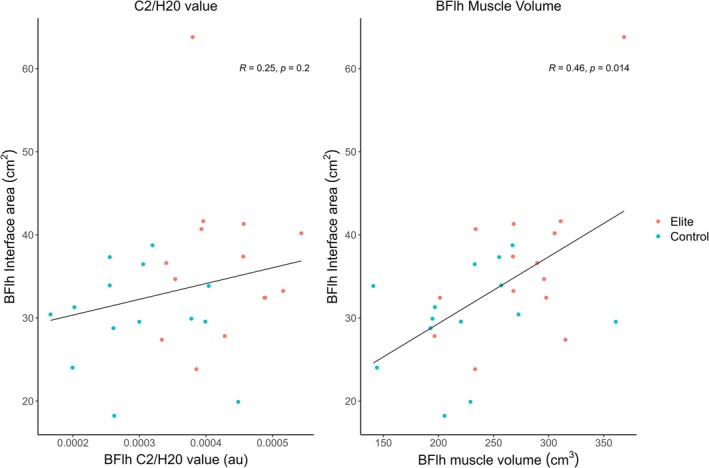 Figure 3
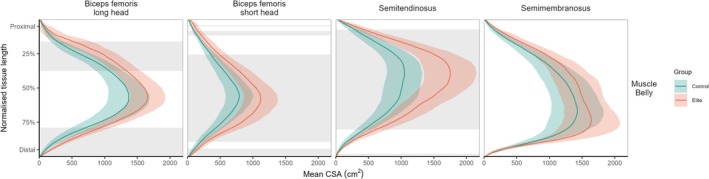 Figure 4
Peer Reviews
No public reviews on file for this paper yet. If you reviewed it on a platform where reviews are public (OpenReview, ICLR, NeurIPS, ICML), you can paste yours below so the community can read it here.
Videos
No videos yet. Explain this paper in a talk, walkthrough, or lecture? Add one.
Taxonomy
TopicsSports injuries and prevention · Sports Performance and Training · Muscle activation and electromyography studies