Analysis of telomere-to-telomere genome of red carrot TXH4 elucidates the role of DcLCYE and DcLCYB1 in lycopene accumulation in carrot
Xiao-Jie Li, Yong-Chao Hao, Jun-Wei Zheng, Ya-Hui Wang, Jia-Xing Tian, Chen-Hao Zhang, Cong-Sheng Yan, Lin Zhou, Xiao-Ming Song, Ai-Sheng Xiong, Yi Liang

TL;DR
This study provides a complete genome of a red carrot variety and identifies genes responsible for high lycopene accumulation in its roots.
Contribution
The paper presents a telomere-to-telomere genome assembly of TXH4 and reveals the role of DcLCYE and DcLCYB1 in lycopene accumulation.
Findings
TXH4 roots have significantly higher lycopene levels compared to leaves due to downregulation of DcLCYE and DcLCYB1.
Overexpression of DcLCYB1 and DcLCYE reduces lycopene, while their knockout increases it.
The genome assembly provides insights for improving carrot breeding strategies.
Abstract
Carrot taproots exhibit a wide range of colors due to variations in carotenoid and anthocyanin contents. TouXinHong4 (TXH4), a Chinese red carrot landrace from western China, is appreciated for its storability, stress tolerance, and good flavor. In this study, we generated a high-quality, telomere-to-telomere (T2T), gap-free genome assembly of TXH4, with a total size of 449.92 Mb. Repetitive sequences accounted for 48.6% of the genome. A total of 34 225 genes were identified, with 34 016 genes associated with at least one functional annotation. Comparison with two previously assembled carrot genomes, Daucus carota T2T (DcT2T) and D. carota v2.0 (DcRef), revealed 2 466 422 and 2 037 986 single nucleotide polymorphisms and 500 579 and 474 704 insertions/deletions in DcT2T and DcRef, respectively. Carotenoid analysis showed that the lycopene content in TXH4 roots was 1965-fold higher than…
Genes, proteins, chemicals, diseases, species, mutations and cell lines named across the full text — each resolved to its canonical identifier and authoritative record.
Click any figure to enlarge with its caption.
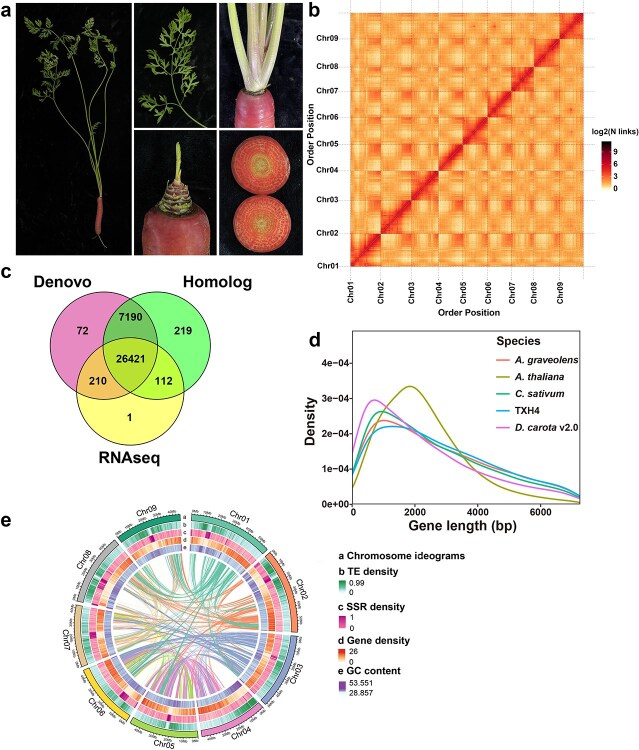 Figure 1
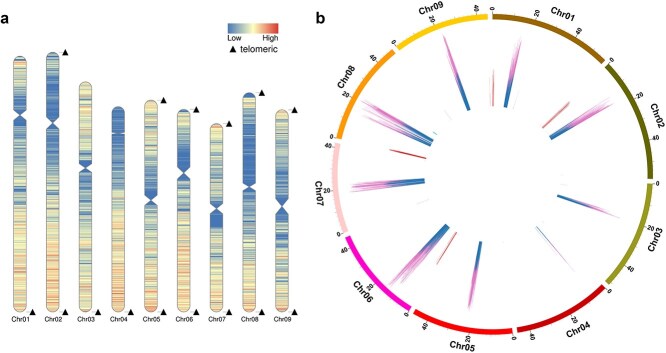 Figure 2
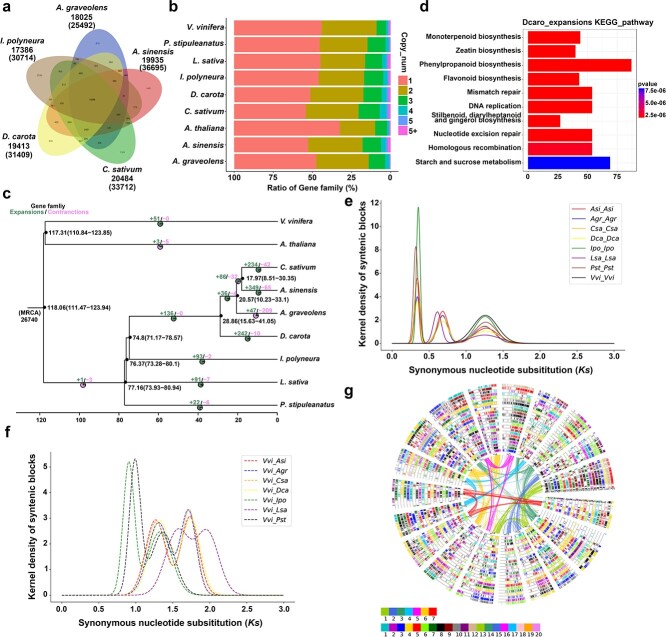 Figure 3
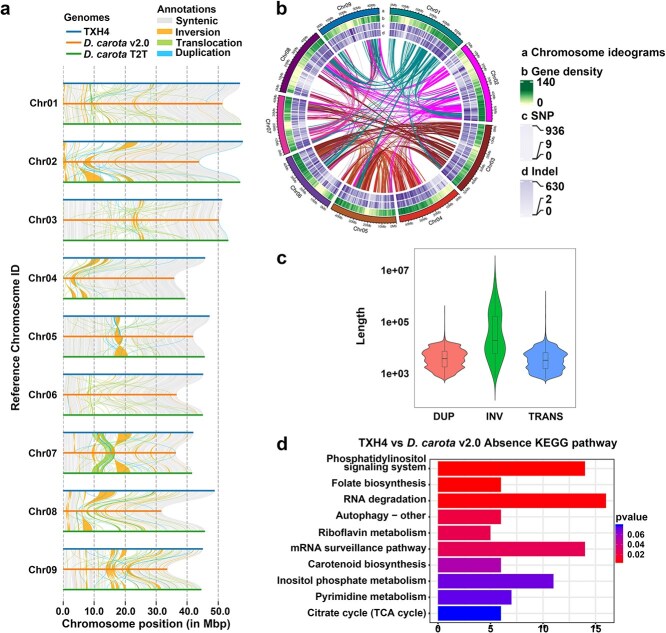 Figure 4
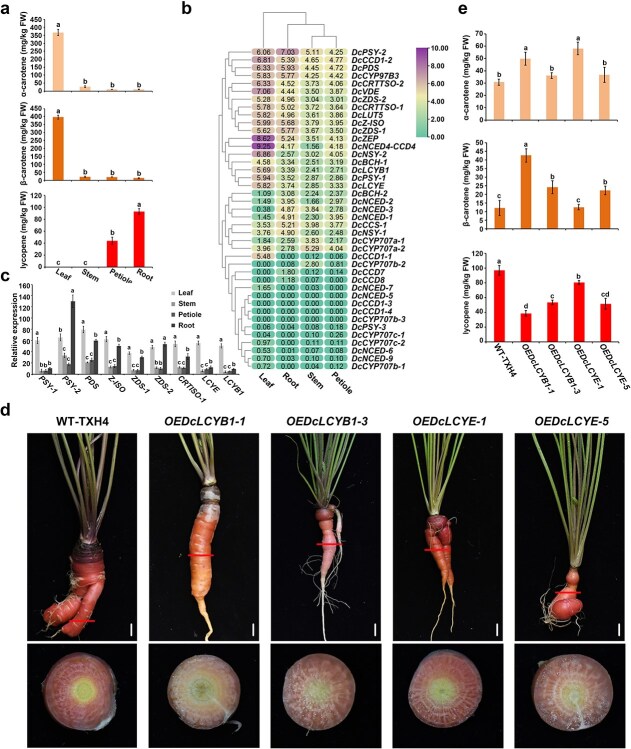 Figure 5
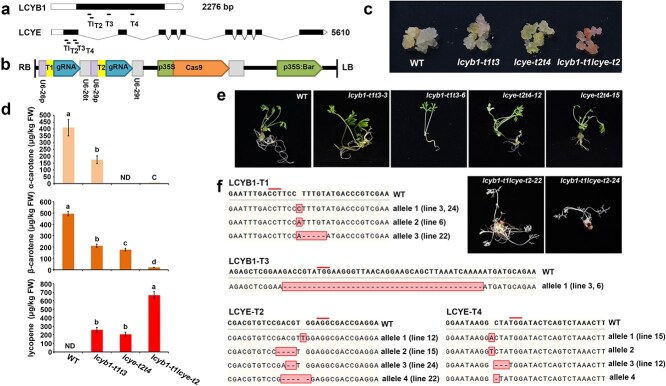 Figure 6
Peer Reviews
No public reviews on file for this paper yet. If you reviewed it on a platform where reviews are public (OpenReview, ICLR, NeurIPS, ICML), you can paste yours below so the community can read it here.
Videos
No videos yet. Explain this paper in a talk, walkthrough, or lecture? Add one.
Taxonomy
TopicsAntioxidant Activity and Oxidative Stress · Nuts composition and effects · Plant biochemistry and biosynthesis