An Efficient Measure of Sexual Interest in Children: The Revised Screening Scale for Pedophilic Interests (SSPI-2)
Melissa O’Donaghy, Kelly M. Babchishin, Grace Culp, Rachael Zarbl, Alexis G. Hinkson

TL;DR
The SSPI-2 is a new screening tool that effectively measures sexual interest in children and improves predictions of recidivism in offenders.
Contribution
The SSPI-2 demonstrates improved validity and predictive accuracy compared to previous tools for assessing pedophilic interests.
Findings
The SSPI-2 showed small to medium correlations with phallometric testing and pedohebephilic diagnoses.
The SSPI-2 outperformed the original SSPI in predicting 5-year sexual and non-contact sexual recidivism.
The SSPI-2 added incremental predictive accuracy to existing risk assessment tools like the BARR-2002R and PCL-R.
Abstract
This study examined the convergent, divergent, predictive, and incremental validity of the Revised Screening Scale for Pedophilic Interests (SSPI-2) in a sample of 264 men adjudicated for sexual offenses against at least one child under the age of 15. We found evidence of construct validity as the SSPI-2 had small to medium correlations with phallometric testing (r = .31), recorded pedohebephilic diagnoses (r = .52), and attitudes tolerant of sexual offending against children (r = .23), in addition to small and non-significant correlations with the PCL-R (r = −.07), VRAG-R (r = −.09), BARR-2002R (r = −.06), and conduct disorder (r = −.07). As indicated by DeLong tests, the SSPI-2 was a better predictor of 5-year sexual (Z = −2.44) and non-contact sexual recidivism (Z = −2.46) than the SSPI. The SSPI-2 also added incremental predictive accuracy to risk tools such as the BARR-2002R,…
Genes, proteins, chemicals, diseases, species, mutations and cell lines named across the full text — each resolved to its canonical identifier and authoritative record.
Click any figure to enlarge with its caption.
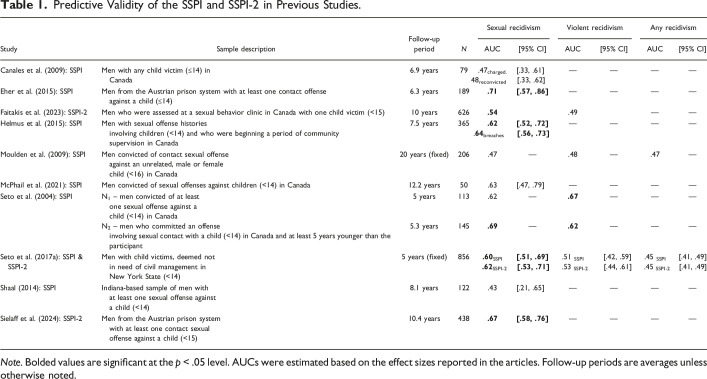 Figure 1
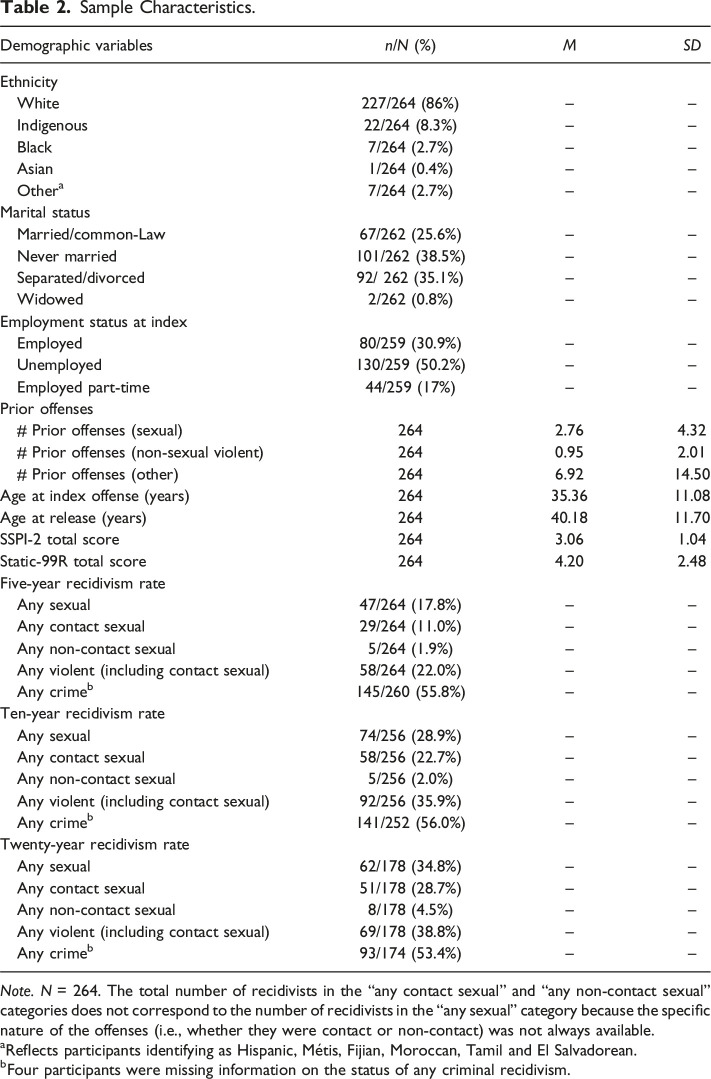 Figure 2
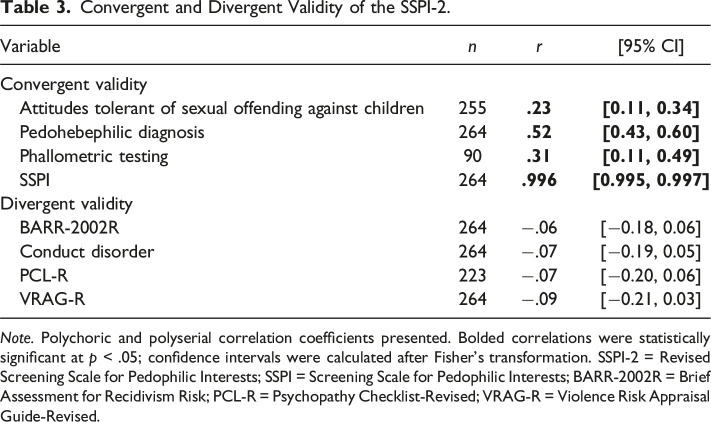 Figure 3
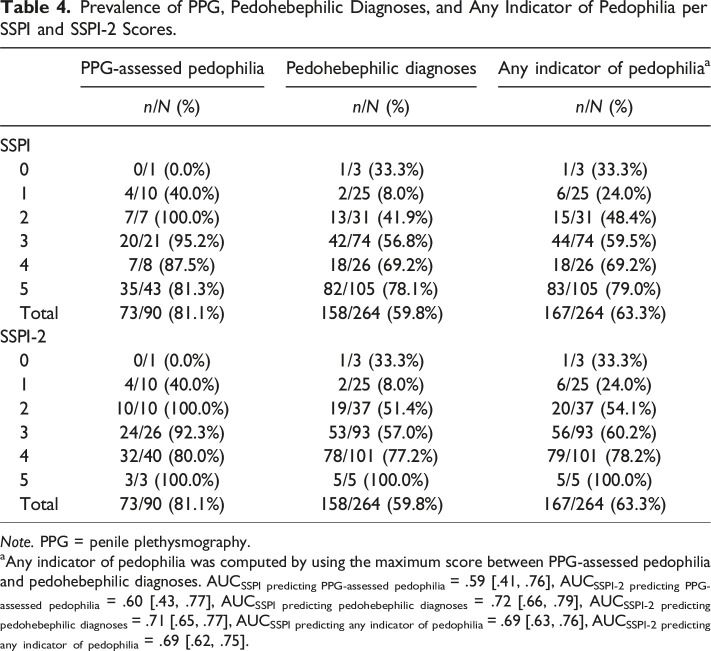 Figure 4
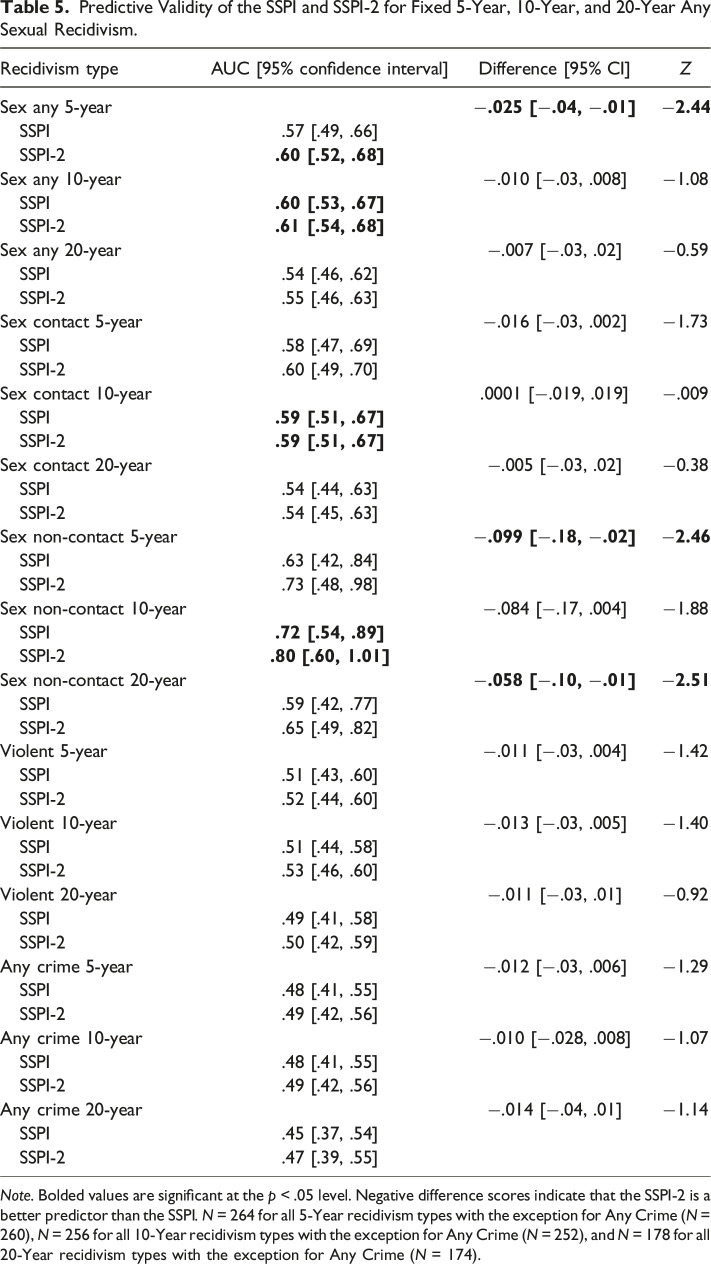 Figure 5
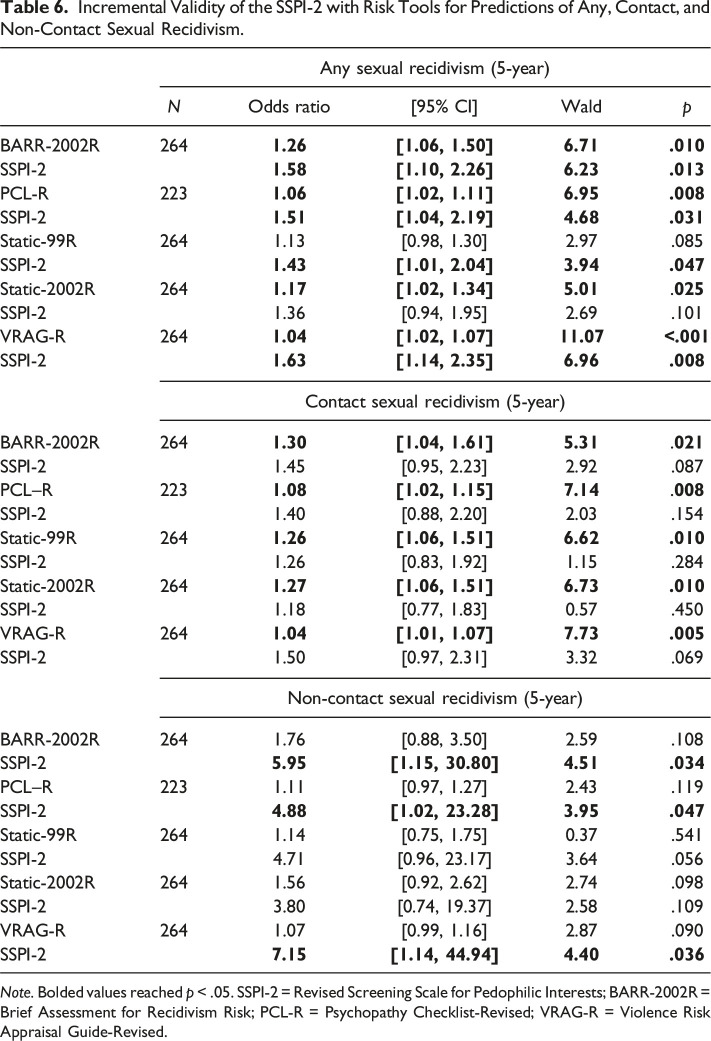 Figure 6
Peer Reviews
No public reviews on file for this paper yet. If you reviewed it on a platform where reviews are public (OpenReview, ICLR, NeurIPS, ICML), you can paste yours below so the community can read it here.
Videos
No videos yet. Explain this paper in a talk, walkthrough, or lecture? Add one.
Taxonomy
TopicsPsychopathy, Forensic Psychiatry, Sexual Offending · Criminal Justice and Corrections Analysis · Sexual Assault and Victimization Studies