Construction and Validation of the Implicit Theories of Sexual Offense Questionnaire (ITSOQ) in a General and (sub)Clinical Population Sample
Mirthe G. C. Noteborn, Martin Hildebrand, Jelle J. Sijtsema, Jaap J. A. Denissen, Stefan Bogaerts

TL;DR
This study created and tested a questionnaire to measure implicit theories about sexual offenses in both general and clinical populations.
Contribution
The paper introduces and validates the Implicit Theories of Sexual Offense Questionnaire (ITSOQ) with distinct factors for different populations.
Findings
The ITSOQ has four components: victim-specific theories, a sexual social desirability index, and antisocial uncontrollability.
The (sub)clinical population scored higher on antisocial uncontrollability and SSDI factors.
Small associations were found between self-reported sexual interests and victim-specific factors.
Abstract
This study developed and assessed the psychometric properties of a questionnaire assessing Implicit Theories (ITs) of sexual offense (Polaschek & Ward, 2002; Ward & Keenan, 1999), named the Implicit Theories of Sexual Offense Questionnaire (ITSOQ). We used existing cognition questionnaires to create a potential item pool, and selected items based on item properties (e.g., mean, SD, range) from three male general population samples (n = 427) and three (sub)clinical population samples (n = 69), i.e., pedophilia-supportive forum users (n = 20), and sexual (n = 28) and violent (n = 21) forensic mental health system clients. A principal component analysis for the general population sample supported a four-component solution for the ITSOQ, including two victim-specific ITs (Factor 1: Children 14–16 years, Factor 2: Women), a sexual social desirability index (SSDI; Factor 3), and a component…
Genes, proteins, chemicals, diseases, species, mutations and cell lines named across the full text — each resolved to its canonical identifier and authoritative record.
Click any figure to enlarge with its caption.
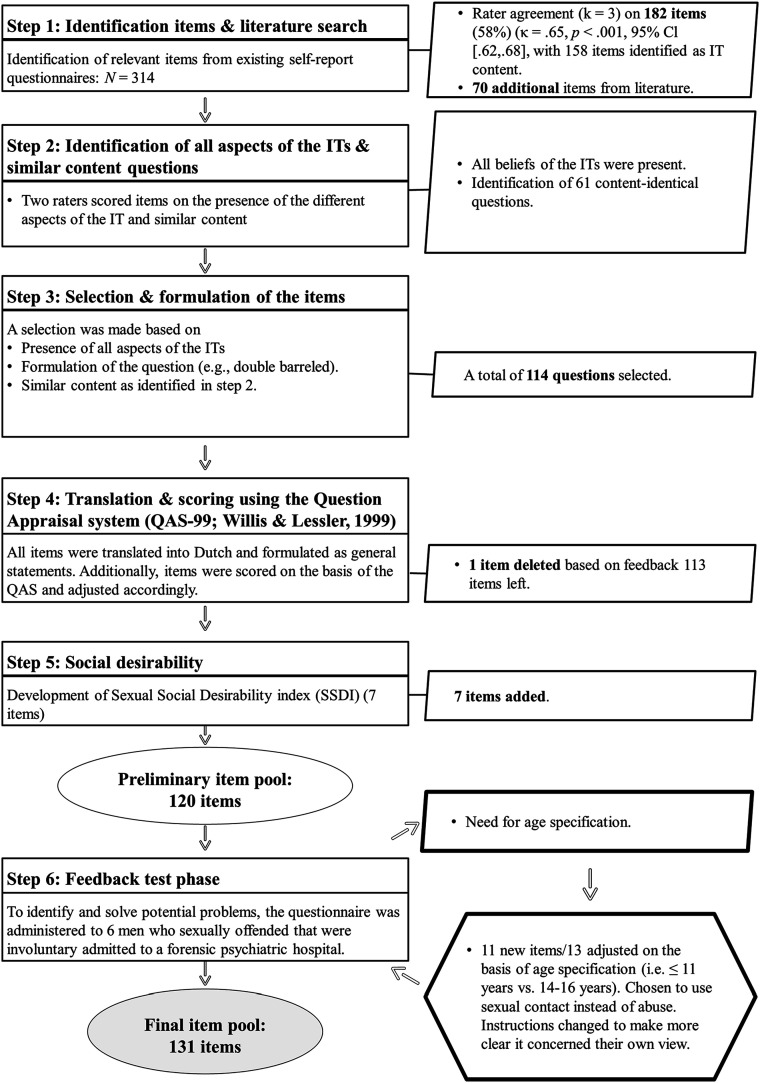 Figure 1
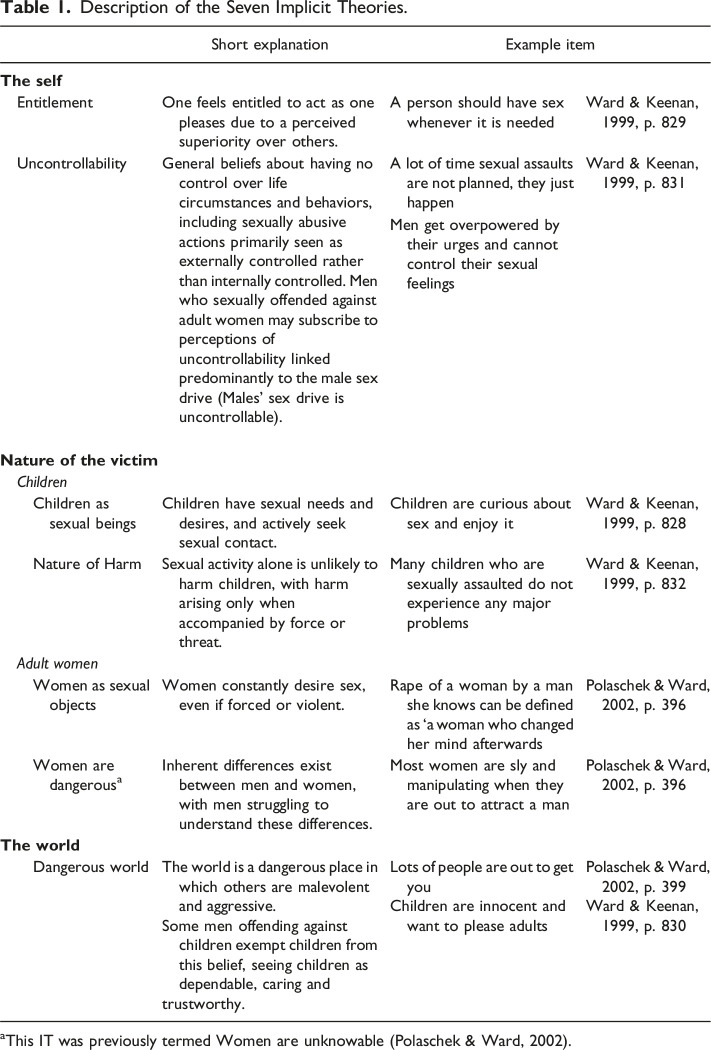 Figure 2
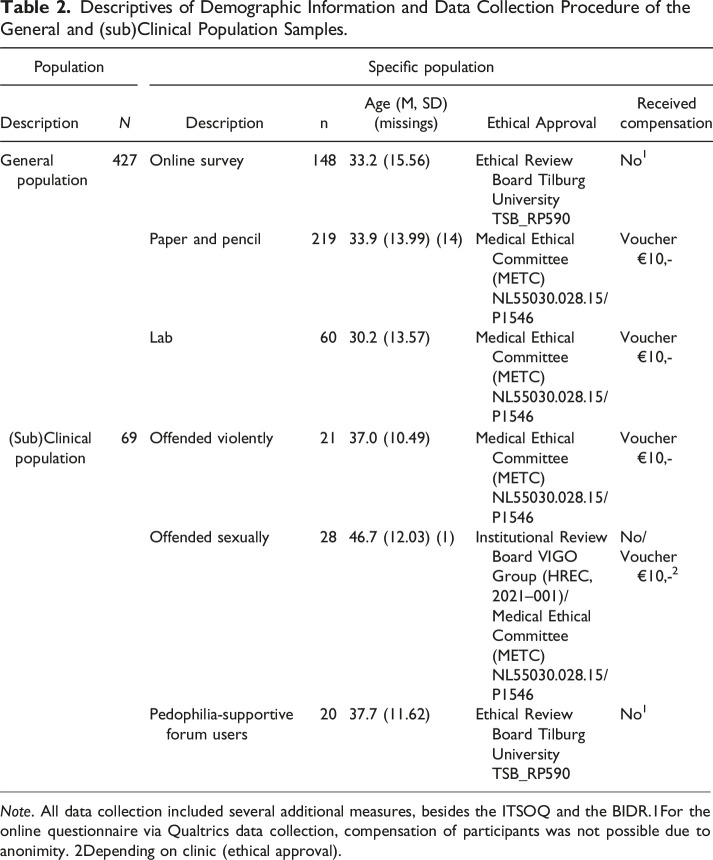 Figure 3
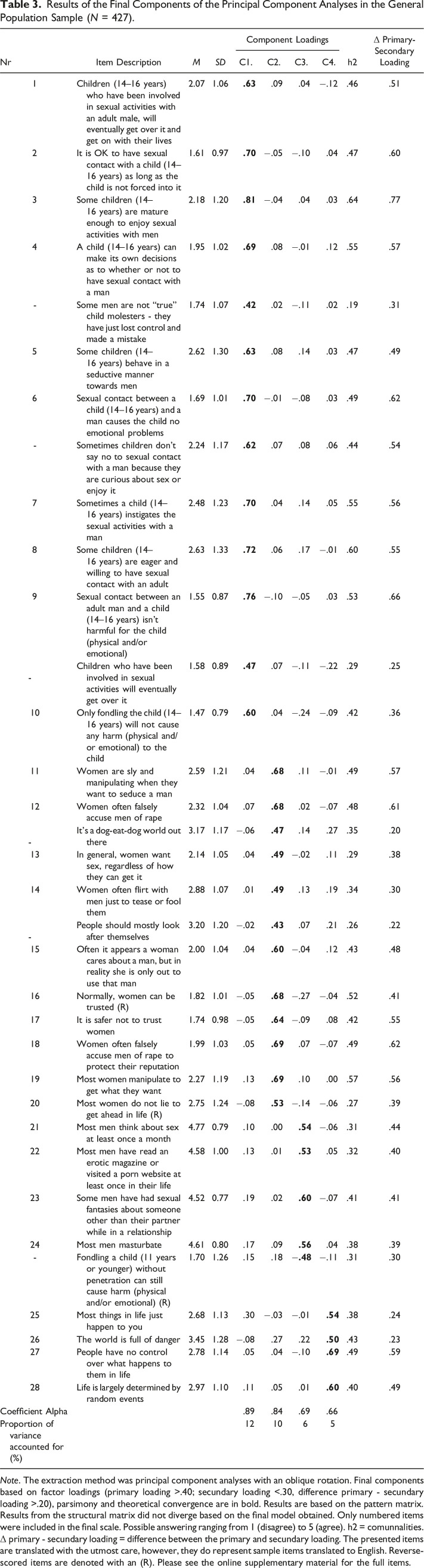 Figure 4
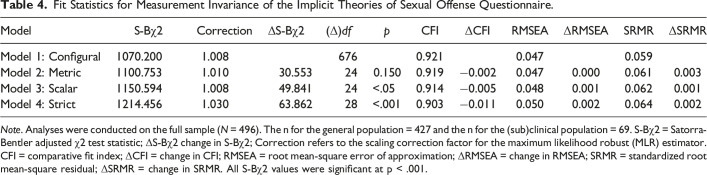 Figure 5
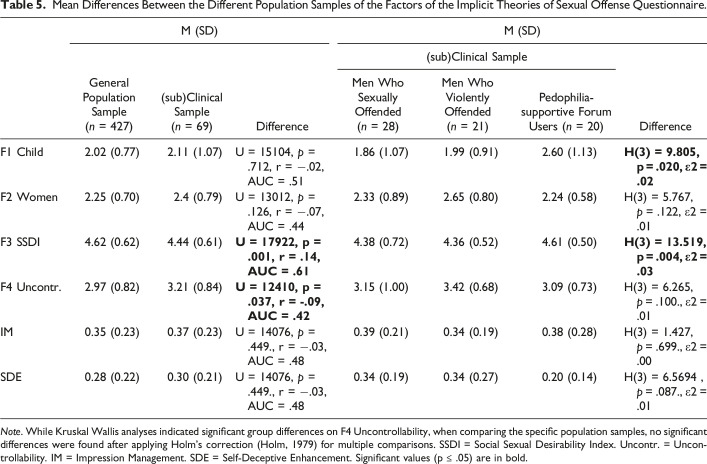 Figure 6
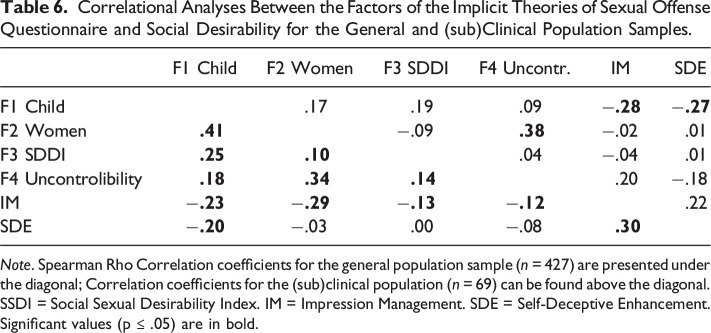 Figure 7
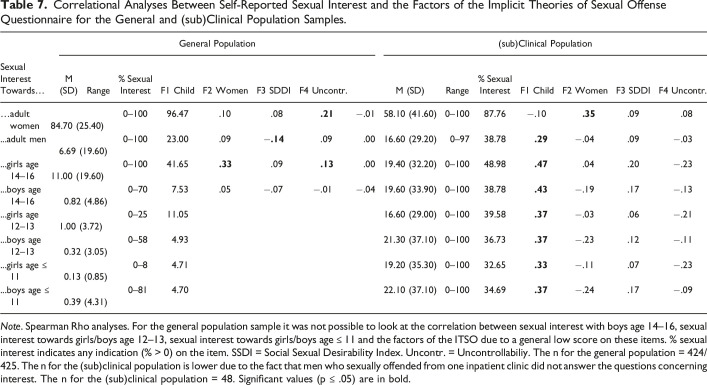 Figure 8
Peer Reviews
No public reviews on file for this paper yet. If you reviewed it on a platform where reviews are public (OpenReview, ICLR, NeurIPS, ICML), you can paste yours below so the community can read it here.
Videos
No videos yet. Explain this paper in a talk, walkthrough, or lecture? Add one.
Taxonomy
TopicsSexual Assault and Victimization Studies · Psychopathy, Forensic Psychiatry, Sexual Offending · Child Abuse and Trauma