N-acetyl-glucosamine primes Pseudomonas aeruginosa for virulence through a type IV pili/cAMP-mediated morphology transition
Jing Chen, Guiying Lin, Kaiyu Ma, Yunxue Guo, Zi Li, Xiaoxue Wang, Dominique Ferrandon

TL;DR
The study shows that Pseudomonas aeruginosa needs a priming step involving N-acetyl-glucosamine to become virulent in fruit flies.
Contribution
The discovery that NAG primes P. aeruginosa for virulence via a morphological switch is novel.
Findings
Planktonic P. aeruginosa is not immediately virulent in Drosophila; it requires a priming step.
NAG promotes virulence by inducing a morphological switch and enhancing FimV localization.
NAM inhibits virulence by preventing FimV localization and cAMP signaling.
Abstract
A microbe is pathogenic when it manages to survive in its host and, often, is able to proliferate. Thus, virulence entails coping with host defenses in parallel to dissemination and/or attack of the host. How the pathogen endures the attack by effectors of the immune response remains insufficiently understood. Here, we report that planktonic Pseudomonas aeruginosa is not immediately virulent in a Drosophila model of acute infection. Bacteria undergo a maturation step called priming, which is required for transition to virulence. Primed bacteria switch to a bacillus shape, only in vivo, proliferate and resist the action of a specific combination of antimicrobial peptides. This priming mechanism requires an interplay between two major effectors of the type IV pili (T4P), FimV and Vfr, which enhance lateral cell wall peptidoglycan synthesis. Interestingly, N-acetyl-muramic acid (NAM)…
Genes, proteins, chemicals, diseases, species, mutations and cell lines named across the full text — each resolved to its canonical identifier and authoritative record.
Click any figure to enlarge with its caption.
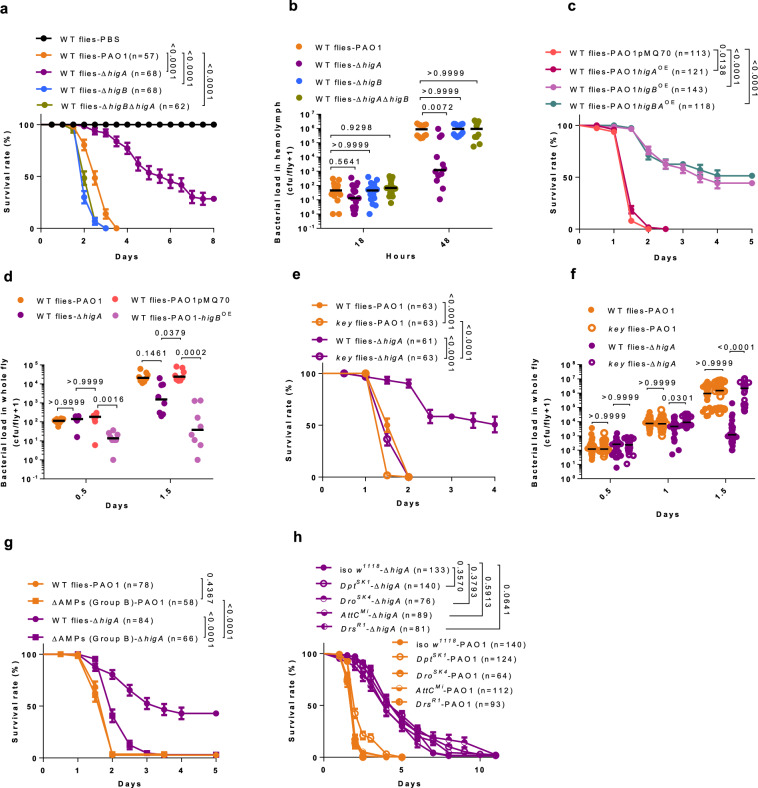 Figure 1
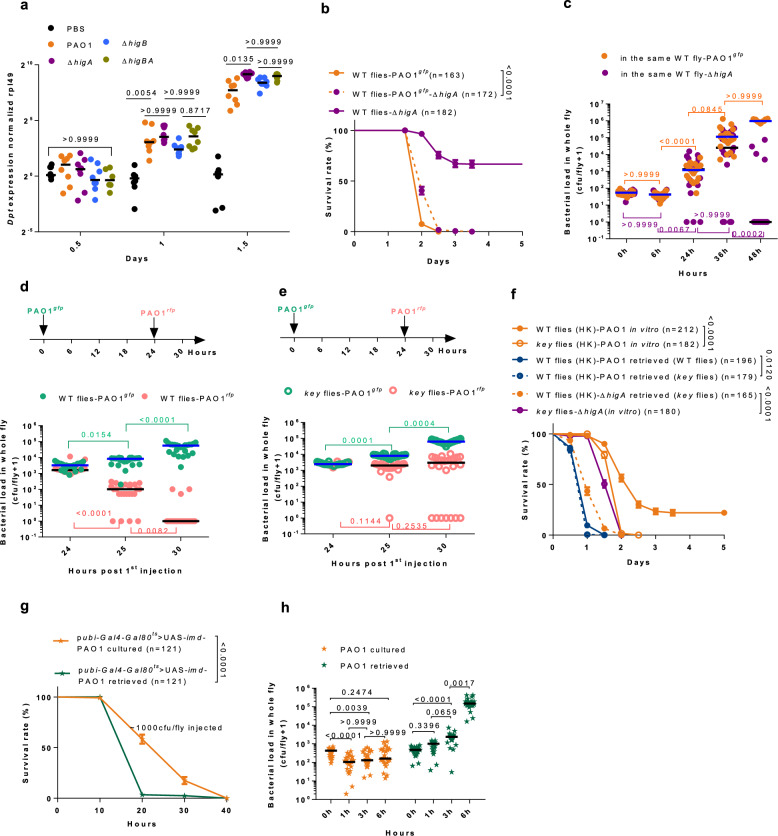 Figure 2
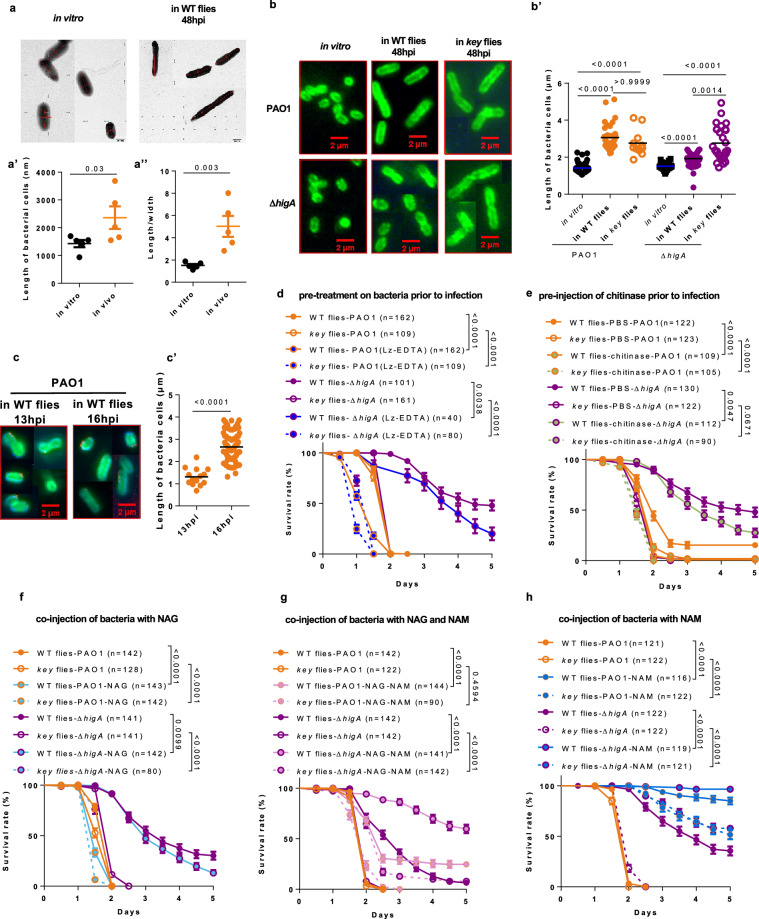 Figure 3
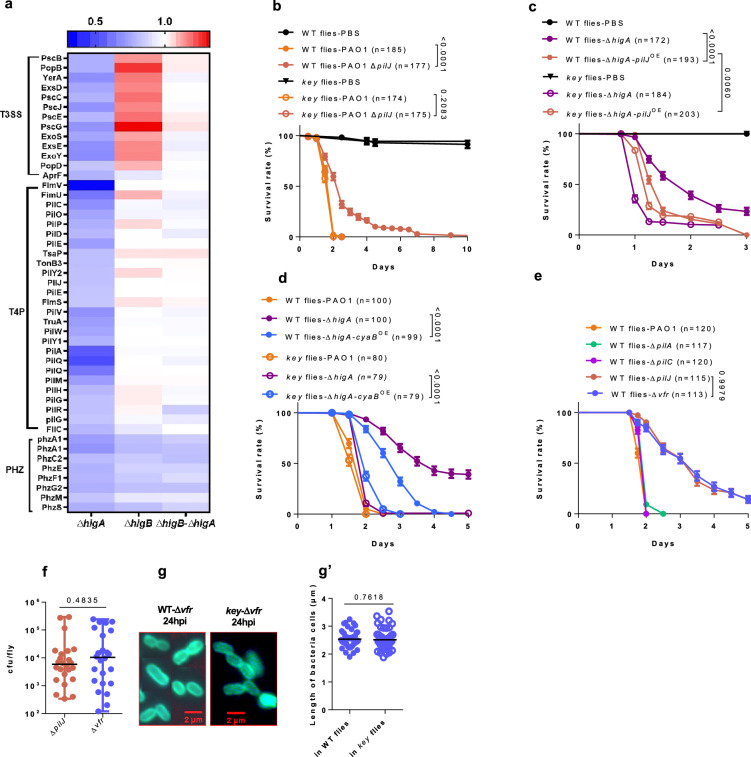 Figure 4
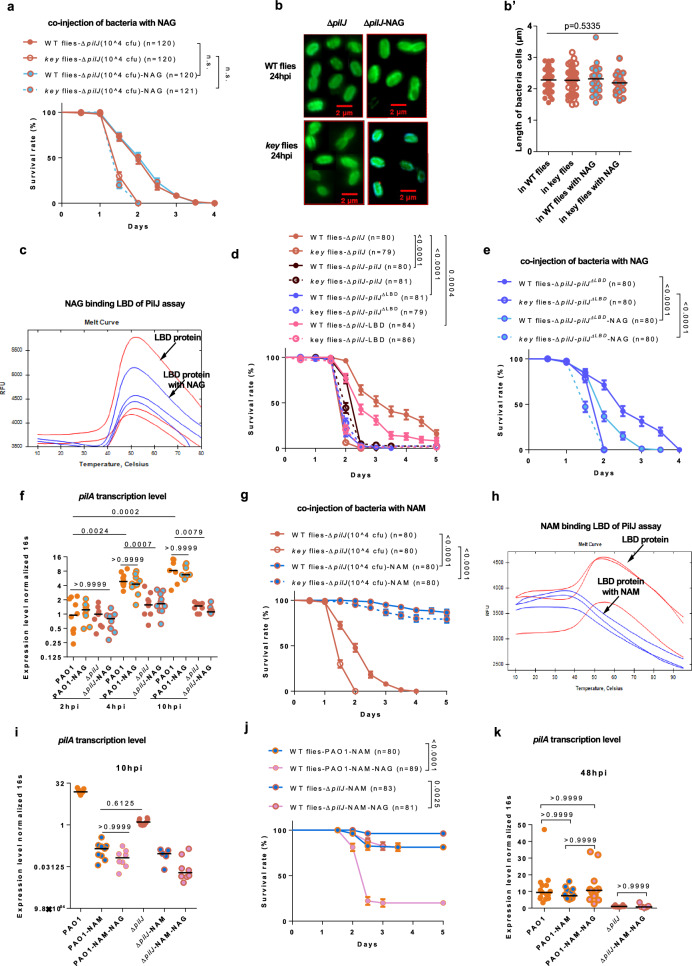 Figure 5
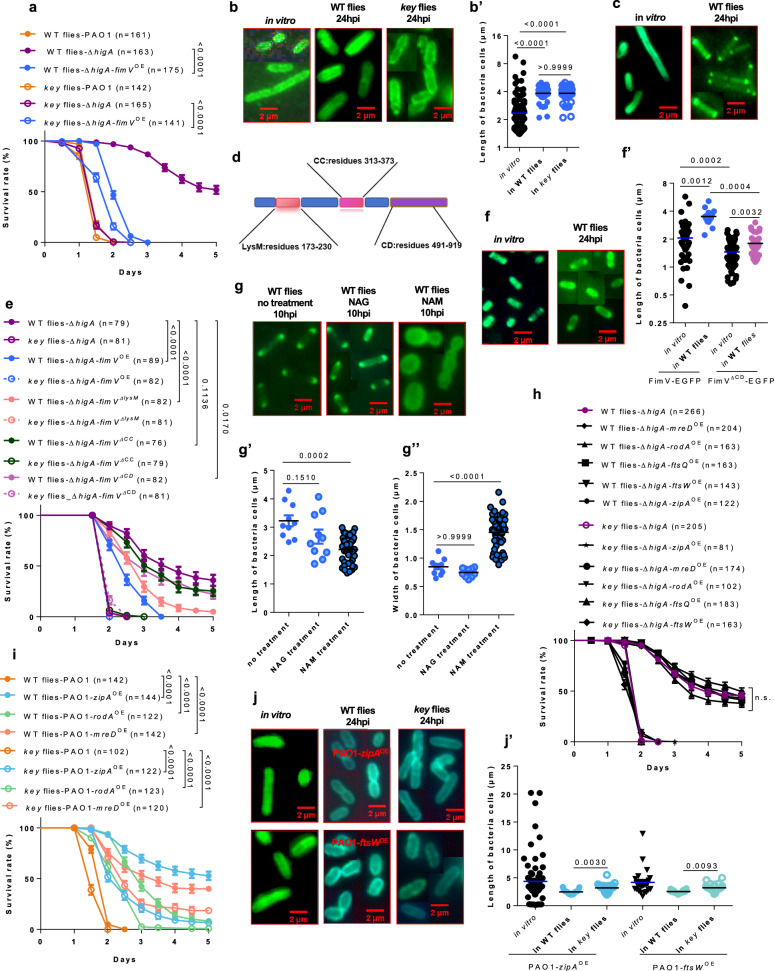 Figure 6
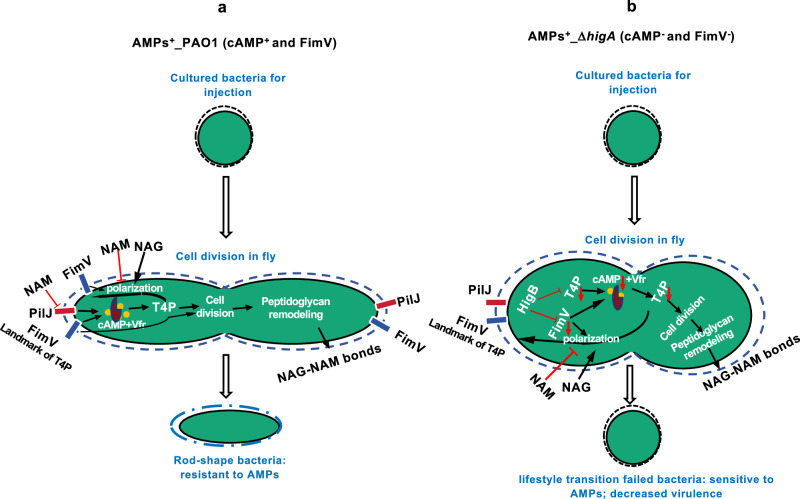 Figure 7
Peer Reviews
No public reviews on file for this paper yet. If you reviewed it on a platform where reviews are public (OpenReview, ICLR, NeurIPS, ICML), you can paste yours below so the community can read it here.
Videos
No videos yet. Explain this paper in a talk, walkthrough, or lecture? Add one.
Taxonomy
TopicsVibrio bacteria research studies · Invertebrate Immune Response Mechanisms · Insect symbiosis and bacterial influences