Watson transform in quantum scattering
Constantinos Valagiannopoulos, Vassilios Kovanis

TL;DR
This paper explores how the Watson transform improves the study of quantum particle scattering in crystalline lattices by enhancing convergence of wave function solutions.
Contribution
The paper introduces the Watson transform as a novel method for solving quantum scattering problems with better convergence.
Findings
Watson transform provides faster convergence for wave function series in quantum scattering.
The method is applicable to various quantum research domains like emission and signal processing.
Complex-ordered Hankel functions are used to achieve improved convergence rates.
Abstract
The scattering of high-energy quantum particles by nanoinclusions into crystalline lattices is studied. Since the typical size of the grid impurity is much larger compared to the wavelength of the produced matter waves, the canonical solutions for the wave functions given as series of spatial harmonics, converge very poorly. Therefore, Watson transform is employed to provide equivalent series that involve complex-ordered Hankel functions and possess a hugely better convergence rate. In this way, the use of a versatile tool is demonstrated allowing for rigorously solving and understanding particle interactions that occur within various research domains: from quantum emission and interference to molecular fluctuations and quantum signal processing.
Genes, proteins, chemicals, diseases, species, mutations and cell lines named across the full text — each resolved to its canonical identifier and authoritative record.
Click any figure to enlarge with its caption.
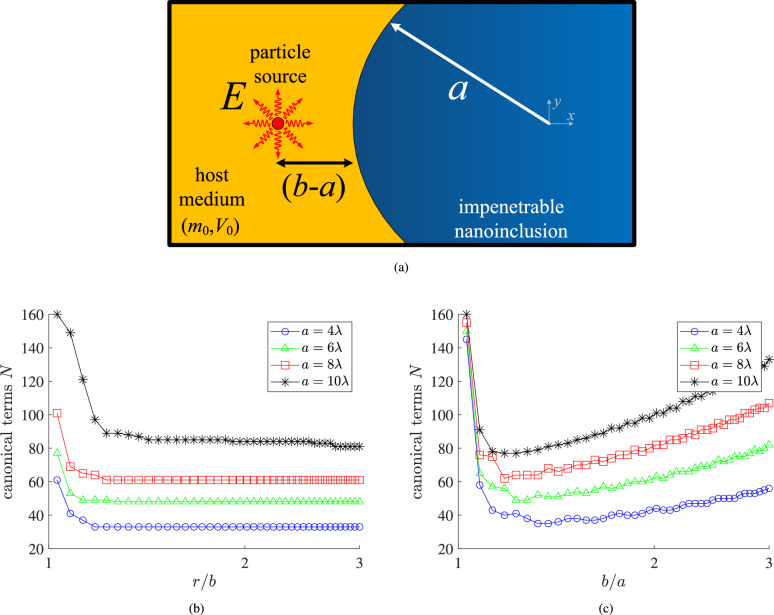 Figure 1
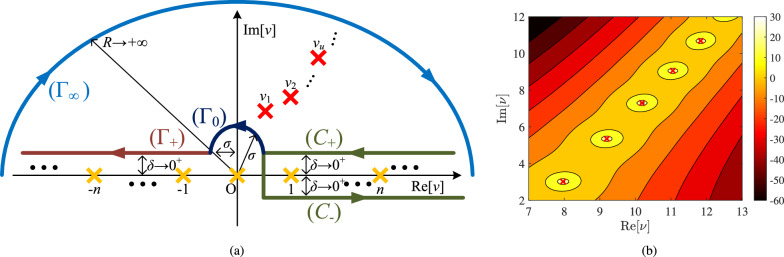 Figure 2
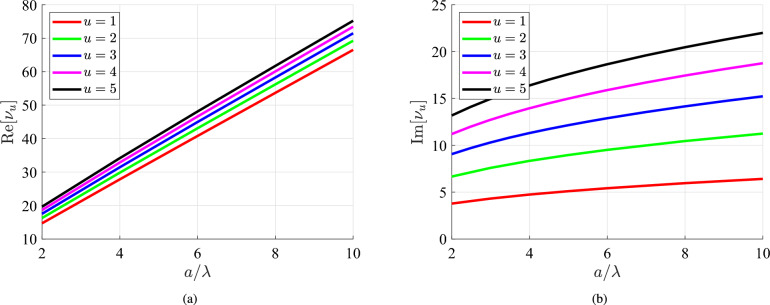 Figure 3
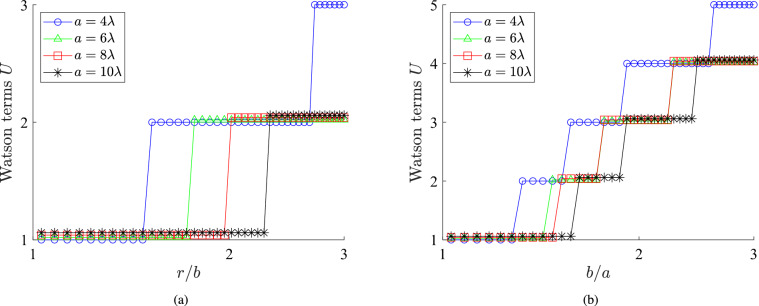 Figure 4
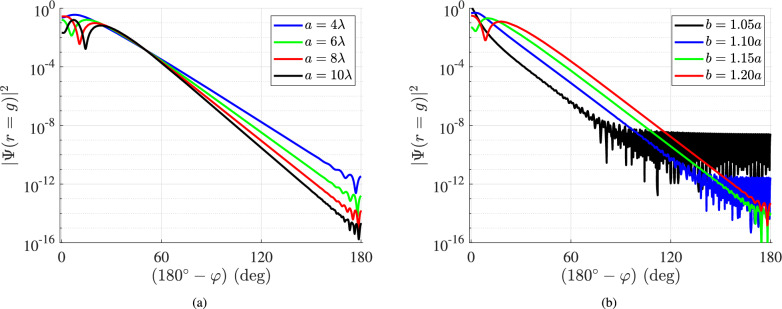 Figure 5
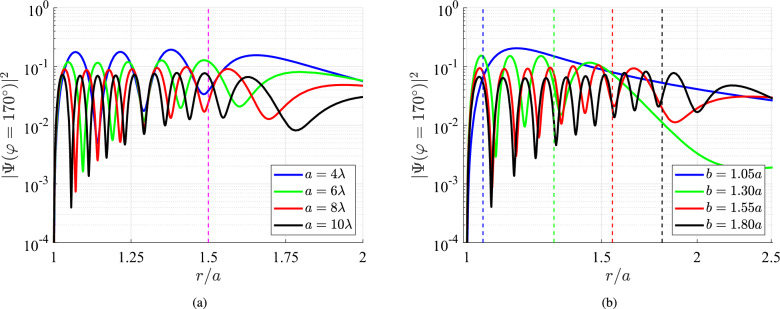 Figure 6
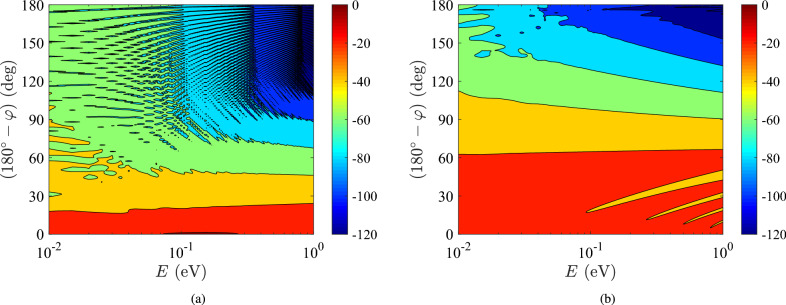 Figure 7
Peer Reviews
No public reviews on file for this paper yet. If you reviewed it on a platform where reviews are public (OpenReview, ICLR, NeurIPS, ICML), you can paste yours below so the community can read it here.
Videos
No videos yet. Explain this paper in a talk, walkthrough, or lecture? Add one.
Taxonomy
TopicsCold Atom Physics and Bose-Einstein Condensates · Quantum Information and Cryptography · Quantum, superfluid, helium dynamics