Induced pluripotent stem cells carrying novel APTX mutations presented defective neural differentiation with the accumulation of DNA single-strand breaks
Zirui Chen, Yihua Huang, Zhirong Yuan, Kaibiao Xu, Yuqing Guan, Luqin Wang, Yawei Jiang, Weiling Deng, Yue Pan, Jing Liu, Yafang Hu

TL;DR
This study uses stem cells with APTX mutations to show how these mutations impair neural development and cause DNA damage in a rare neurological disorder.
Contribution
The study introduces a novel iPSC model with APTX mutations to explore the pathogenesis of AOA1 and reveals DNA repair defects during neural differentiation.
Findings
APTX-mutant iPSCs show impaired differentiation into neural progenitor cells and neurons.
Accumulation of DNA single-strand breaks and increased cleaved PARP-1 is observed in mutant cells.
Reduced APE1 expression is linked to the base excision repair pathway during neural differentiation.
Abstract
Ataxia with oculomotor apraxia type 1 (AOA1) is a rare, autosomal recessive, early-onset, progressive cerebellar ataxia caused by mutations in the APTX gene, which encodes aprataxin, a DNA-adenylate hydrolase involved in DNA damage repair. The pathogenesis of AOA1 remains unclear. The purpose of this study was to investigate the pathogenesis of a novel mutation, p.H201P/H201R, carried by our AOA1 patient and the mechanism of AOA1 in an induced pluripotent stem cells (iPSCs) model. We edited iPSCs derived from a healthy individual to carry the APTX homozygous mutation p.H201P (H201P-iPSCs) or p.H201R (H201R-iPSCs) via CRISPR/Cas9. We found that aprataxin expression was absent in both H201P- and H201R-iPSCs. The capacity of these APTX-mutant iPSCs to differentiate into neural progenitor cells (NPCs) and mature neurons was diminished. We observed an increase in DNA single-strand breaks…
Genes, proteins, chemicals, diseases, species, mutations and cell lines named across the full text — each resolved to its canonical identifier and authoritative record.
Click any figure to enlarge with its caption.
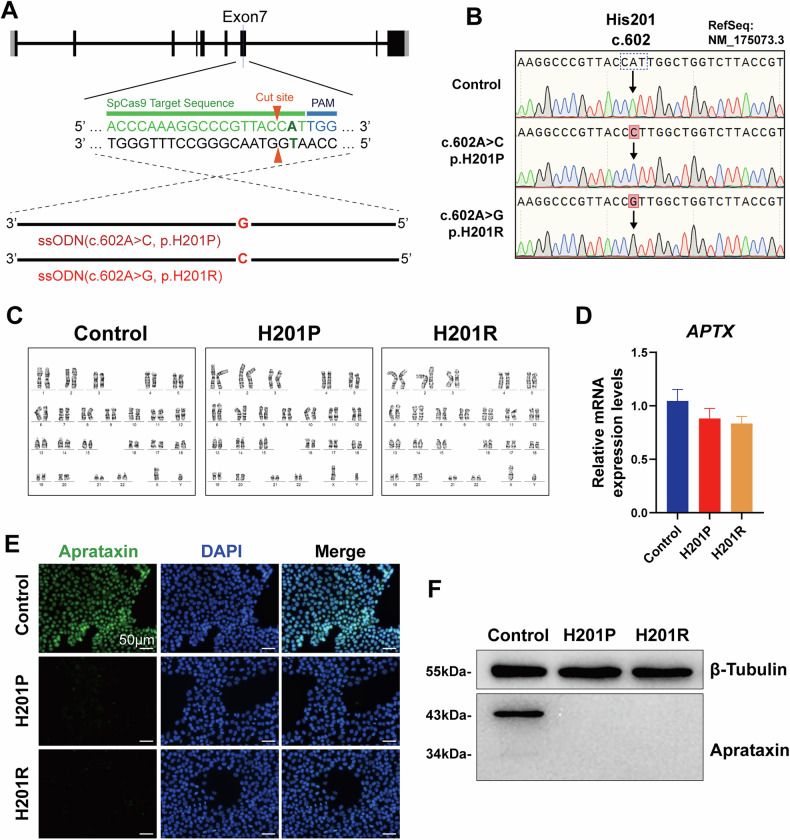 Figure 1
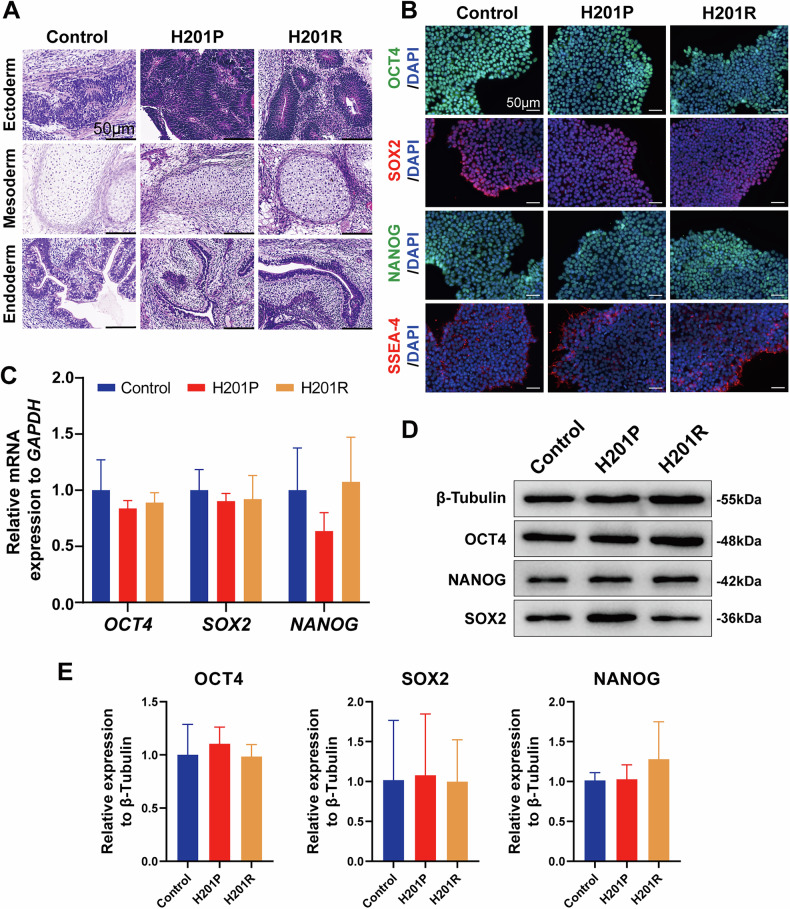 Figure 2
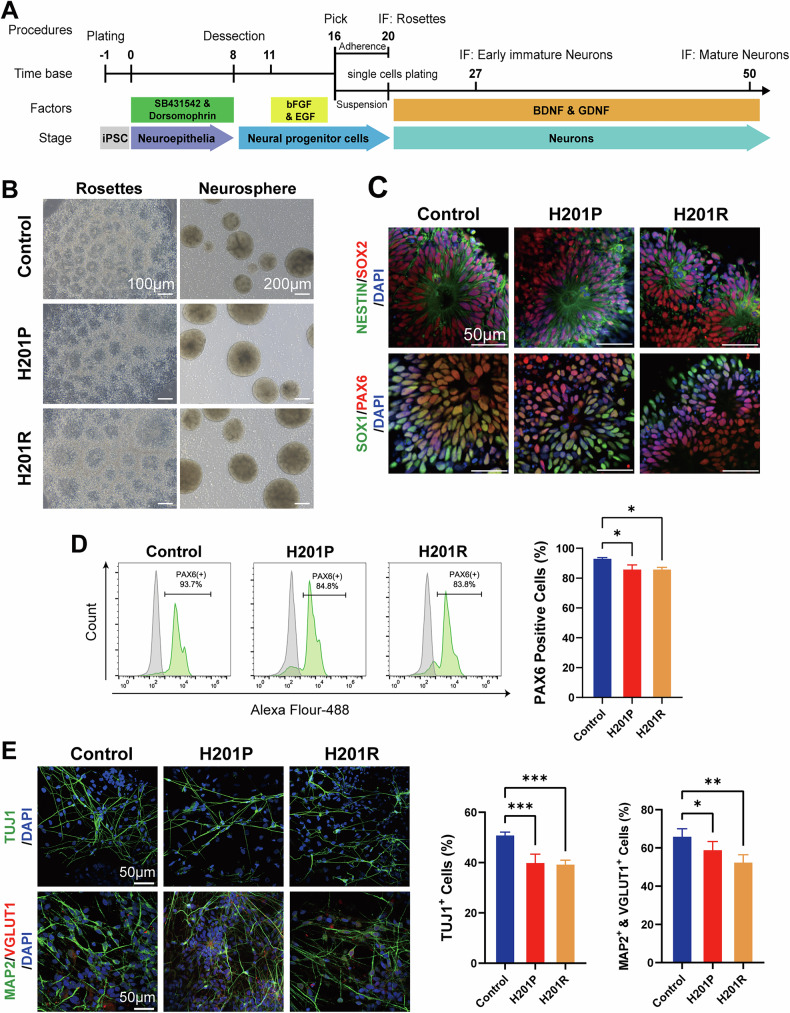 Figure 3
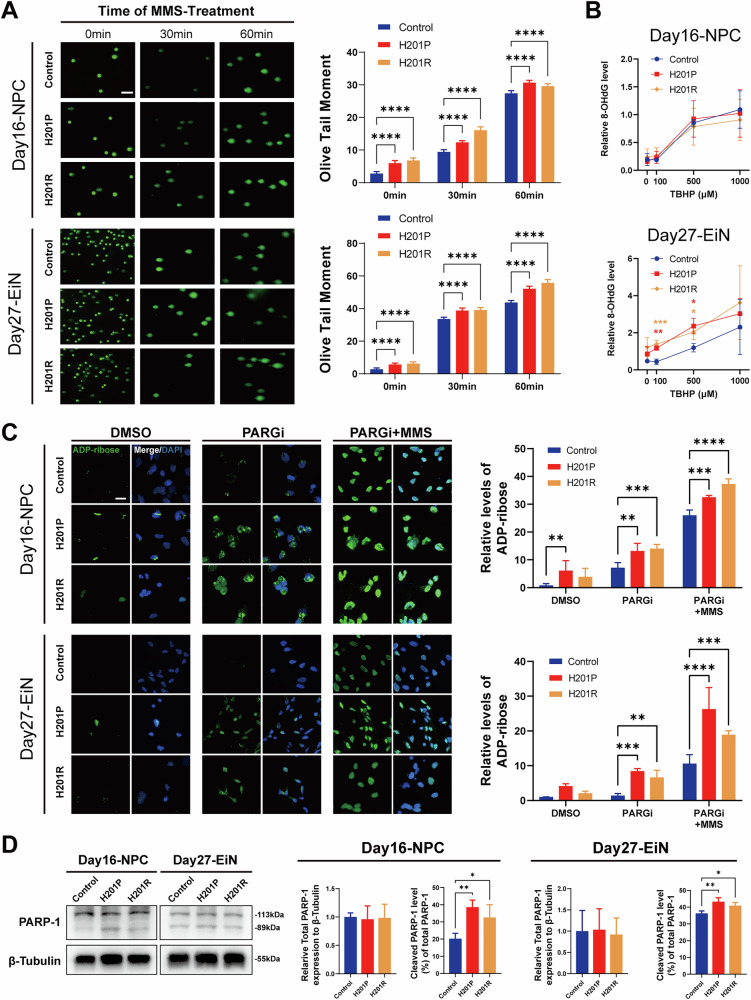 Figure 4
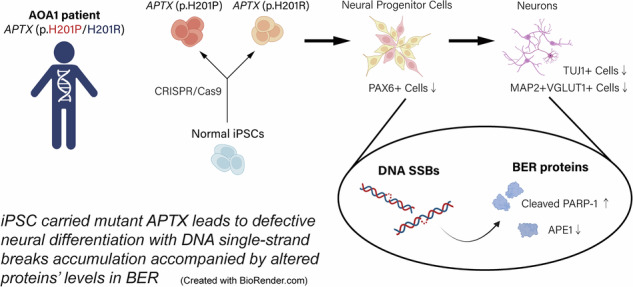 Figure 5
Peer Reviews
No public reviews on file for this paper yet. If you reviewed it on a platform where reviews are public (OpenReview, ICLR, NeurIPS, ICML), you can paste yours below so the community can read it here.
Videos
No videos yet. Explain this paper in a talk, walkthrough, or lecture? Add one.
Taxonomy
TopicsDNA Repair Mechanisms · Genetic Neurodegenerative Diseases · Microtubule and mitosis dynamics