HLA and pathogens in myalgic encephalomyelitis/chronic fatigue syndrome (ME/CFS) and other post-infection conditions
Apostolos P. Georgopoulos, Lisa M. James, Philip K. Peterson

TL;DR
This study explores how certain HLA genes influence the immune response to viruses linked to ME/CFS and similar chronic conditions.
Contribution
The study provides novel evidence linking HLA allele binding affinity to HHV, SARS-CoV-2, and Borrelia antigens with ME/CFS and related conditions.
Findings
Susceptibility HLA alleles showed significantly weaker binding to HHV antigens compared to protective alleles.
Susceptibility alleles also showed weak binding to SARS-CoV-2 and Borrelia proteins, while protective alleles showed strong binding.
The findings suggest that HLA immunogenetic makeup modulates the risk of ME/CFS and similar chronic diseases.
Abstract
Viral infections have been widely implicated in Myalgic Encephalomyelitis/Chronic Fatigue Syndrome (ME/CFS) pathogenesis. Recent evidence has also identified certain Human Leukocyte Antigen (HLA) alleles that are significantly associated with ME/CFS risk/protection. Here we tested the hypothesis that ME/CFS risk or protection conferred from those HLA alleles is associated with binding affinity to antigens of HHV viruses, a critical step in initiating the adaptive immune system response to foreign antigens. Specifically, we determined in silico the predicted binding affinity of two susceptibility alleles (C*07:04, DQB1*03:03) and two protective alleles (B*08:01, DPB1*02:01) to > 10,000 antigens of the 9 Human Herpes Viruses (HHV1, HHV2, HHV3, HHV4, HHV5, HHV6A, HHV6B, HHV7, HHV8) which have been implicated in the etiology of ME/CFS. We found that the binding affinity of all HHV antigens…
Genes, proteins, chemicals, diseases, species, mutations and cell lines named across the full text — each resolved to its canonical identifier and authoritative record.
Click any figure to enlarge with its caption.
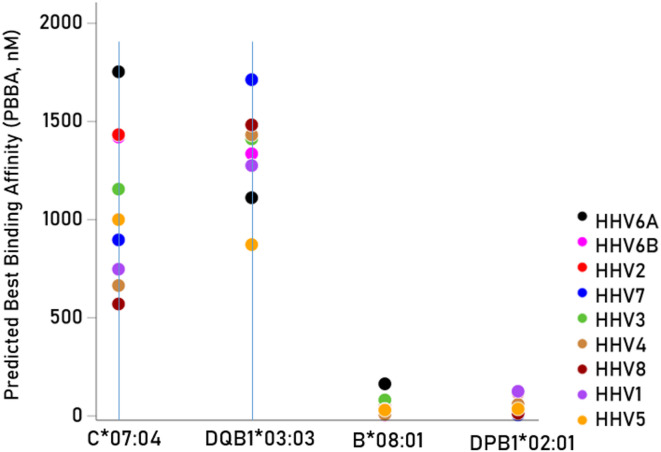 Figure 1
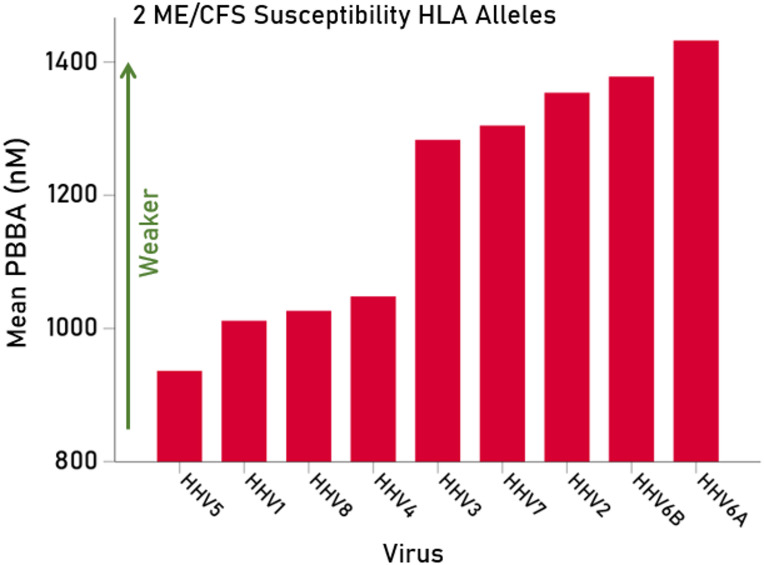 Figure 2
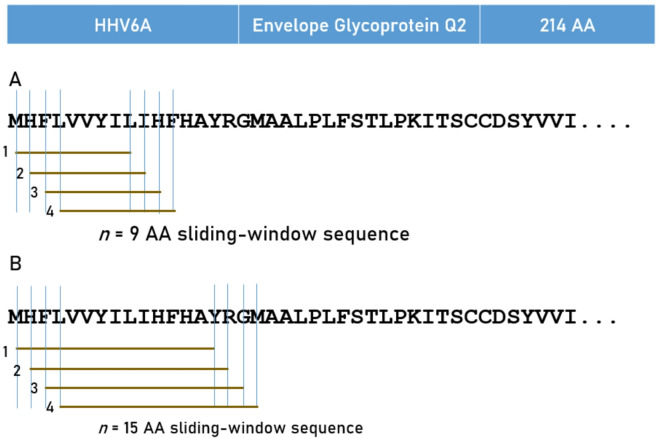 Figure 3
Peer Reviews
No public reviews on file for this paper yet. If you reviewed it on a platform where reviews are public (OpenReview, ICLR, NeurIPS, ICML), you can paste yours below so the community can read it here.
Videos
No videos yet. Explain this paper in a talk, walkthrough, or lecture? Add one.
Taxonomy
TopicsFibromyalgia and Chronic Fatigue Syndrome Research · Immune Cell Function and Interaction · Exercise and Physiological Responses