AI-based detection of neutrophil dysplasia: an accessible and sensitive model for MDS diagnosis from peripheral blood
Nicole H. Romano, Christian Ruiz, Pascal Schlaepfer, Stefan Balabanov, Stefan Habringer, Corinne C. Widmer

TL;DR
This paper introduces an AI model that can detect MDS from blood smear images, offering a faster and more accessible diagnostic tool.
Contribution
The novel contribution is an AI-based model for MDS diagnosis using peripheral blood neutrophil images, without requiring bone marrow analysis.
Findings
The AI model achieved 94% accuracy in classifying dysplastic neutrophils from MDS patients.
The model correctly identified 91 out of 94 patient samples with high sensitivity and specificity.
The model successfully detected non-prominent MDS cases with 95% accuracy.
Abstract
Myelodysplastic syndrome / neoplasm (MDS) presents a diagnostic challenge due to the need of expert morphological analysis, and the reliance on genomic analysis of collected bone marrow material for the definite diagnosis. This study aimed to facilitate this process by developing a computer vision AI-based model that is capable of diagnosing MDS from images from peripheral blood smears (PBS). We used a cohort of 43,371 neutrophils from 84 MDS and 60 non-MDS samples to train a neutrophil classifier to differentiate between dysplastic and non-dysplastic cells. The model was initially fed with PBS images from patients with prominent MDS (pMDS) and further refined to detect non-prominent MDS (npMDS), i.e., without clear-cut dysplastic features in their neutrophils. The model learning was only based on the single-cell annotation of the neutrophils from pMDS, without human-generated…
Genes, proteins, chemicals, diseases, species, mutations and cell lines named across the full text — each resolved to its canonical identifier and authoritative record.
Click any figure to enlarge with its caption.
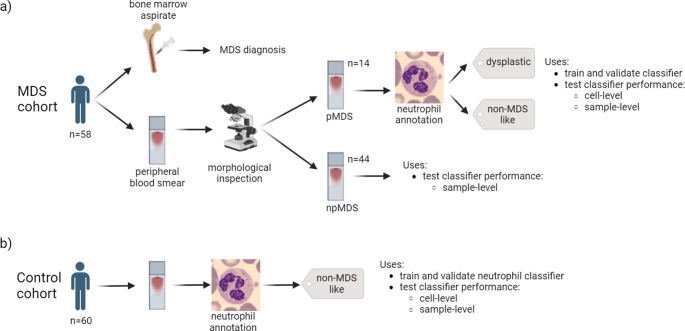 Figure 1
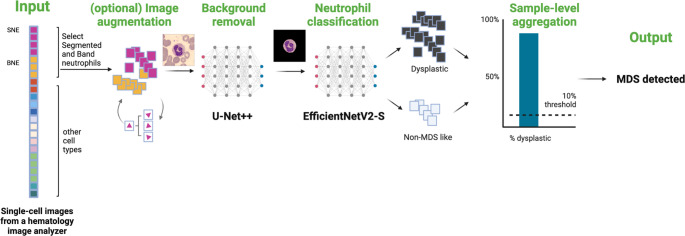 Figure 2
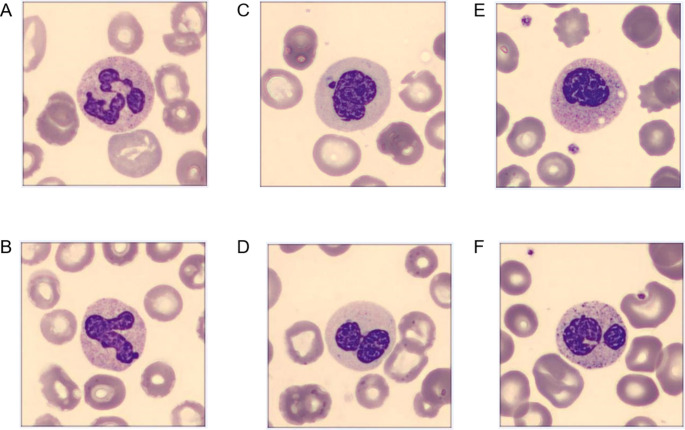 Figure 3
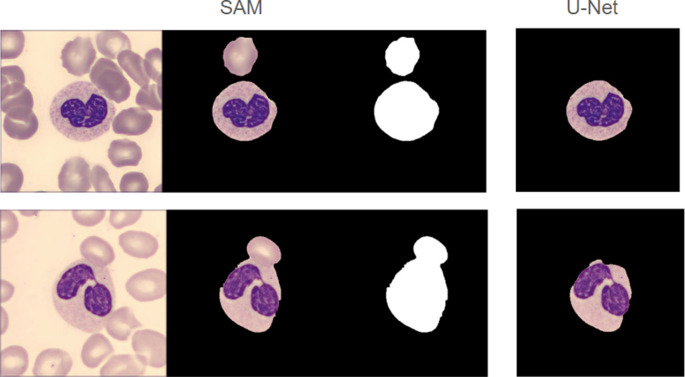 Figure 4
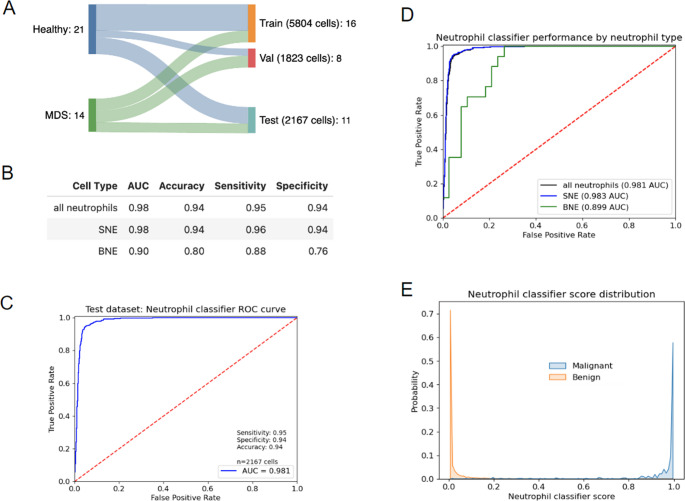 Figure 5
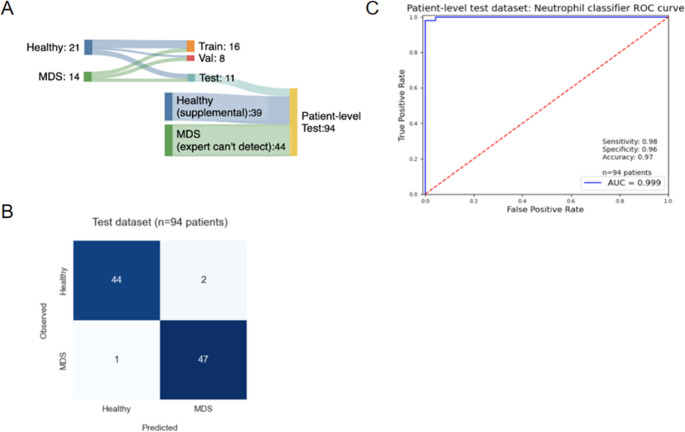 Figure 6
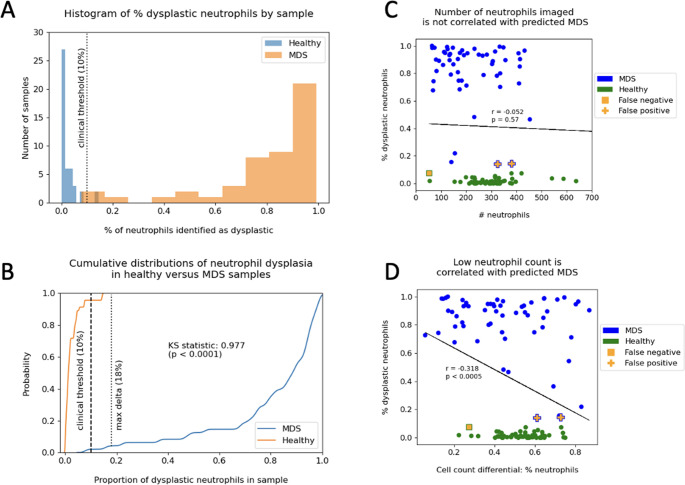 Figure 7
Peer Reviews
No public reviews on file for this paper yet. If you reviewed it on a platform where reviews are public (OpenReview, ICLR, NeurIPS, ICML), you can paste yours below so the community can read it here.
Videos
No videos yet. Explain this paper in a talk, walkthrough, or lecture? Add one.
Taxonomy
TopicsBlood disorders and treatments · Neutrophil, Myeloperoxidase and Oxidative Mechanisms · Hematological disorders and diagnostics