Comprehensive analysis of the clinical feature, myeloid neoplasm-related gene mutation profiles and T cell diversity acquired pure red cell aplasia
Yuemin Gong, Xingxing Chai, Xiaoqing Liu, Yawen Zhang, Yue Li, Yunlong Li, Jianping Hao, Guangsheng He

TL;DR
This study analyzes clinical features, gene mutations, and T cell diversity in pure red cell aplasia to better understand its causes and treatment responses.
Contribution
The study provides a comprehensive analysis of gene mutations and TCR profiles in a large PRCA cohort, identifying key factors associated with treatment response.
Findings
DNMT3A, KMT2A, and TP53 are the top mutated genes in acquired PRCA patients over 40 years old.
TRBV6_TRBJ2 is the most frequent dominant clonotype in LGLL-associated PRCA patients.
CsA response in PRCA is influenced by β2-MG and MF dysregulation, not by gene mutations or TCR clone numbers.
Abstract
Acquired pure red cell aplasia (PRCA) is a kind of rare bone marrow failure disease characterized by destruction of erythrocyte by the immune system. However, the diverse etiologies of acquired PRCA make its pathogenesis largely unclear. We portrayed the clinicopathologic, mutation and TCR rearrangement profiles of 64 primary PRCA cases and 104 large granular lymphocytic leukemia (LGLL)-associated PRCA, and tried to reveal the association factors of CsA response. We found that gene mutations were detected in 39.7% of acquired PRCA who were older than 40 years, with DNMT3A, KMT2A and TP53 being the top 3 mutation genes. KMT2A mutation was only detected in patients with normal reticulocyte (Ret)%, while IDH1 mutation only occurred in patients with normal CD3 + CD8+/Lym%. For LGLL-associated PRCA patients, TRBV6_TRBJ2 was the most frequent dominant clonotype and the proportion of each…
Genes, proteins, chemicals, diseases, species, mutations and cell lines named across the full text — each resolved to its canonical identifier and authoritative record.
Click any figure to enlarge with its caption.
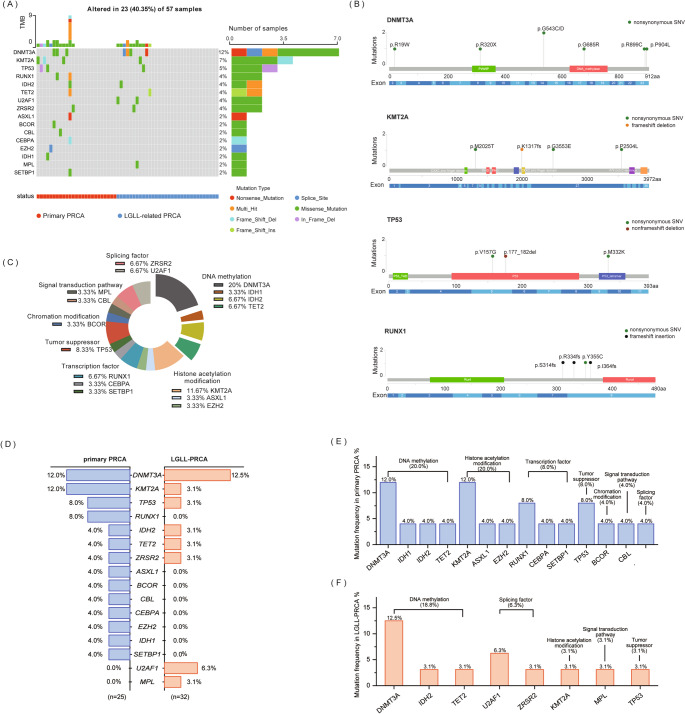 Figure 1
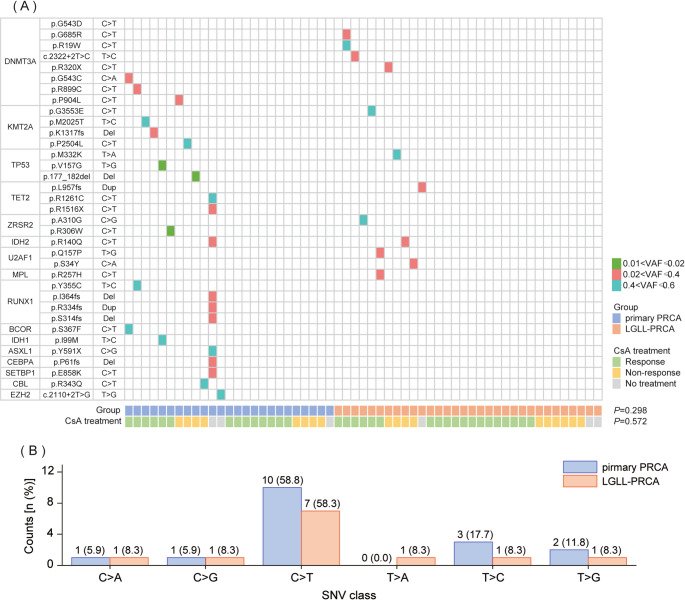 Figure 2
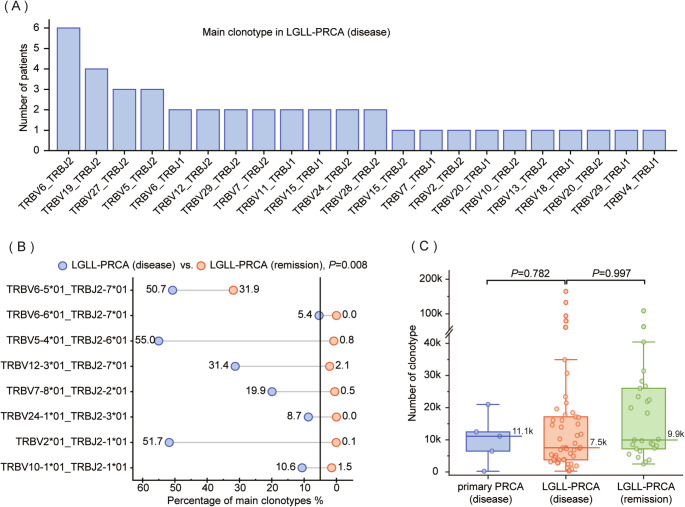 Figure 3
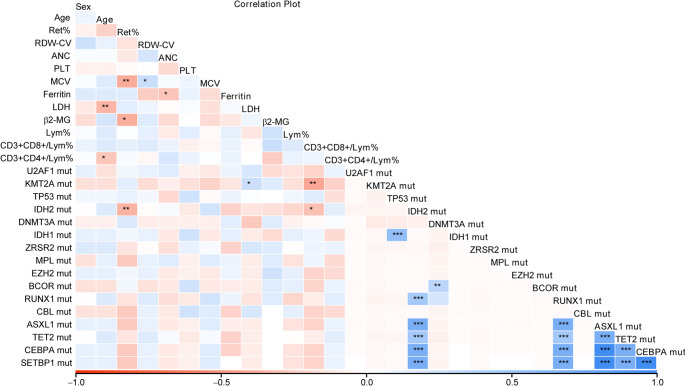 Figure 4
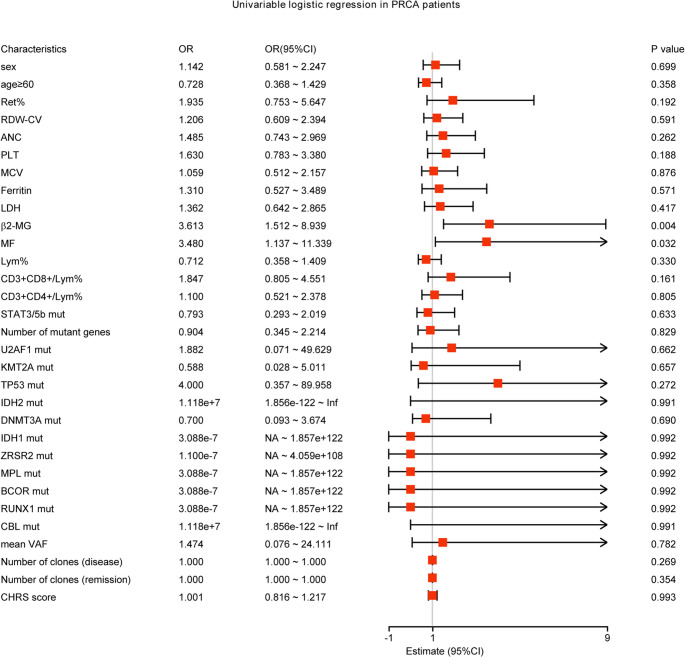 Figure 5
Peer Reviews
No public reviews on file for this paper yet. If you reviewed it on a platform where reviews are public (OpenReview, ICLR, NeurIPS, ICML), you can paste yours below so the community can read it here.
Videos
No videos yet. Explain this paper in a talk, walkthrough, or lecture? Add one.
Taxonomy
TopicsAcute Myeloid Leukemia Research · Immunodeficiency and Autoimmune Disorders · Chronic Lymphocytic Leukemia Research