In-vivo Assessment of the Proximal Branches of the Anterior Cerebral Artery Using Rotational Angiography
Maximilian Rauch, Joachim Berkefeld, Janine Mokbel, Thomas Deller, Elke Hattingen, Stefan Weidauer

TL;DR
This study uses 3D imaging to examine the anatomy of the anterior cerebral artery's branches, revealing variations that could impact surgical and endovascular procedures.
Contribution
The study provides new in-vivo data on the anatomical variations of the recurrent artery of Heubner and medial lenticulostriate arteries using 3D rotational angiography.
Findings
The RAH was present in 72% of hemispheres, with most originating from the A1/A2 transition.
A weak negative correlation was found between the number of RAH and the presence of additional MLSAs.
The study highlights the importance of 3D-RA for visualizing ACA anatomy to avoid procedural complications.
Abstract
The anatomy of the proximal anterior cerebral artery (ACA) and its branches, including the recurrent artery of Heubner (RAH) and medial lenticulostriate arteries (MLSAs), is known for frequent variations. Impairment of these branches can result in severe consequences, including neurological deficits or cognitive impairment. This study aimed to analyze these branches and their variations in vivo, using data from 3D rotational angiographies (3D-RA). We reviewed 3D-RAs of 209 hemispheres from 191 patients with pathologies remote from the region of interest. The presence, origin and course of the RAH were investigated. Delineation, origin and number of perforator vessels originating from the A1 segment (MLSAs) were assessed. The RAH was observed in 151 hemispheres (72%), including a single RAH in 144 (69%) and a doubled RAH in 7 (3%) hemispheres. In 37% of cases, the RAH originated from…
Genes, proteins, chemicals, diseases, species, mutations and cell lines named across the full text — each resolved to its canonical identifier and authoritative record.
Click any figure to enlarge with its caption.
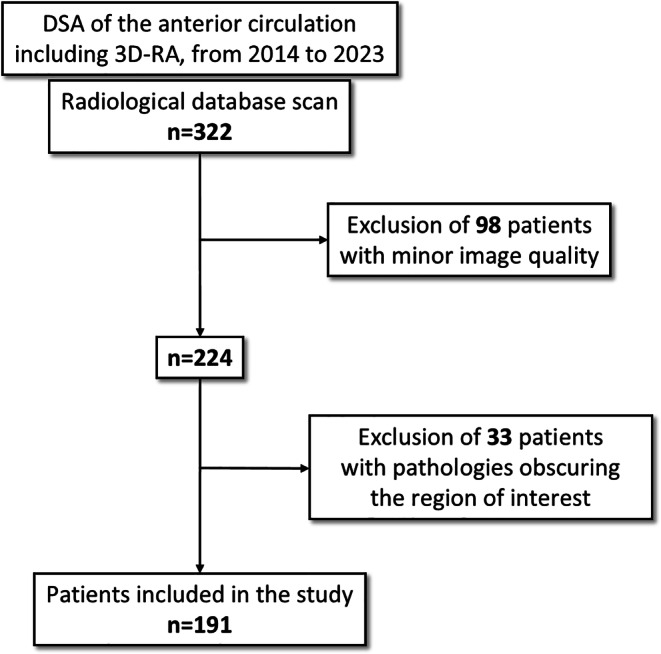 Figure 1
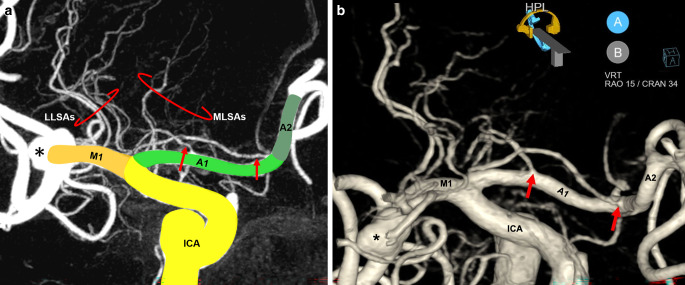 Figure 2
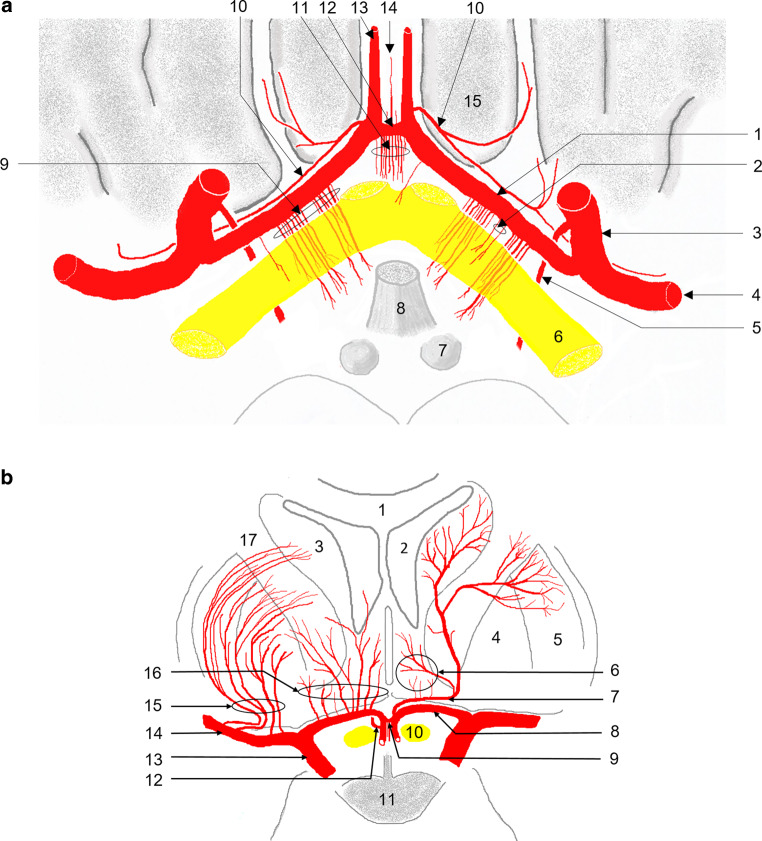 Figure 3
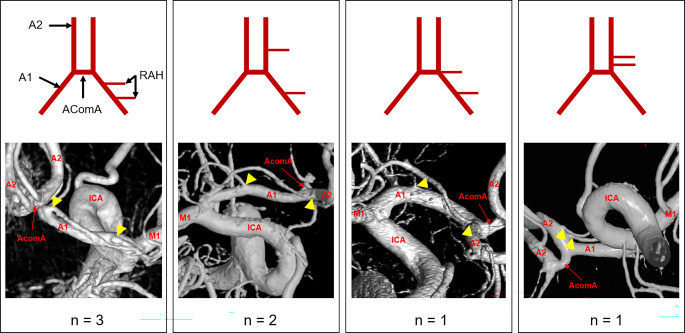 Figure 4
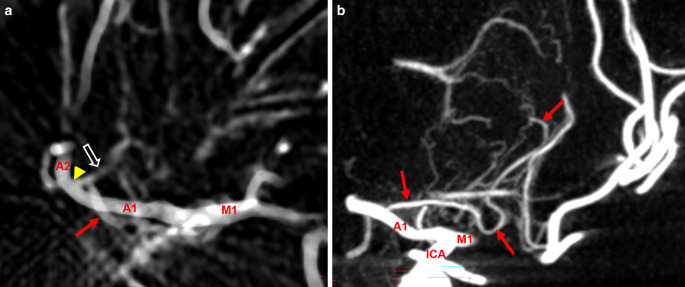 Figure 5
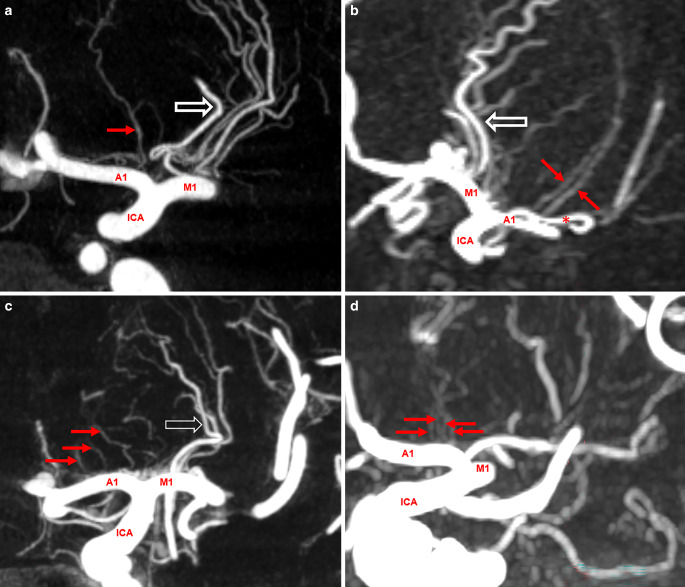 Figure 6
Peer Reviews
No public reviews on file for this paper yet. If you reviewed it on a platform where reviews are public (OpenReview, ICLR, NeurIPS, ICML), you can paste yours below so the community can read it here.
Videos
No videos yet. Explain this paper in a talk, walkthrough, or lecture? Add one.
Taxonomy
TopicsIntracranial Aneurysms: Treatment and Complications · Cerebrovascular and Carotid Artery Diseases · Moyamoya disease diagnosis and treatment