An Italian real-world multicenter study of patients with refractory/relapsed functional high-risk multiple myeloma patients treated with second-line therapies
Danilo De Novellis, Salvatore Palmieri, Stefano Rocco, Daniele Derudas, Roberta Della Pepa, Daniela Roccotelli, Daniela Esposito, Chiara Masucci, Emilia Gigliotta, Maria Lucia Barone, Emanuela Morelli, Antonio Lazzaro, Rosario Bianco, Fabrizio Accardi, Luana Marano

TL;DR
This study examines outcomes of second-line therapies for high-risk multiple myeloma patients in Italy, finding suboptimal results and highlighting the need for better treatment strategies.
Contribution
The study provides real-world data on second-line therapies for refractory/relapsed functional high-risk multiple myeloma in a multicenter Italian cohort.
Findings
61% overall response rate with 42% achieving very good partial response or better.
Median progression-free survival was not reached, with a 12-month PFS rate of 54%.
Carfilzomib-based regimens showed some benefits, but outcomes remained suboptimal.
Abstract
Functional high risk multiple myeloma (FHRMM) remains a challenging entity with poor outcomes and limited survival, and there is no international consensus on optimal second-line therapeutic strategies in relapsed/refractory patients. In this multicenter real-world retrospective study, we investigated clinical characteristics and outcomes of a total of 62 FHRMM patients previously treated with a first-line daratumumab-based quadruplet regimen or who relapsed within 12 months after frontline autologous stem cell transplantation (ASCT). In our cohort, the overall response rate was 61%, with 42% of patients achieving a very good partial response (VGPR) or better. Similarly, median progression-free survival (PFS) was not reached with an estimated 12-month PFS rate of 54%, as well as median overall survival (OS) with a 12-month OS rate of 72%. Factors associated with worse PFS included…
Genes, proteins, chemicals, diseases, species, mutations and cell lines named across the full text — each resolved to its canonical identifier and authoritative record.
Click any figure to enlarge with its caption.
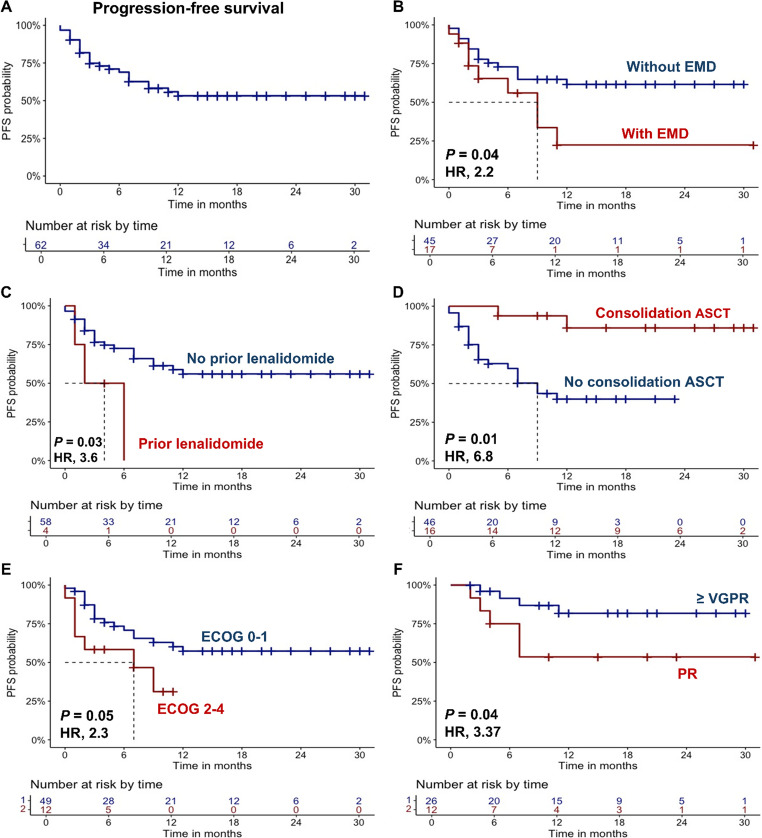 Figure 1
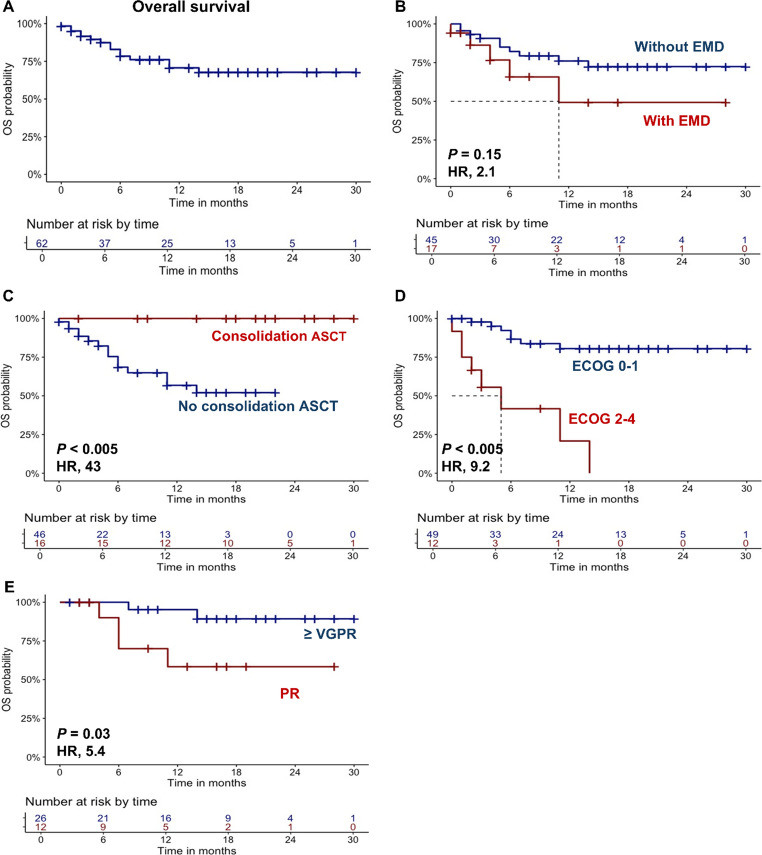 Figure 2
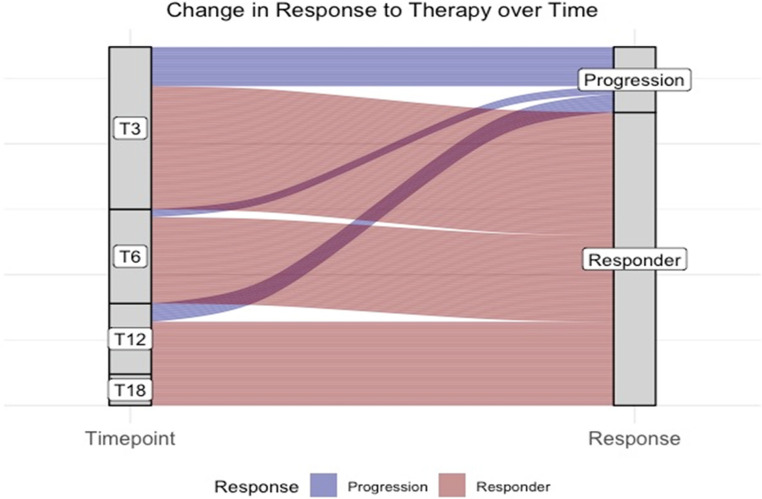 Figure 3
Peer Reviews
No public reviews on file for this paper yet. If you reviewed it on a platform where reviews are public (OpenReview, ICLR, NeurIPS, ICML), you can paste yours below so the community can read it here.
Videos
No videos yet. Explain this paper in a talk, walkthrough, or lecture? Add one.
Taxonomy
TopicsMultiple Myeloma Research and Treatments · Protein Degradation and Inhibitors · Cancer Treatment and Pharmacology