Potential repurposing of lapatinib and pazopanib as neuroprotective agents in a rat model of Huntington’s disease
Nada Ezeldine-Elmahalawy, Noha F. Abdelkader, Hala F. Zaki, Amany I. Elbrairy, Sameh S. Gad

TL;DR
This study explores how cancer drugs lapatinib and pazopanib may protect brain cells in a rat model of Huntington’s disease, showing promising results for future treatments.
Contribution
The novel contribution is evaluating lapatinib and pazopanib as potential neuroprotective agents in Huntington’s disease for the first time.
Findings
Lapatinib and pazopanib improved striatal architecture, neuronal survival, and reduced neuroinflammation in HD rats.
Both drugs modulated key signaling pathways like m-Tor/ULK-1/Beclin-1/LC3-II and reduced NF-κB and TNF-α gene expression.
Treatment normalized neurotransmitter levels and showed improved motor and cognitive function in HD rats.
Abstract
The neuroprotective potential of tyrosine kinase inhibitors (TKIs), potent anticancer drugs, was verified against various neurodegenerative insults, but not Huntington’s disease (HD). These promising outcomes were due to their ability to modulate various intracellular signalling pathways. Hence, the current study aimed to evaluate the neuroprotective effects of lapatinib and pazopanib in the 3-nitropropionic (3-NP)-induced HD model in rats. After 14 days of 3-NP administration, rats received saline, lapatinib, or pazopanib for 21 days. Treatment with lapatinib or pazopanib improved the striatal microscopic architecture, neuronal survival, and neuroinflammatory responses, with a pronounced effect observed for pazopanib. At the molecular level, lapatinib and pazopanib reduced the striatal gene expression of NF-κB and TNF-α receptors, curbed the glutamate/calpain-2 axis, and modified the…
Genes, proteins, chemicals, diseases, species, mutations and cell lines named across the full text — each resolved to its canonical identifier and authoritative record.
Click any figure to enlarge with its caption.
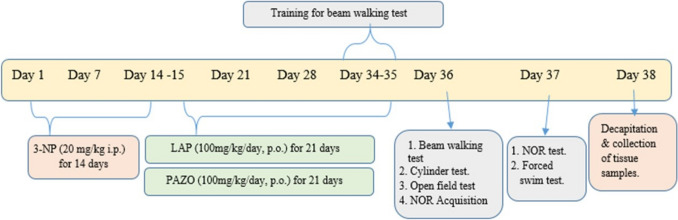 Figure 1
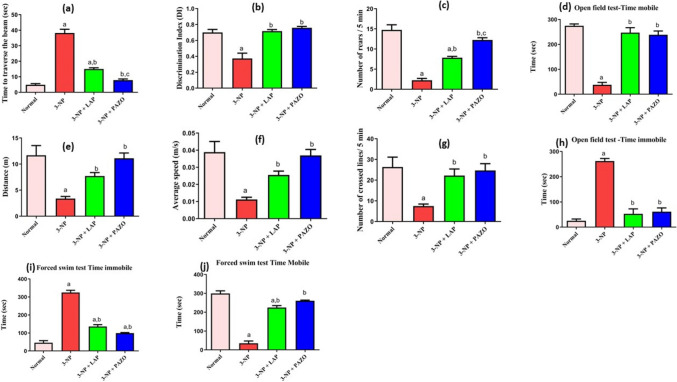 Figure 2
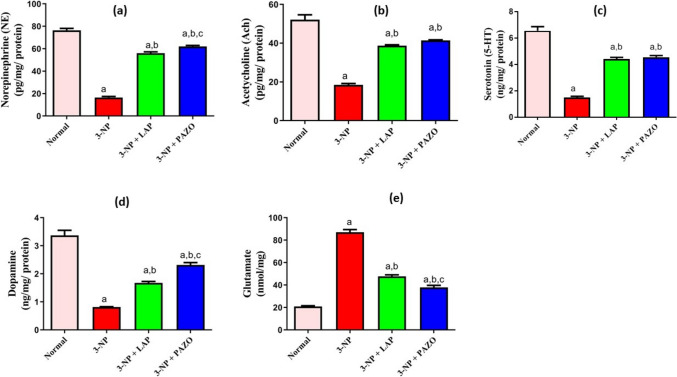 Figure 3
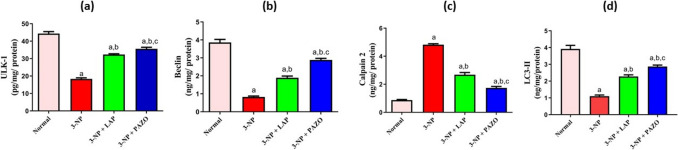 Figure 4
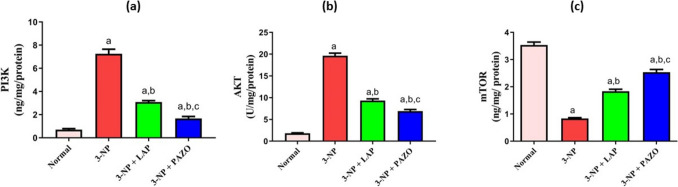 Figure 5
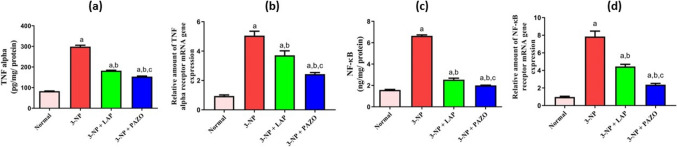 Figure 6
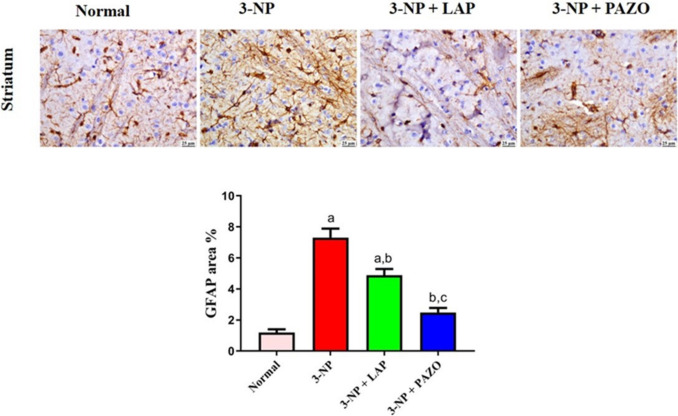 Figure 7
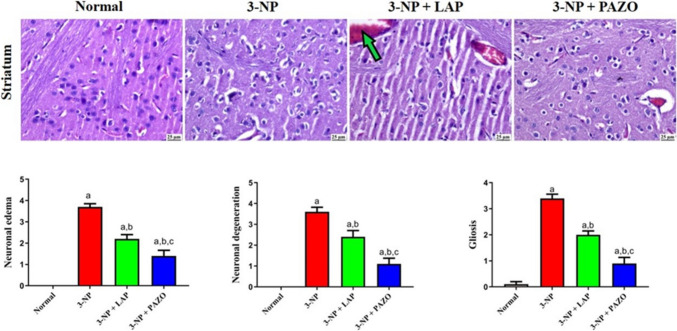 Figure 8
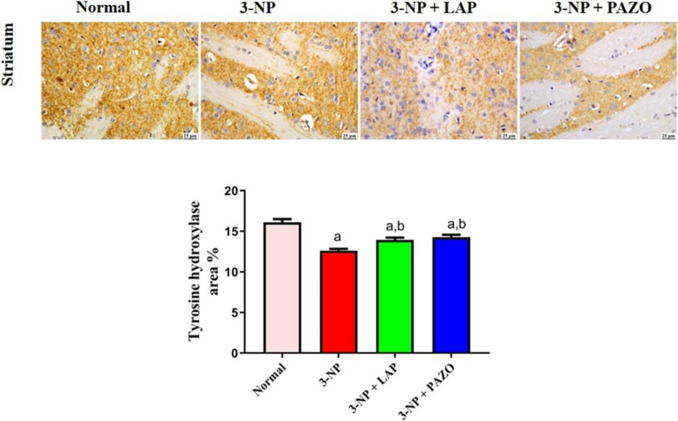 Figure 9
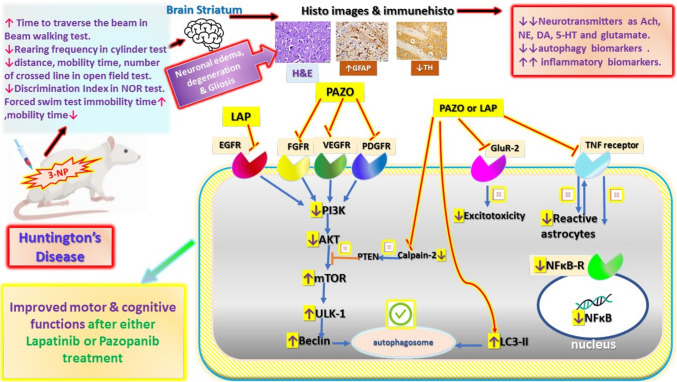 Figure 10
Peer Reviews
No public reviews on file for this paper yet. If you reviewed it on a platform where reviews are public (OpenReview, ICLR, NeurIPS, ICML), you can paste yours below so the community can read it here.
Videos
No videos yet. Explain this paper in a talk, walkthrough, or lecture? Add one.
Taxonomy
TopicsGenetic Neurodegenerative Diseases · Autophagy in Disease and Therapy · Sirtuins and Resveratrol in Medicine