Comparison of prognostication by IPSS-M, IPSS-R and AIPSS-MDS in the context of limited availability of molecular data in daily clinical practice
Felicitas Schulz, Carolin Kellersmann, Beate Betz, Barbara Hildebrandt, Annika Kasprzak, Corinna Strupp, Felicitas Thol, Michael Heuser, Christina Ganster, Fabian Beier, Katja Sockel, Wolf-Karsten Hofmann, Andrea Kuendgen, Paul Jaeger, Michael Pfeilstoecker, Michael Lauseker

TL;DR
This study compares three tools for predicting survival in MDS patients, finding that molecular data improves accuracy but is often unavailable in practice.
Contribution
The study evaluates the practicality of three MDS prognostication tools when molecular data is limited.
Findings
All three tools reliably predicted median overall survival in a small patient cohort.
IPSS-M provided the most accurate median OS predictions.
IPSS-R remains the most widely applicable due to limited molecular data availability.
Abstract
The IPSS-M was developed to revolutionize the prediction of MDS patients’ survival by incorporating molecular data. To compensate for lack of access to molecular analyses, the AIPSS-MDS, a supervised machine learning algorithm exclusively based on clinical and cytogenetic data, was developed by the Spanish MDS Group. We used data of the Düsseldorf MDS Registry and included 207 of more than 8500 registry patients whose IPSS-M-requested complete molecular data were known to compare and validate prognostication regarding OS and LFS of the IPSS-M, IPSS-R and AIPSS-MDS. All three tools reliably prognosticated median OS of patients even in a comparatively small patient cohort. The IPSS-M provided the most accurate prediction of median OS while the frequent lack of molecular data persists as an obstacle in daily clinical practice. Due to these circumstances, the IPSS-R remains the…
Genes, proteins, chemicals, diseases, species, mutations and cell lines named across the full text — each resolved to its canonical identifier and authoritative record.
Click any figure to enlarge with its caption.
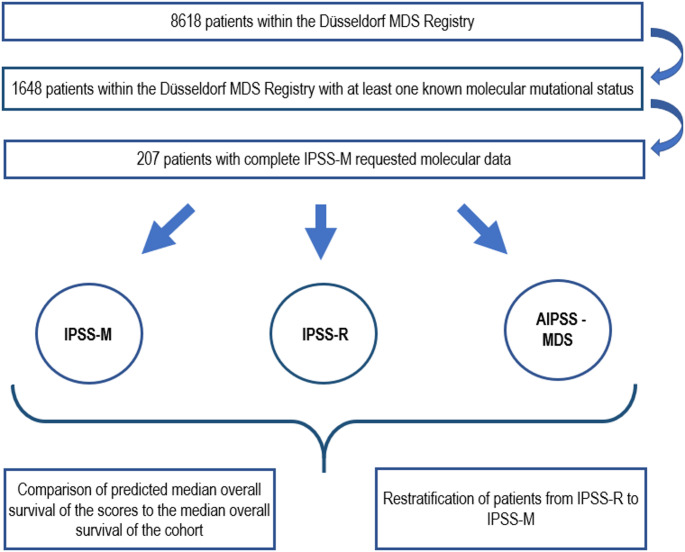 Figure 1
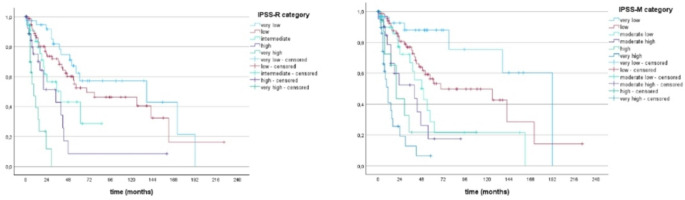 Figure 2
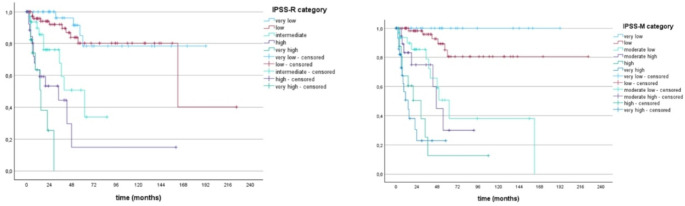 Figure 3
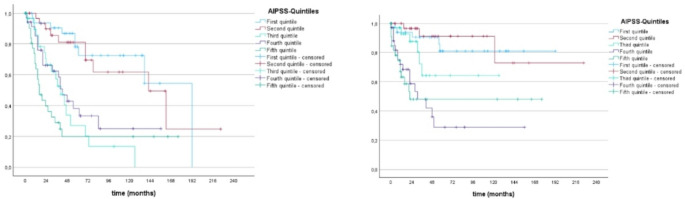 Figure 4
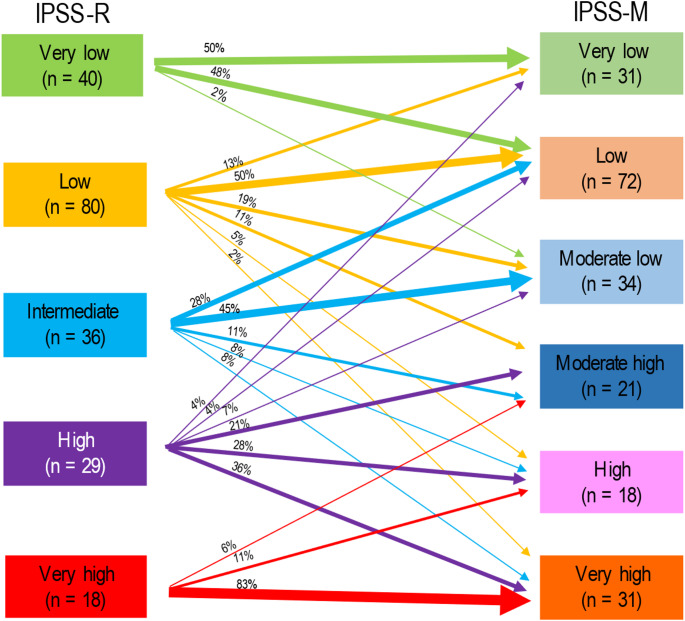 Figure 5
Peer Reviews
No public reviews on file for this paper yet. If you reviewed it on a platform where reviews are public (OpenReview, ICLR, NeurIPS, ICML), you can paste yours below so the community can read it here.
Videos
No videos yet. Explain this paper in a talk, walkthrough, or lecture? Add one.
Taxonomy
TopicsAcute Myeloid Leukemia Research · Acute Lymphoblastic Leukemia research · Cancer Genomics and Diagnostics