InterVelo: a mutually enhancing model for estimating pseudotime and RNA velocity in multi-omic single-cell data
Yurou Wang, Zhixiang Lin, Tao Wang

TL;DR
InterVelo is a new deep learning method that improves the estimation of pseudotime and RNA velocity in single-cell data by integrating them in a mutually enhancing way.
Contribution
InterVelo introduces a novel framework that simultaneously learns pseudotime and RNA velocity, enhancing accuracy and robustness.
Findings
InterVelo outperforms existing methods in recovering pseudotime and RNA velocity across diverse datasets.
The model provides more accurate velocity estimations in terms of direction and magnitude.
InterVelo successfully identifies driver genes and supports gene activity enrichment analysis.
Abstract
RNA velocity has become a powerful tool for uncovering transcriptional dynamics in snapshot single-cell data. However, current RNA velocity approaches often assume constant transcriptional rates and treat genes independently with gene-specific times, which may introduce biases and deviate from biological realities. Here, we present InterVelo, a novel deep learning framework that simultaneously learns cellular pseudotime and RNA velocity. InterVelo leverages an unsupervised cellular time to guide RNA velocity estimation, while the estimated RNA velocity in turn refines the direction of pseudotime. By benchmarking InterVelo against existing methods on both simulated and real datasets, we demonstrate its superior performance in recovering pseudotime and RNA velocity. InterVelo yields more precise velocity estimations in terms of both direction and magnitude, with outstanding robustness…
Genes, proteins, chemicals, diseases, species, mutations and cell lines named across the full text — each resolved to its canonical identifier and authoritative record.
Click any figure to enlarge with its caption.
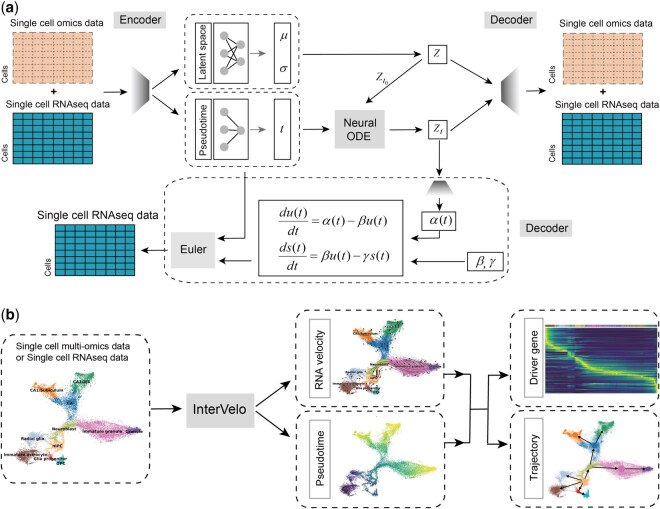 Figure 1
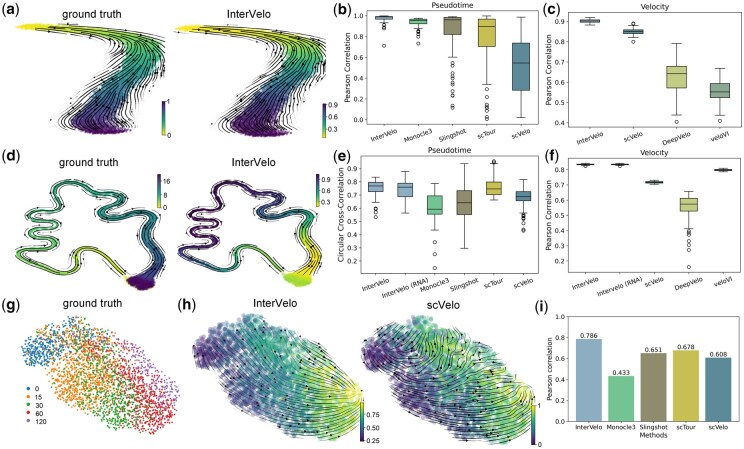 Figure 2
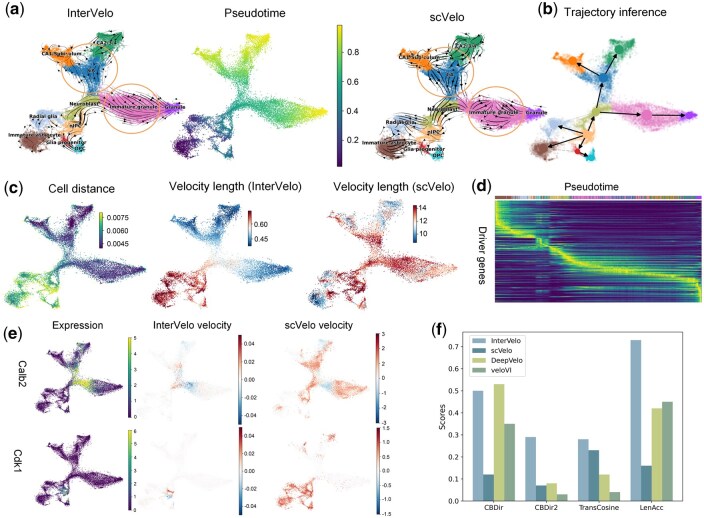 Figure 3
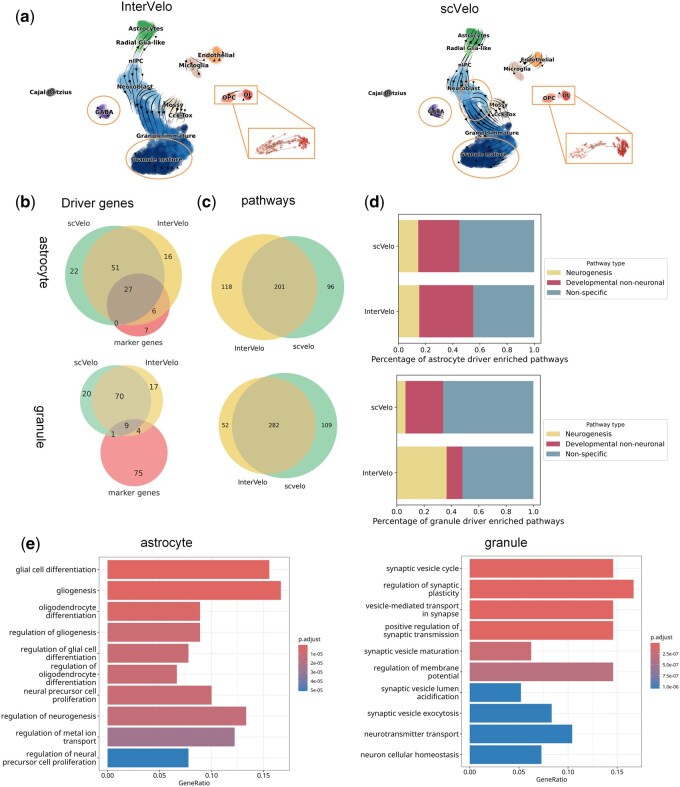 Figure 4
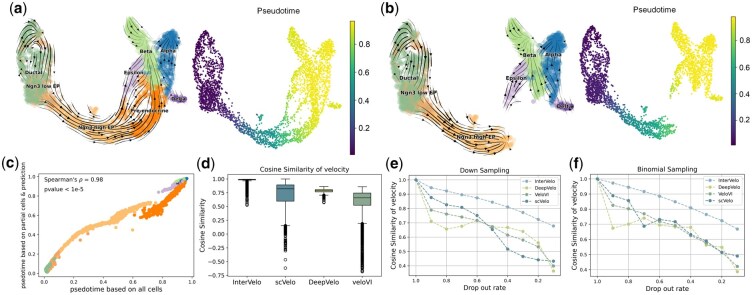 Figure 5
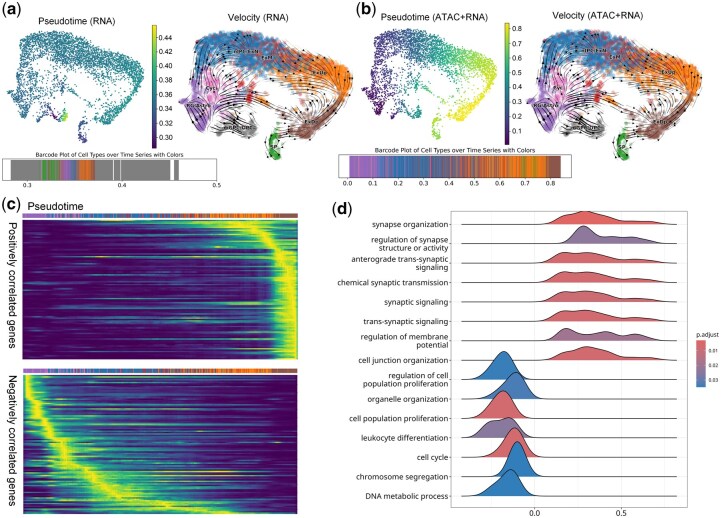 Figure 6
Peer Reviews
No public reviews on file for this paper yet. If you reviewed it on a platform where reviews are public (OpenReview, ICLR, NeurIPS, ICML), you can paste yours below so the community can read it here.
Videos
No videos yet. Explain this paper in a talk, walkthrough, or lecture? Add one.
Taxonomy
TopicsSingle-cell and spatial transcriptomics · Cancer-related molecular mechanisms research · RNA modifications and cancer