Identifying Pediatric Long COVID: Comparing an EHR Algorithm to Manual Review
Morgan Botdorf, Kimberley Dickinson, Vitaly Lorman, Hanieh Razzaghi, Nicole Marchesani, Suchitra Rao, Colin Rogerson, Miranda Higginbotham, Asuncion Mejias, Daria Salyakina, Deepika Thacker, Dima Dandachi, Dimitri A. Christakis, Emily Taylor, Hayden T. Schwenk, Hiroki Morizono

TL;DR
The study develops and evaluates a tool to identify long COVID in children using electronic health records, comparing it to manual reviews by clinicians.
Contribution
A pediatric-specific rule-based computable phenotype for long COVID is introduced and validated against manual chart review.
Findings
The computable phenotype showed moderate agreement with manual chart review (accuracy = 0.62).
Discrepancies often arose when clinicians attributed symptoms to preexisting conditions.
Model performance improved when preexisting conditions were accounted for (accuracy = 0.71).
Abstract
Long COVID, characterized by persistent or recurring symptoms post-COVID-19 infection, poses challenges for pediatric care and research due to the lack of a standardized clinical definition. Adult-focused phenotypes do not translate well to children, given developmental and physiological differences, and pediatric-specific phenotypes have not been compared with chart review. This study introduces and evaluates a pediatric-specific rule-based computable phenotype (CP) to identify long COVID using electronic health record data. We compare its performance to manual chart review. We applied the CP, composed of diagnostic codes empirically associated with long COVID, to 339,467 pediatric patients with SARS-CoV-2 infection in the RECOVER PCORnet EHR database. The CP identified 31,781 patients with long COVID. Clinicians conducted chart reviews on a subset of patients across 16 hospital…
Genes, proteins, chemicals, diseases, species, mutations and cell lines named across the full text — each resolved to its canonical identifier and authoritative record.
Click any figure to enlarge with its caption.
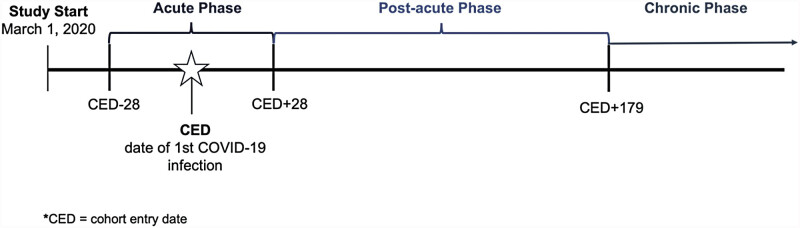 Figure 1
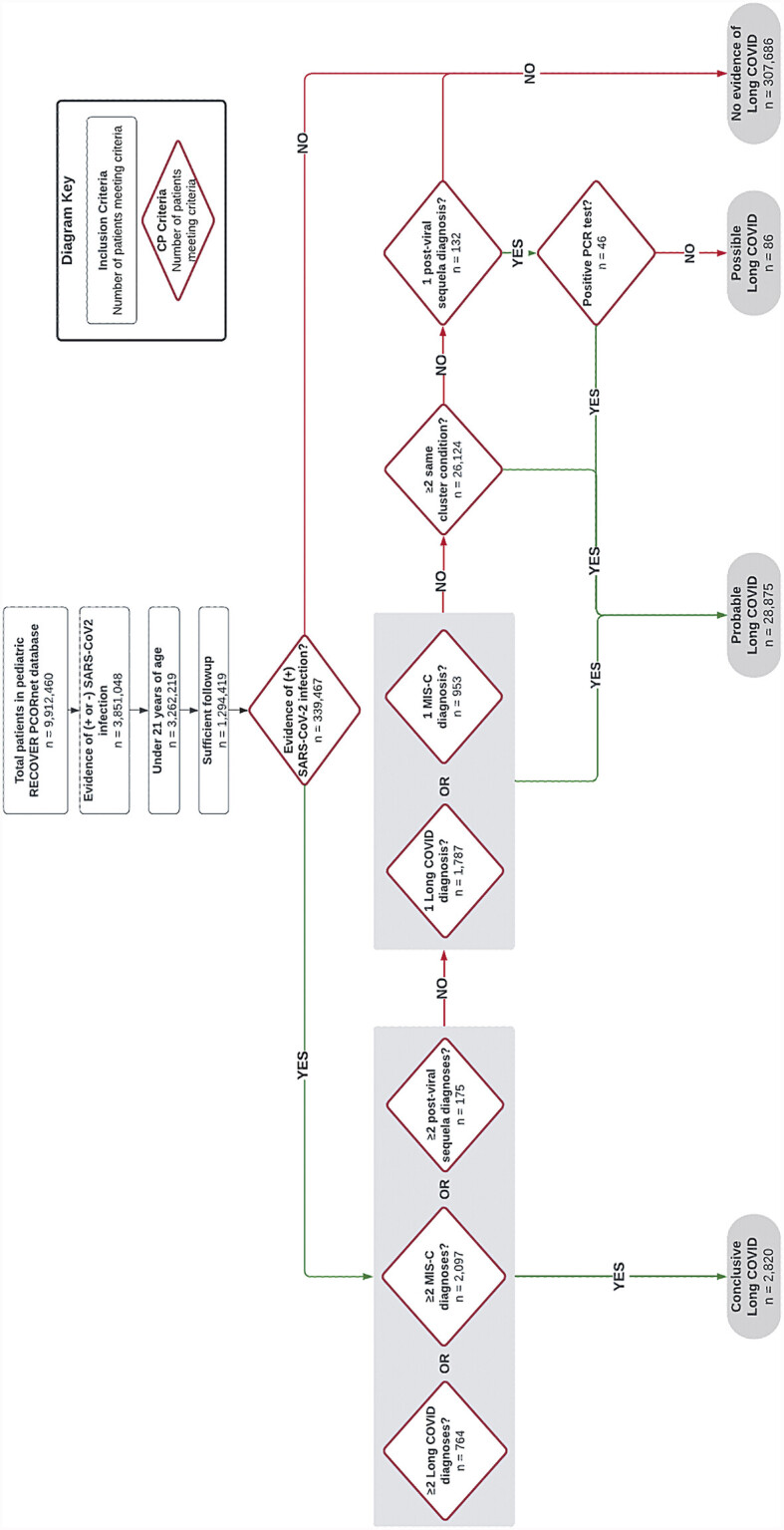 Figure 2
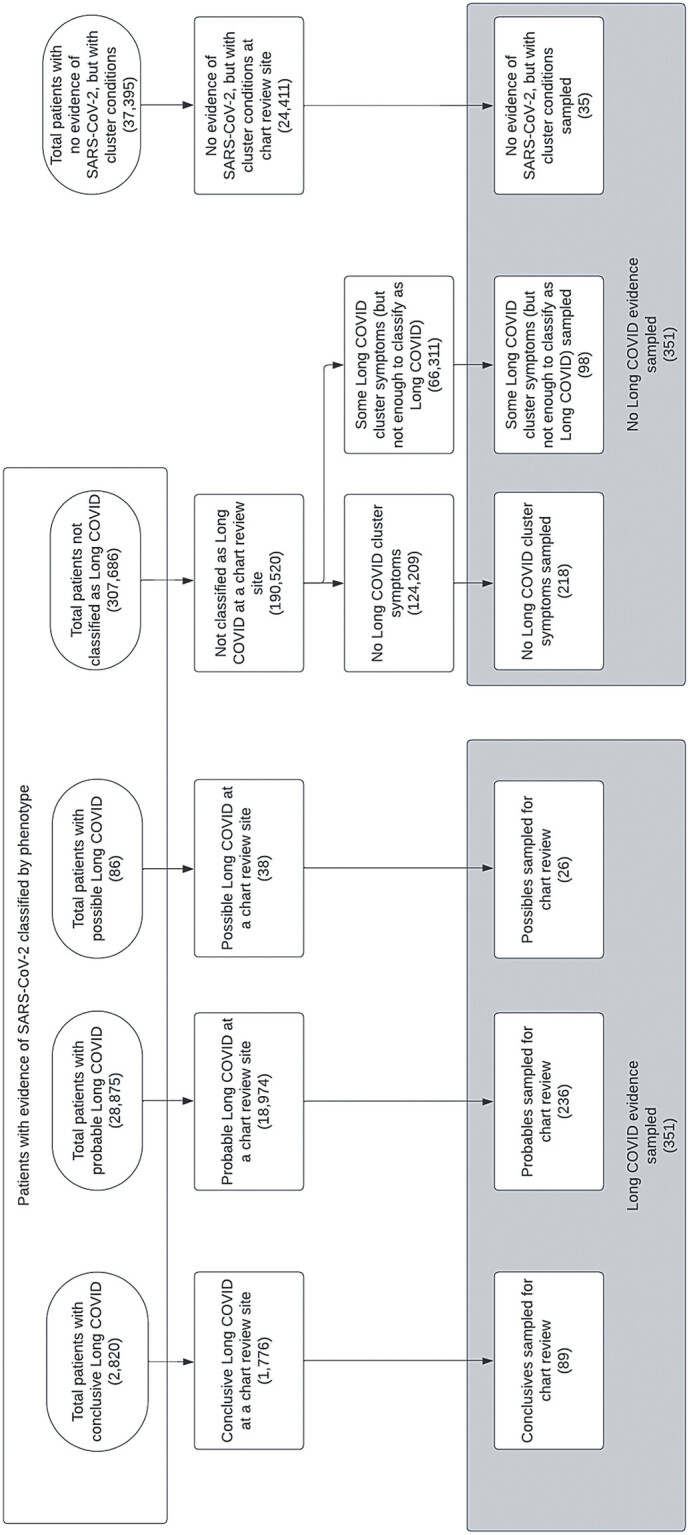 Figure 3
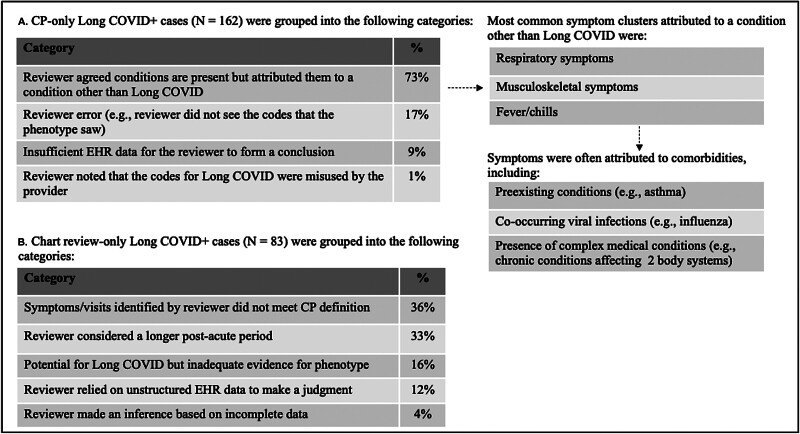 Figure 4
Peer Reviews
No public reviews on file for this paper yet. If you reviewed it on a platform where reviews are public (OpenReview, ICLR, NeurIPS, ICML), you can paste yours below so the community can read it here.
Videos
No videos yet. Explain this paper in a talk, walkthrough, or lecture? Add one.
Taxonomy
TopicsLong-Term Effects of COVID-19 · Intensive Care Unit Cognitive Disorders · Respiratory Support and Mechanisms