Biological mediators involved in tooth resorption following avulsion and delayed replantation: an experimental in vivo study
Léa Assed Bezerra da Silva, Daniele Lucca Longo, Fernanda Maria Machado Pereira Cabral de Oliveira, Júlia Ingryd Targino de Sousa, Kelly Fernanda Molena, Raquel Assed Bezerra da Silva, João Vicente Barbizam, Nestor Cohenca, Maya Fernanda Manfirin Arnez, Marilia Pacifico Lucisano

TL;DR
This study explores how tooth resorption occurs after tooth avulsion and delayed replantation in dogs, focusing on biological mediators involved in the process.
Contribution
The study identifies specific biological mediators and their roles in inflammatory and replacement resorption following delayed replantation of avulsed teeth.
Findings
TRAP+ osteoclasts were observed in inflammatory resorption regardless of extra-alveolar time.
RANKL synthesis was more intense after 90 minutes of dry storage compared to shorter durations.
Replacement resorption showed higher alkaline phosphatase and reduced periostin synthesis.
Abstract
This study aimed to investigate the biological mediators involved in tooth resorption following permanent tooth avulsion and late replantation at various periods. Premolars of healthy dogs were extracted and divided into: Control Group (CG): negative control, sound teeth (n= 5 teeth / 10 roots); or kept dry and replanted after 20 min (G20): the teeth were replanted after 20 minutes of extraoral time in a dry environment (n= 5 teeth / 10 roots); 60 min (G60): the teeth were replanted after 60 minutes of extraoral time in a dry environment (n= 5); or 90 min (G90): the teeth were replanted after 90 minutes of extraoral time in a dry environment (n= 5 teeth / 10 roots). After this, the teeth were replanted and splinted with 0.4 mm nickel-titanium (Ni-Ti) archwire. After 120 days, the animals were sacrificed, and the tissues were removed for histological processing. The slides were stained…
Genes, proteins, chemicals, diseases, species, mutations and cell lines named across the full text — each resolved to its canonical identifier and authoritative record.
Click any figure to enlarge with its caption.
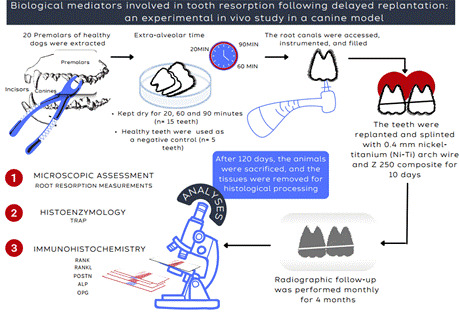 Figure 1
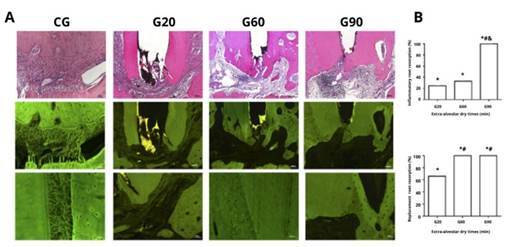 Figure 2
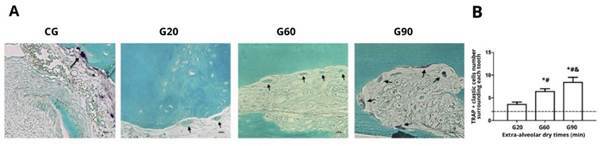 Figure 3
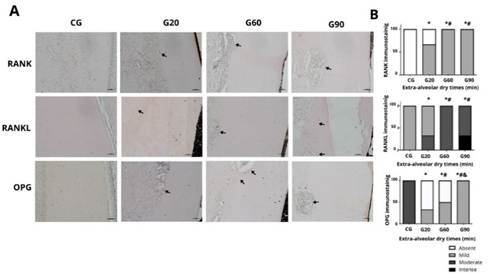 Figure 4
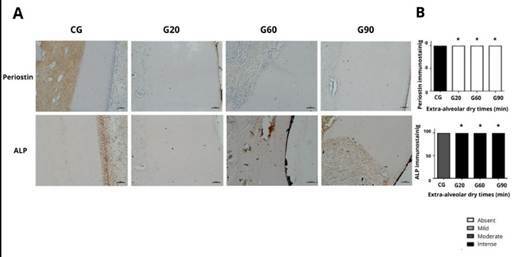 Figure 5
Peer Reviews
No public reviews on file for this paper yet. If you reviewed it on a platform where reviews are public (OpenReview, ICLR, NeurIPS, ICML), you can paste yours below so the community can read it here.
Videos
No videos yet. Explain this paper in a talk, walkthrough, or lecture? Add one.
Taxonomy
TopicsDental Trauma and Treatments · Airway Management and Intubation Techniques · dental development and anomalies