Sero-epidemiology of Coxiella burnetii in livestock and humans in Isiolo county Kenya
Wilfred Mutuku Mutisya, James M. Akoko, Athman Mwatondo, Mathew Muturi, Daniel Nthiwa, Hussein M. Abkallo, Richard Nyamota, Timothy Wachira, Peter Gathura, Bernard Bett

TL;DR
This study found high rates of Coxiella burnetii exposure in both livestock and humans in Kenya, identifying key risk factors and the need for targeted public health interventions.
Contribution
The study provides the first linked human-livestock sero-epidemiological data on Coxiella burnetii in Isiolo County, Kenya.
Findings
Coxiella burnetii seroprevalence was 47.9% in livestock and 44.7% in humans.
Goats had higher odds of exposure compared to other livestock species.
Human exposure was associated with being female and living in a household with seropositive animals.
Abstract
Coxiella burnetii, the causative agent of Q fever, is a globally distributed pathogen with significant zoonotic and economic impacts, particularly in regions where humans and livestock interact closely. Although endemic in many countries, including Kenya, comprehensive epidemiological data on the pathogen are limited. To address this gap, we conducted a linked human and livestock populations study in Garbatulla, Isiolo County to assess seroprevalence and identify potential predictors of C. burnetii exposure. We used a cross-sectional design with multistage sampling. Blood and serum samples were collected from 2,157 livestock and 683 humans that were recruited from 242 households. Additional data on herd/household and subject characteristics were collected using a structured questionnaire. Indirect enzyme-linked immunosorbent assay (ELISA) was used to test the serum samples for…
Genes, proteins, chemicals, diseases, species, mutations and cell lines named across the full text — each resolved to its canonical identifier and authoritative record.
Click any figure to enlarge with its caption.
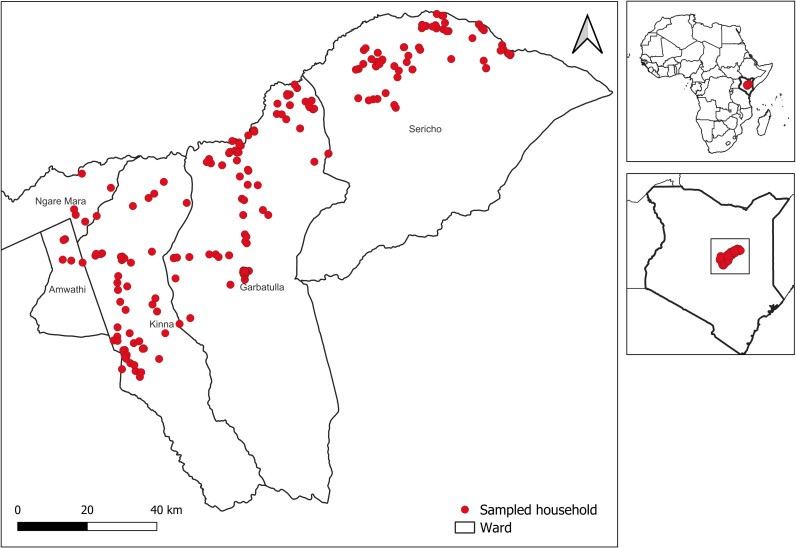 Figure 1
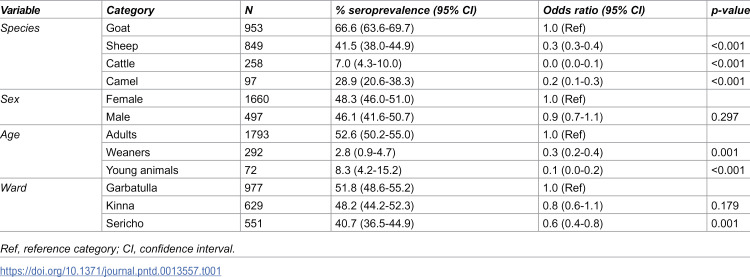 Figure 2
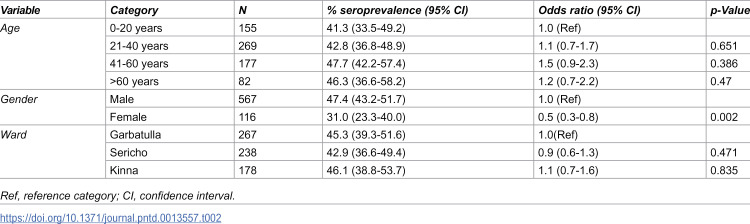 Figure 3
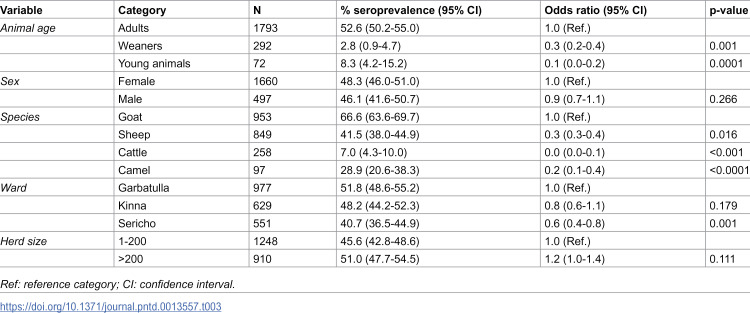 Figure 4
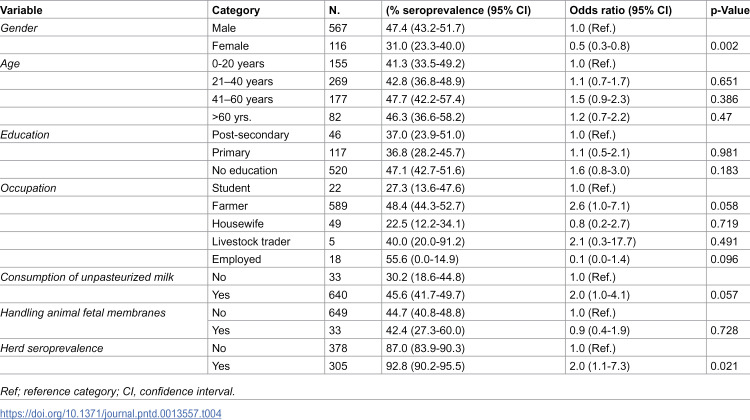 Figure 5
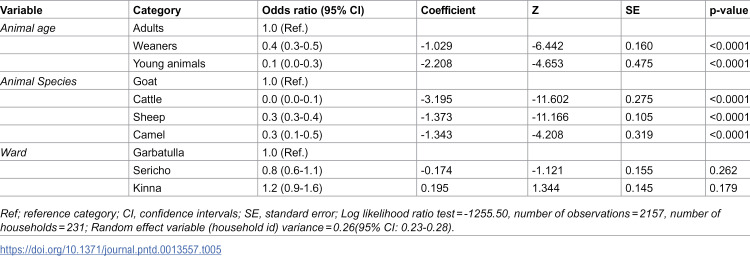 Figure 6
 Figure 7
Peer Reviews
No public reviews on file for this paper yet. If you reviewed it on a platform where reviews are public (OpenReview, ICLR, NeurIPS, ICML), you can paste yours below so the community can read it here.
Videos
No videos yet. Explain this paper in a talk, walkthrough, or lecture? Add one.
Taxonomy
TopicsVector-borne infectious diseases · Viral Infections and Vectors · Vector-Borne Animal Diseases