Addressing multicollinearity in general linear model: A novel approach for ridge parameter with performance comparison
Muhammad Luqman, Sajjad Haider Bhatti, Demet Aydin, Mohsin Jamil

TL;DR
This paper introduces a new ridge regression method to handle multicollinearity in data, showing improved performance in simulations and real-world examples.
Contribution
The paper proposes novel ridge parameter choices that outperform existing ones in handling multicollinearity.
Findings
Proposed ridge estimators showed better performance in reducing mean square error under various multicollinearity scenarios.
Simulation results confirmed superiority of new ridge constants over existing ones in most conditions.
Real-life applications validated the effectiveness of the proposed ridge penalties.
Abstract
The problem of ill-conditioned data or multicollinearity is common in regression modelling. The problem results in imprecise parameter estimation which leads to inability of gauging true impact of explanatory variables on the response. Also, due to strong multicollinearity, standard errors of parameter estimates get inflated leading to wider confidence intervals and hence increased risk of type-II error. To handle the problem, different approaches have been proposed in literature. Primarily, such techniques penalize the coefficient estimates in one way or other. Ridge regression is one of the most applied among such techniques. In ridge regression, a penalty term is added in the objective function of the general linear model. That penalty term introduces a small amount of bias in parameter estimates with an objective to decrease the mean square error. In the current article, some new…
Genes, proteins, chemicals, diseases, species, mutations and cell lines named across the full text — each resolved to its canonical identifier and authoritative record.
Click any figure to enlarge with its caption.
 Figure 1
 Figure 2
 Figure 3
 Figure 4
 Figure 5
 Figure 6
 Figure 7
 Figure 8
 Figure 9
 Figure 10
 Figure 11
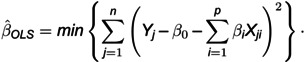 Figure 12
 Figure 13
 Figure 14
 Figure 15
 Figure 16
 Figure 17
 Figure 18
 Figure 19
 Figure 20
 Figure 21
 Figure 22
 Figure 23
 Figure 24
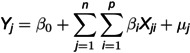 Figure 25
 Figure 26
 Figure 27
 Figure 28
 Figure 29
 Figure 30
 Figure 31
 Figure 32
 Figure 33
 Figure 34
 Figure 35
 Figure 36
 Figure 37
 Figure 38
 Figure 39
 Figure 40
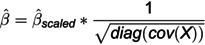 Figure 41
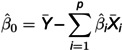 Figure 42
 Figure 43
 Figure 44
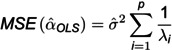 Figure 45
 Figure 46
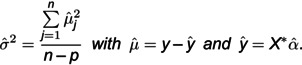 Figure 47
 Figure 48
 Figure 49
 Figure 50
Peer Reviews
No public reviews on file for this paper yet. If you reviewed it on a platform where reviews are public (OpenReview, ICLR, NeurIPS, ICML), you can paste yours below so the community can read it here.
Videos
No videos yet. Explain this paper in a talk, walkthrough, or lecture? Add one.
Taxonomy
TopicsAdvanced Statistical Methods and Models · Statistical Methods and Inference · Spectroscopy and Chemometric Analyses