Case-control study of autonomic symptoms in the setting of Long COVID with tilt table testing
Matthew S. Durstenfeld, Nirosh Mataraarachchi, Michael J. Peluso, Marta Levkova-Clark, Veronica Schaffer, Emily A. Fehrman, Grace Anderson, Diana Flores, Timothy J. Henrich, Carlin S. Long, Steven G. Deeks, Priscilla Y. Hsue, Jeyasakthy Saniasiaya, Jeyasakthy Saniasiaya

TL;DR
This study finds that people with Long COVID often experience autonomic symptoms during tilt table tests, with increased heart rates but few meeting criteria for severe diagnoses.
Contribution
The study provides new empirical evidence on autonomic dysfunction in Long COVID using tilt table testing.
Findings
Long COVID patients had significantly higher COMPASS 31 scores compared to recovered individuals.
Heart rate was consistently higher in Long COVID patients during tilt testing.
63% of Long COVID patients experienced symptoms during tilt, but few met criteria for abnormal hemodynamic responses.
Abstract
Autonomic symptoms and orthostatic syndromes have been reported in Long COVID, but few studies have characterized findings using head up tilt table testing. To characterize autonomic responses to positional changes among individuals with Long COVID. We assessed autonomic symptoms using the Composite Autonomic Symptom Scale 31 (COMPASS 31) instrument and performed head up tilt table testing for 30 minutes at 70 degrees among individuals with Long COVID and recovered comparators. We included 26 participants (median age 56 years, 50% female median 25 months after first COVID): 16 with Long COVID and 10 recovered comparators. COMPASS 31 scores (0–100, higher is worse) were higher among those with Long COVID (median 30.5 vs 8, p = 0.003). Heart rate was 8 beats per minutes higher throughout tilt among those with Long COVID (95% CI 1.1 to 14.4; p = 0.02); there were no differences in blood…
Genes, proteins, chemicals, diseases, species, mutations and cell lines named across the full text — each resolved to its canonical identifier and authoritative record.
Click any figure to enlarge with its caption.
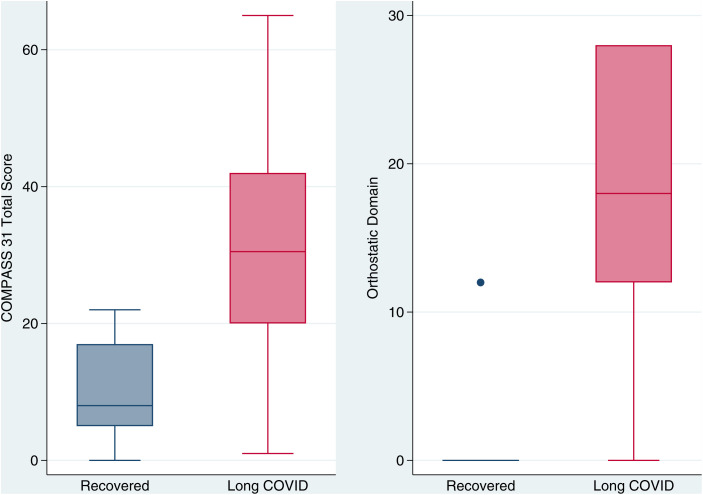 Figure 1
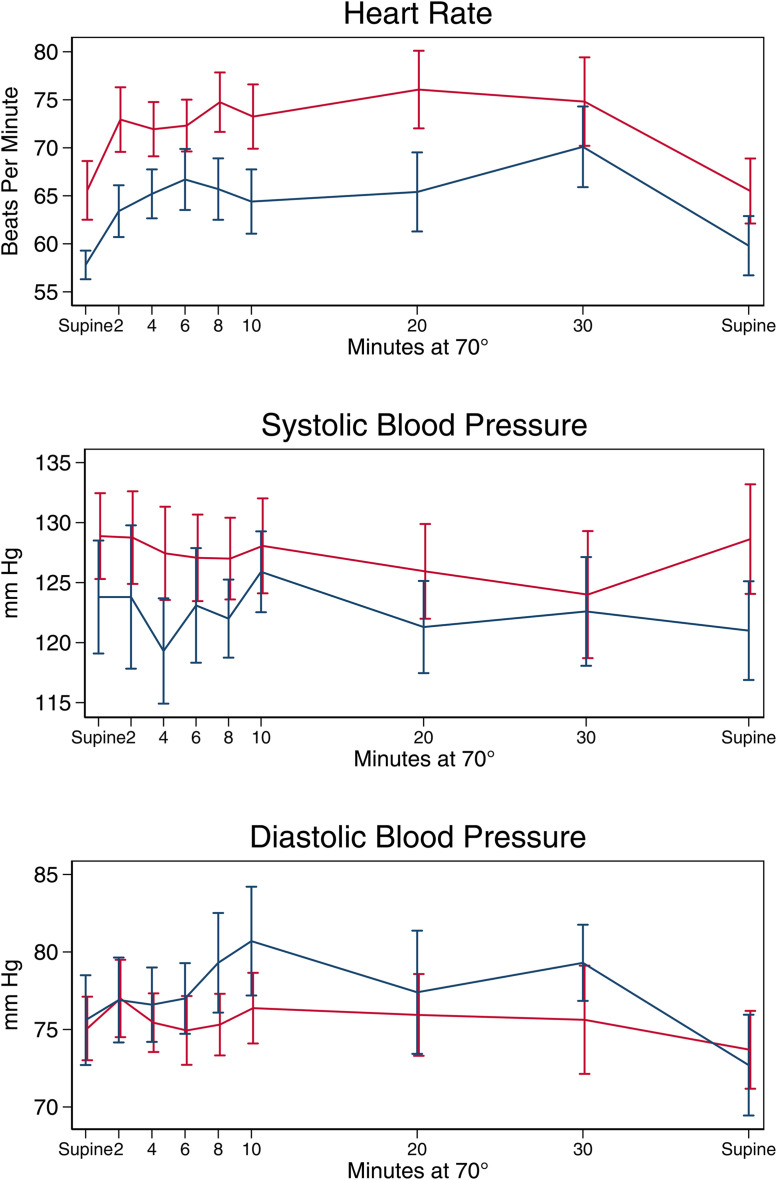 Figure 2
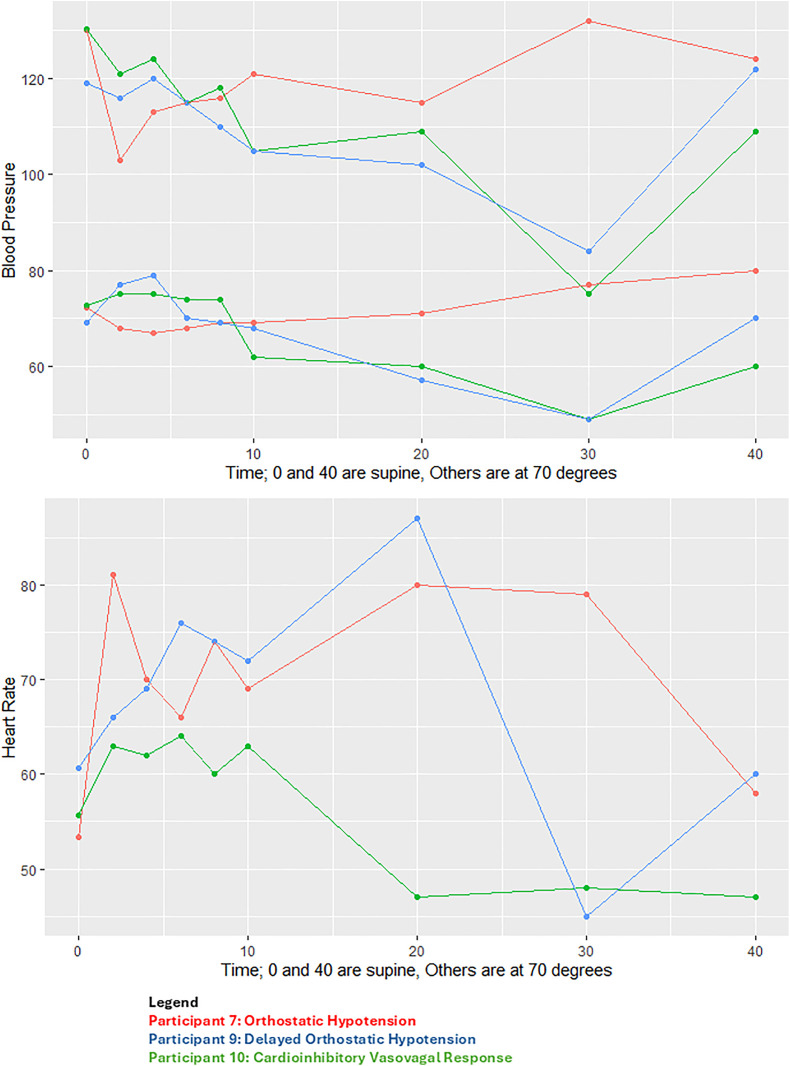 Figure 3
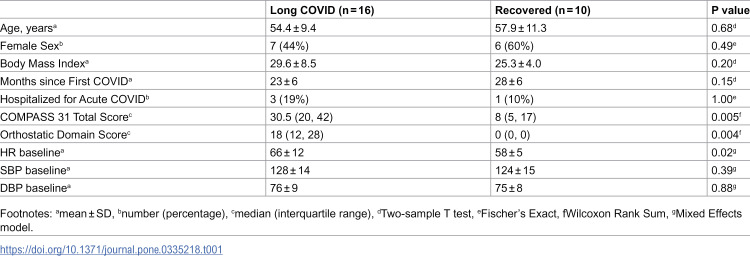 Figure 4
Peer Reviews
No public reviews on file for this paper yet. If you reviewed it on a platform where reviews are public (OpenReview, ICLR, NeurIPS, ICML), you can paste yours below so the community can read it here.
Videos
No videos yet. Explain this paper in a talk, walkthrough, or lecture? Add one.
Taxonomy
TopicsCardiovascular Syncope and Autonomic Disorders · Heart Rate Variability and Autonomic Control · Psychosomatic Disorders and Their Treatments