Manifold transform by recurrent cortical circuit enhances robust encoding of familiar stimuli
Weifan Wang, Xueyan Niu, Liyuan Liang, Tai-Sing Lee

TL;DR
The brain becomes more efficient at recognizing familiar faces by adapting neural circuits to focus on important features and ignore irrelevant changes.
Contribution
A computational model showing that recurrent neural circuits develop to robustly encode familiar stimuli through a manifold transform.
Findings
Familiarity training leads to the development of recurrent circuits that robustly encode global stimuli.
The learned circuits implement a manifold transform that enhances stimulus representation against noise.
Local linear computations in the circuit redistribute gain to improve concept discrimination.
Abstract
A ubiquitous phenomenon observed along the ventral stream of the primate hierarchical visual system is the suppression of neural responses to familiar stimuli at the population level. The observation of the suppression of the neural response in the early visual cortex (V1 and V2) to familiar stimuli that are multiple times larger in size than the receptive fields of individual neurons implicates the plausible development of recurrent circuits for encoding these global stimuli. In this work, we investigated the neural mechanisms of familiarity suppression and showed that a recurrent neural circuit based on Hebbian learning, consisting of neurons with small and local receptive fields, can develop to encode specific global familiar stimuli robustly as a result of familiarity training. We proposed that the learned recurrent circuit implements a manifold transform. The recurrent circuit…
Genes, proteins, chemicals, diseases, species, mutations and cell lines named across the full text — each resolved to its canonical identifier and authoritative record.
Click any figure to enlarge with its caption.
 Figure 1
 Figure 2
 Figure 3
 Figure 4
 Figure 5
 Figure 6
 Figure 7
 Figure 8
 Figure 9
 Figure 10
 Figure 11
 Figure 12
 Figure 13
 Figure 14
 Figure 15
 Figure 16
 Figure 17
 Figure 18
 Figure 19
 Figure 20
 Figure 21
 Figure 22
 Figure 23
 Figure 24
 Figure 25
 Figure 26
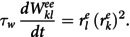 Figure 27
 Figure 28
 Figure 29
 Figure 30
 Figure 31
 Figure 32
 Figure 33
 Figure 34
 Figure 35
 Figure 36
 Figure 37
 Figure 38
 Figure 39
 Figure 40
 Figure 41
 Figure 42
 Figure 43
 Figure 44
 Figure 45
 Figure 46
 Figure 47
 Figure 48
 Figure 49
 Figure 50
Peer Reviews
No public reviews on file for this paper yet. If you reviewed it on a platform where reviews are public (OpenReview, ICLR, NeurIPS, ICML), you can paste yours below so the community can read it here.
Videos
No videos yet. Explain this paper in a talk, walkthrough, or lecture? Add one.
Taxonomy
TopicsNeural dynamics and brain function · Visual perception and processing mechanisms · CCD and CMOS Imaging Sensors