Evaluation of mandibular functional limitation in patients with temporomandibular joint disorders and the relationship with other psychosocial factors
Nguyen Ngoc Hoa, Toan Do, Tran Thai Binh, To Thanh Dong, Tran Thi Minh Quyen, Viet Hai Hoang

TL;DR
This study finds that TMD patients experience varying levels of jaw function issues, which are linked to depression, anxiety, and chronic pain.
Contribution
The study identifies specific TMD subgroups with distinct functional limitations and their associations with psychosocial factors.
Findings
Disc displacement without reduction shows the highest functional limitation scores for chewing and mouth-opening.
Jaw function limitations correlate with depression, anxiety, and chronic pain levels.
Chewing hard foods is most affected in the arthralgia group, while swallowing is least affected.
Abstract
Temporomandibular joint disorders (TMDs) are a common source of orofacial pain and dysfunction, often characterized by myalgia, restricted mouth opening, and limitations in mandibular movement. This study aims to evaluate the extent of mandibular functional limitation across different TMD subgroups and its relationship with anxiety and depression. A cross-sectional descriptive study was conducted on 120 patients diagnosed with temporomandibular joint disorders according to the Diagnostic Criteria for TMDs (DC/TMD). Participants completed self-report questionnaires assessing the Jaw Functional Limitation Scale-8 (JFLS-8), Visual Analog Scale (VAS), Patient Health Questionnaire-9 (PHQ-9), General Anxiety Disorder-7 (GAD-7), Graded Chronic Pain Scale (GCPS), and Oral Behaviors Checklist (OBC). The Mann-Whitney U and Kruskal-Wallis tests were used to compare means between groups for…
Genes, proteins, chemicals, diseases, species, mutations and cell lines named across the full text — each resolved to its canonical identifier and authoritative record.
Click any figure to enlarge with its caption.
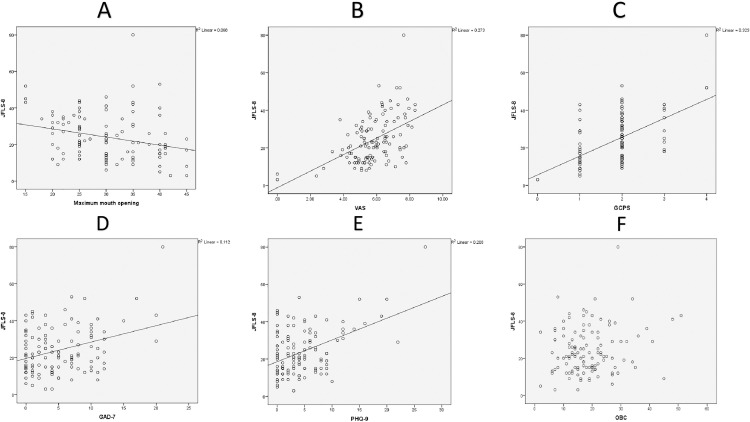 Figure 1
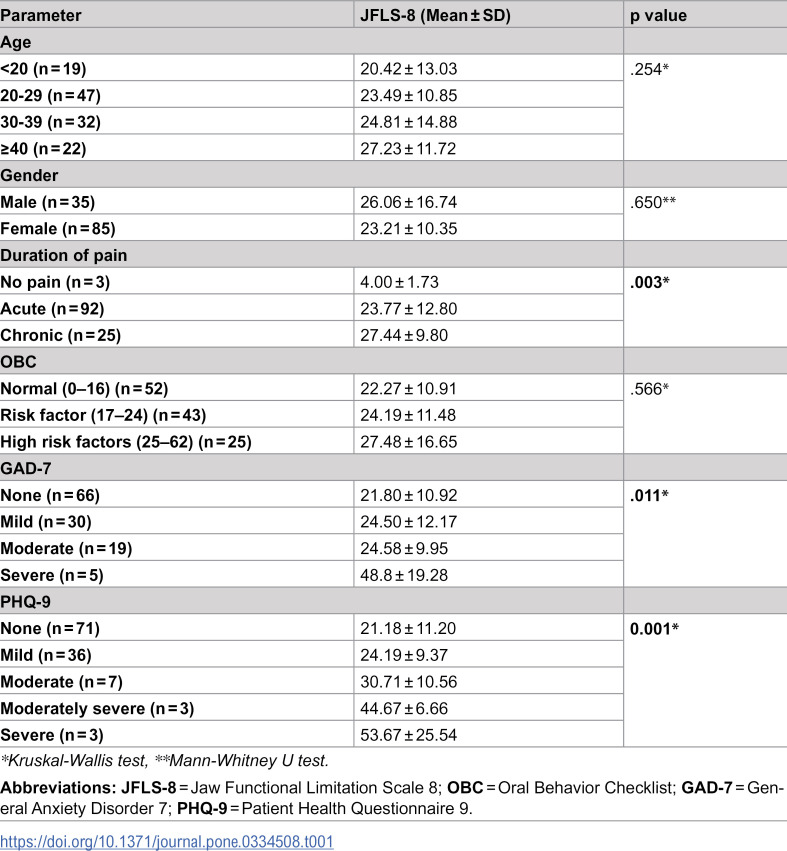 Figure 2
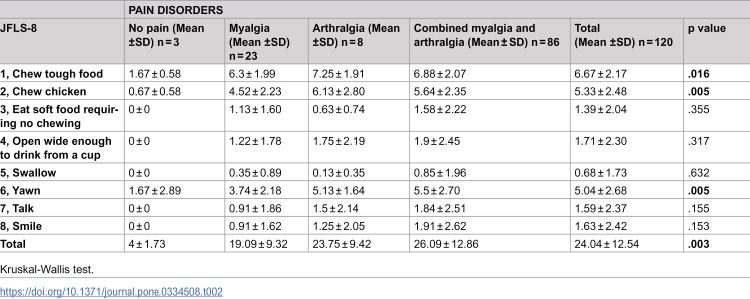 Figure 3
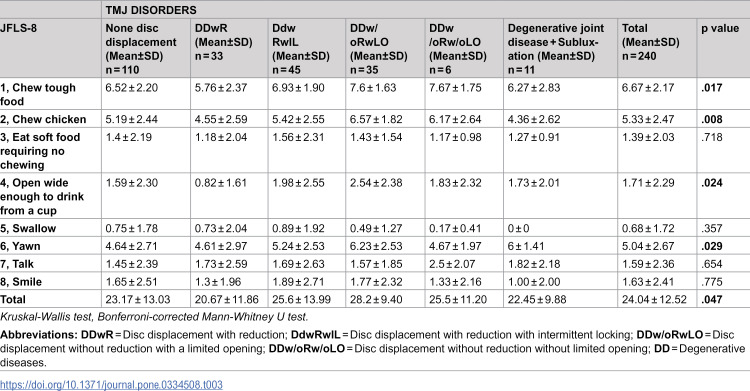 Figure 4
Peer Reviews
No public reviews on file for this paper yet. If you reviewed it on a platform where reviews are public (OpenReview, ICLR, NeurIPS, ICML), you can paste yours below so the community can read it here.
Videos
No videos yet. Explain this paper in a talk, walkthrough, or lecture? Add one.
Taxonomy
TopicsTemporomandibular Joint Disorders · Pain Mechanisms and Treatments · Oropharyngeal Anatomy and Pathologies