Application of various mixtures of medicinal herbs in the diet of laying hens: Evaluating preventive approach of fatty liver syndrome
Mohammadreza Khodaei, Mehran Torki, Fariborz Khajali, Iraj Karimi, Ewa Tomaszewska, Ewa Tomaszewska, Ewa Tomaszewska, Ewa Tomaszewska

TL;DR
This study shows that adding a specific mix of herbs to the diet of laying hens can help prevent fatty liver syndrome and improve their health and productivity.
Contribution
The study introduces a novel herbal mix (lemon, black pepper, sumac, chicory) as an effective dietary intervention to prevent fatty liver syndrome in laying hens.
Findings
The high-energy, low-protein diet significantly reduced egg production and increased liver damage in hens.
Mix 2 of herbs reversed the negative effects of the unhealthy diet on productive performance and liver health.
Herbal mixes did not significantly affect blood cell counts or hemoglobin levels when used with the challenge diet.
Abstract
Fatty liver hemorrhagic syndrome (FLHS) is a major health issue in laying hens, which is associated with reduced productive performance and increased mortality. This study investigated the efficacy of three herbal additive mixes as dietary interventions to prevent FLHS in a total of 384 LSL-Lohmann laying hens from 65 to 77 weeks of age. Hens were allocated to eight treatments in a 2 × 4 factorial design, comprising two basal diets—a standard diet (SD) and a high-energy, low-protein challenge diet (CD)—alongside four dietary interventions (three herbal mixes and a control). The herbal mixes were formulated as follows: Mix 1 (turmeric, fumitory, green tea, milk thistle), Mix 2 (lemon, black pepper, sumac, chicory), and Mix 3 (garlic, artichoke, ginger, shallot). Productive performance, blood variables, and liver lesion scores were carefully assessed. The results demonstrated that the CD…
Genes, proteins, chemicals, diseases, species, mutations and cell lines named across the full text — each resolved to its canonical identifier and authoritative record.
Click any figure to enlarge with its caption.
 Figure 1
 Figure 2
 Figure 3
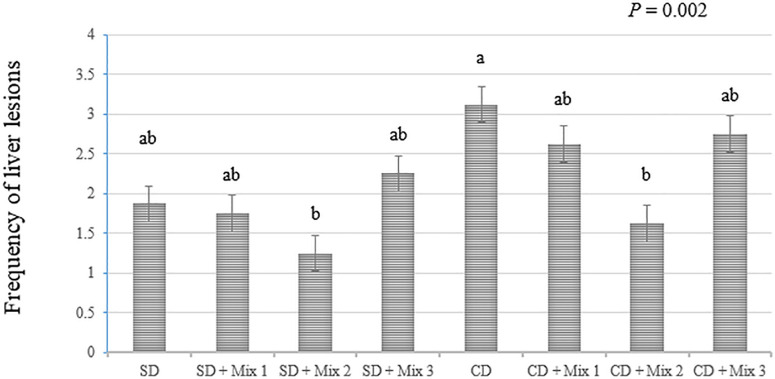 Figure 4
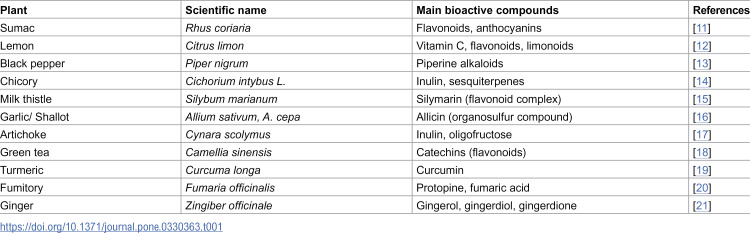 Figure 5
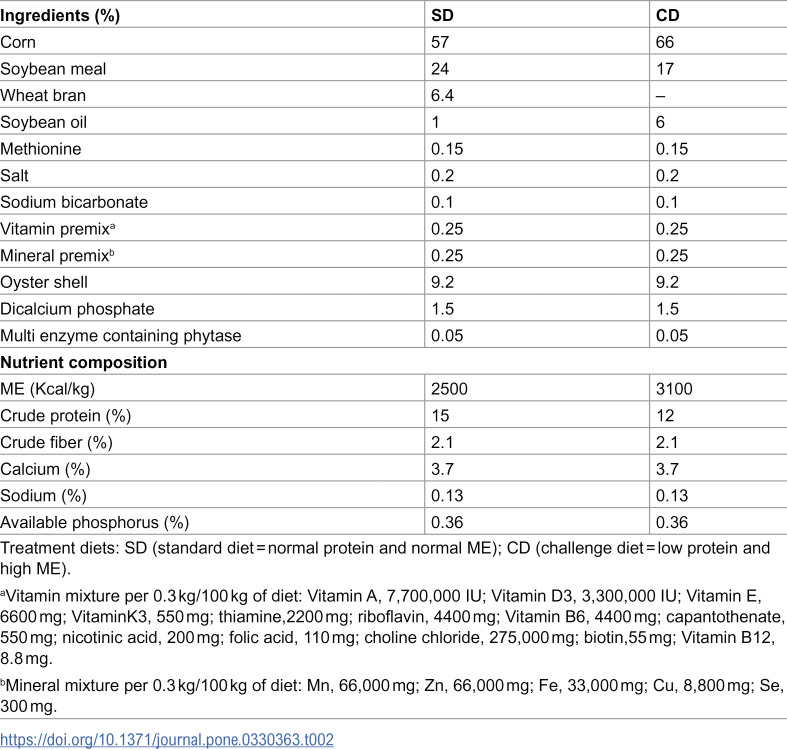 Figure 6
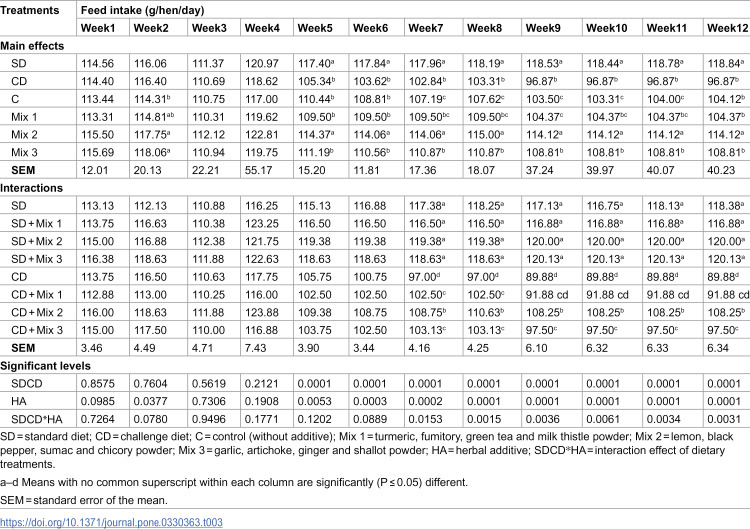 Figure 7
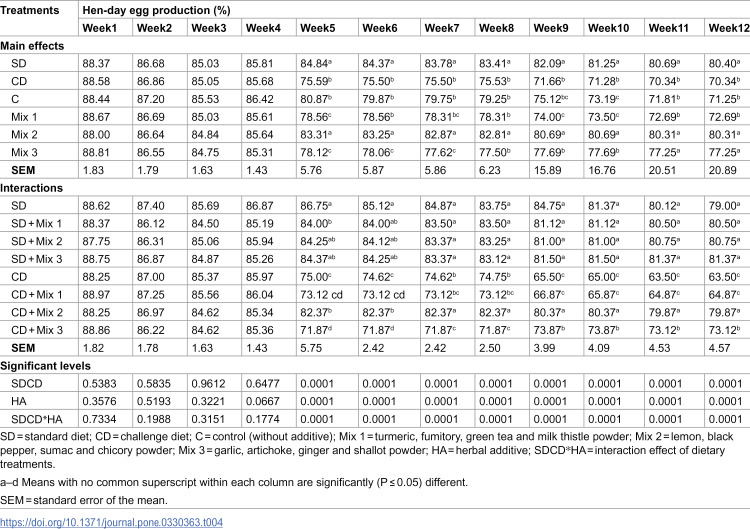 Figure 8
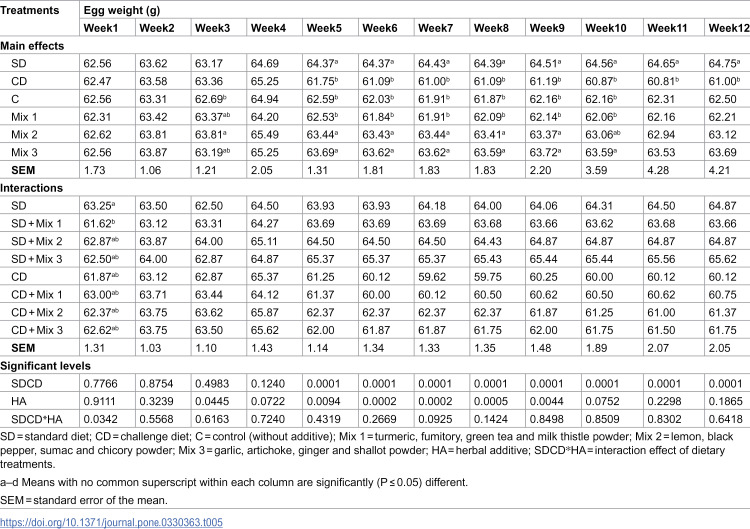 Figure 9
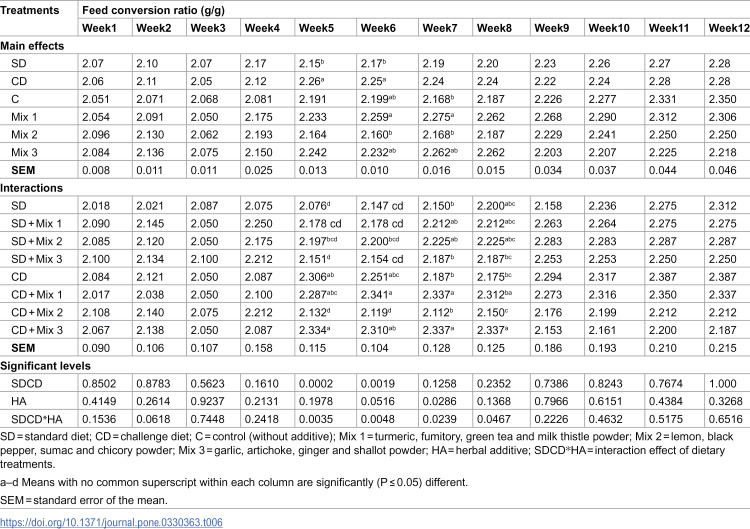 Figure 10
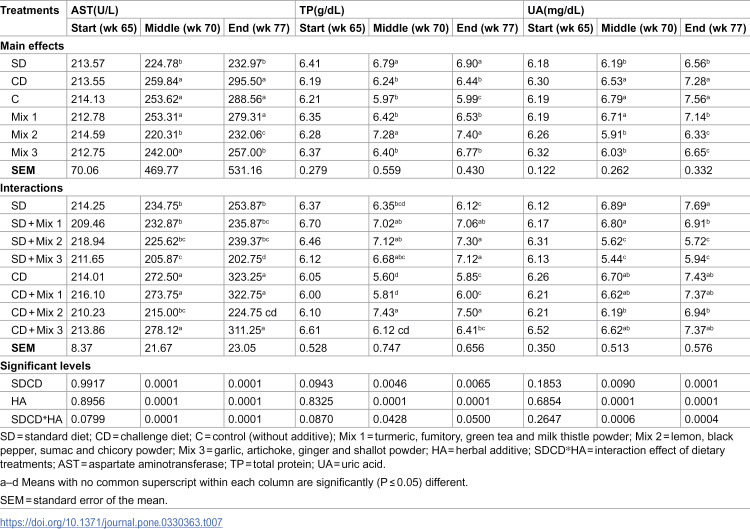 Figure 11
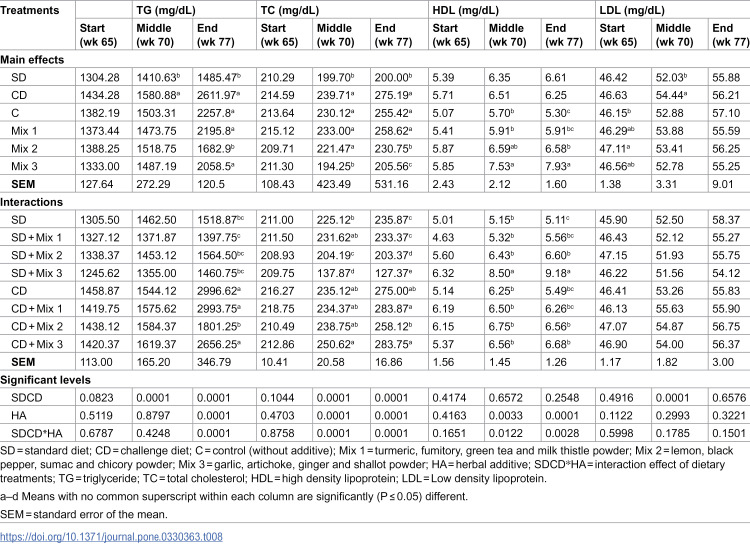 Figure 12
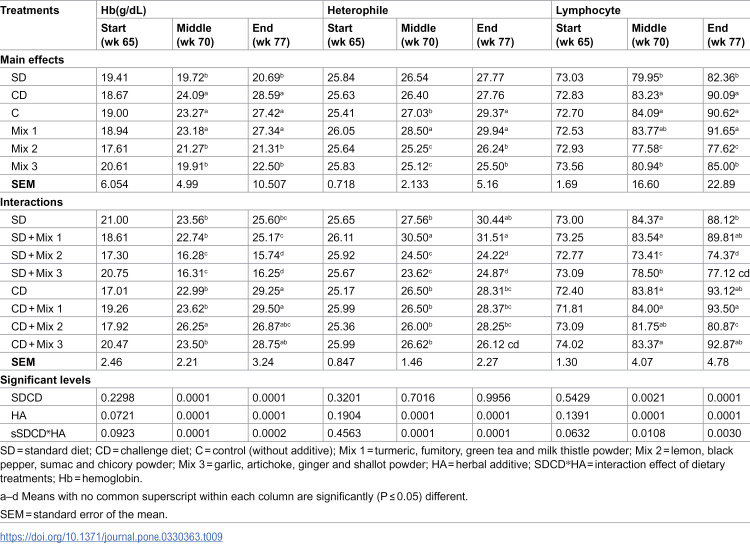 Figure 13
Peer Reviews
No public reviews on file for this paper yet. If you reviewed it on a platform where reviews are public (OpenReview, ICLR, NeurIPS, ICML), you can paste yours below so the community can read it here.
Videos
No videos yet. Explain this paper in a talk, walkthrough, or lecture? Add one.
Taxonomy
TopicsAnimal Nutrition and Physiology · Ginger and Zingiberaceae research · Moringa oleifera research and applications