YOLOv11-MFF: A multi-scale frequency-adaptive fusion network for enhanced CXR anomaly detection
Li Guan, Ruting Zhang, Yi Zhao

TL;DR
This paper introduces YOLOv11-MFF, a new network for detecting anomalies in chest X-rays that improves detection accuracy by adapting to lesion characteristics.
Contribution
The novel Frequency-Adaptive Hybrid Gate and Multi Scale Parallel Large Convolution block enhance lesion detection in chest X-rays.
Findings
YOLOv11-MFF achieves a precision of 48.2% and recall of 42.5% on the VinDr-CXR dataset.
The model outperforms state-of-the-art models with an [email protected] of 41.5% and [email protected]:0.95 of 22.6%.
Abstract
Chest X-ray (CXR) represents one of the most widely utilized clinical diagnostic tools for thoracic diseases. Nevertheless, computer-aided diagnosis based on chest radiographs still faces considerable challenges in anomaly detection. Certain lesions in CXRs exhibit subtle radiographic characteristics with ambiguous boundaries, low pixel occupancy, and weak contrast. While existing studies primarily focus on improving multi-scale feature fusion, they frequently overlook complications arising from background noise and varied lesion morphology. This study introduces YOLOv11-MFF, an enhanced YOLOv11 network with three key innovations. Specifically, a novel Frequency-Adaptive Hybrid Gate (FAHG) is developed to improve contrast differentiation between lesions and background. A Multi Scale Parallel Large Convolution (MSPLC) block is designed and integrated with the original C3k2 module to…
Genes, proteins, chemicals, diseases, species, mutations and cell lines named across the full text — each resolved to its canonical identifier and authoritative record.
Click any figure to enlarge with its caption.
 Figure 1
 Figure 2
 Figure 3
 Figure 4
 Figure 5
 Figure 6
 Figure 7
 Figure 8
 Figure 9
 Figure 10
 Figure 11
 Figure 12
 Figure 13
 Figure 14
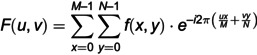 Figure 15
 Figure 16
 Figure 17
 Figure 18
 Figure 19
 Figure 20
 Figure 21
 Figure 22
 Figure 23
 Figure 24
 Figure 25
 Figure 26
 Figure 27
 Figure 28
 Figure 29
 Figure 30
 Figure 31
 Figure 32
 Figure 33
 Figure 34
 Figure 35
 Figure 36
 Figure 37
 Figure 38
 Figure 39
 Figure 40
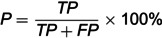 Figure 41
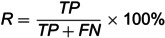 Figure 42
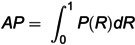 Figure 43
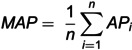 Figure 44
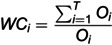 Figure 45
 Figure 46
 Figure 47
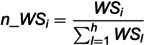 Figure 48
 Figure 49
 Figure 50
Peer Reviews
No public reviews on file for this paper yet. If you reviewed it on a platform where reviews are public (OpenReview, ICLR, NeurIPS, ICML), you can paste yours below so the community can read it here.
Videos
No videos yet. Explain this paper in a talk, walkthrough, or lecture? Add one.
Taxonomy
TopicsCOVID-19 diagnosis using AI · Lung Cancer Diagnosis and Treatment