Molecular consequences of mitochondrial replacement may be masked from organismal traits in Tigriopus californicus
Jacob R. Denova, Ben A. Flanagan, Murad Jah, Scott L. Applebaum, Suzanne Edmands

TL;DR
This study explores how mitochondrial replacement in copepods affects molecular health metrics, even when organismal traits like lifespan remain unchanged.
Contribution
The study reveals molecular consequences of mitochondrial replacement that are not reflected in organismal traits, using a novel copepod model system.
Findings
Three-parent offspring showed higher oxidative DNA damage and lower mitochondrial DNA content compared to hybrid controls.
Organismal traits like lifespan and metabolic rate were unaffected by mitochondrial replacement.
Sex-specific differences were observed in some traits but not in mitochondrial replacement effects.
Abstract
Mitochondrial replacement therapy (MRT) presents a promising preventative measure to combat mitochondrial diseases. However, the long-term consequences of disrupting mitonuclear coevolution at both the molecular and organismal levels remain understudied. Data on sex-specific effects are also lacking despite predictions that males may be especially vulnerable to mitochondrial replacement. To address this, we used backcrossed lines of the copepod Tigriopus californicus to produce offspring with nuclear genotype contributions from two populations and a mitochondrial genotype from a third, separate, population. When compared to hybrid controls with mitochondrial genotypes that matched the maternal nuclear genotype but not the paternal, these “three-parent offspring” did not significantly differ in lifespan or routine metabolic rate. While these organismal-level traits showed no effect,…
Genes, proteins, chemicals, diseases, species, mutations and cell lines named across the full text — each resolved to its canonical identifier and authoritative record.
Click any figure to enlarge with its caption.
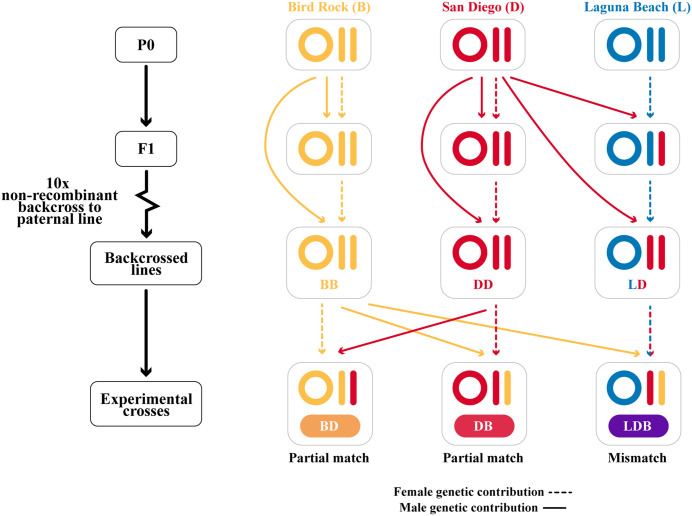 Figure 1
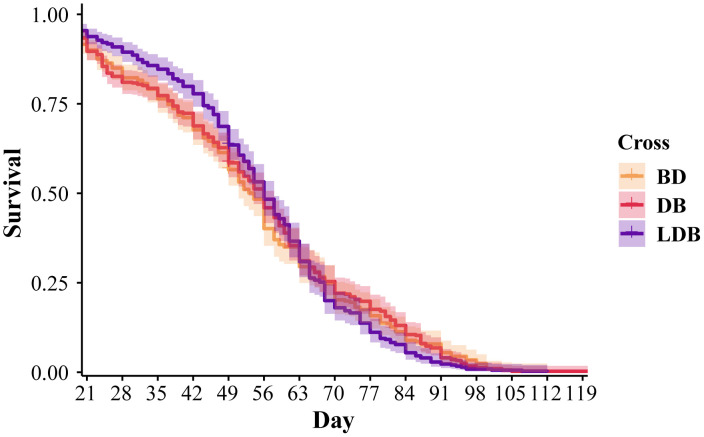 Figure 2
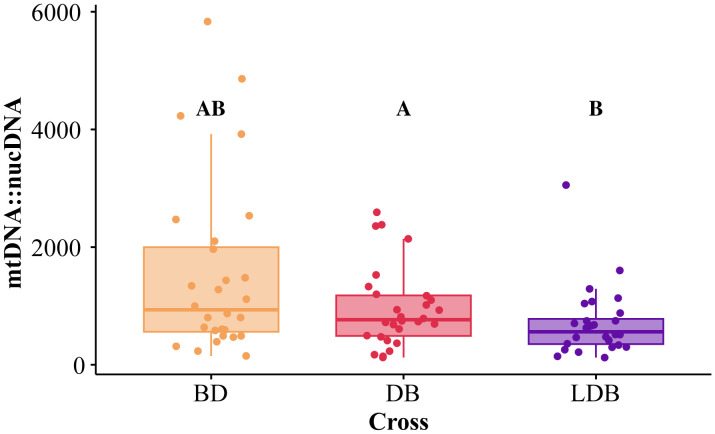 Figure 3
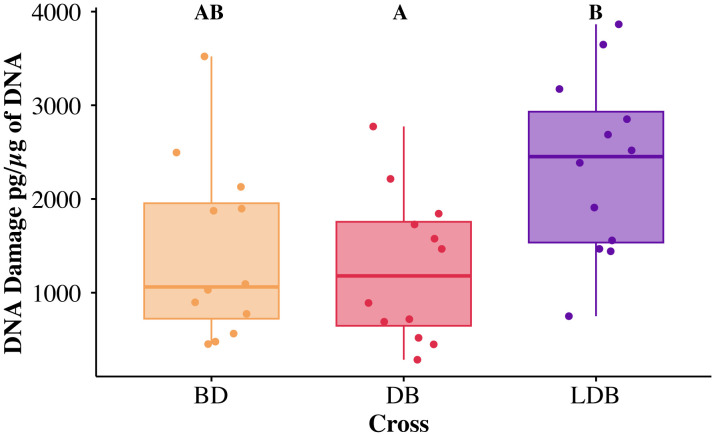 Figure 4
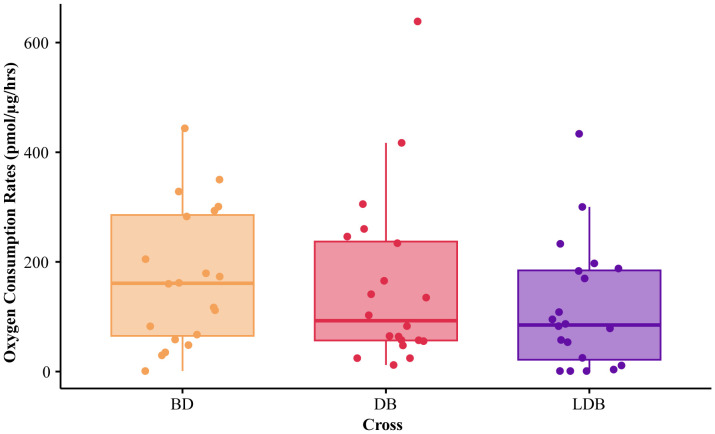 Figure 5
 Figure 6
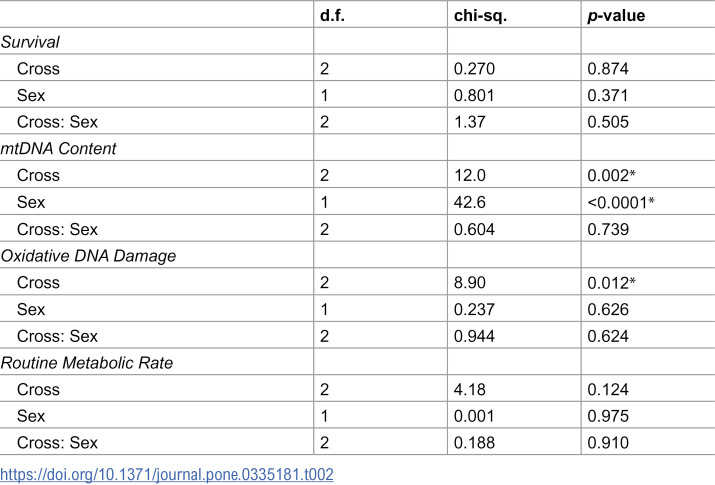 Figure 7
Peer Reviews
No public reviews on file for this paper yet. If you reviewed it on a platform where reviews are public (OpenReview, ICLR, NeurIPS, ICML), you can paste yours below so the community can read it here.
Videos
No videos yet. Explain this paper in a talk, walkthrough, or lecture? Add one.
Taxonomy
TopicsMitochondrial Function and Pathology · Metabolomics and Mass Spectrometry Studies · Metabolism and Genetic Disorders