Metabolic regulation of behavior by the intestinal enzyme FMO-2
Elizabeth S. Kitto, Safa Beydoun, Ella Henry, Megan L. Schaller, Mira Bhandari, Sarah A. Easow, Angela M. Tuckowski, Marshall B. Howington, Ajay Bhat, Aditya Sridhar, Eugene Chung, Charles R. Evans, Scott F. Leiser

TL;DR
A gut enzyme in worms affects behavior by changing how tryptophan is processed, linking metabolism to health and lifespan.
Contribution
The study reveals a novel mechanism where the enzyme FMO-2 modulates behavior through tryptophan metabolism in a cell nonautonomous manner.
Findings
Modified fmo-2 expression alters sensory perception and decision-making in C. elegans.
FMO-2 interacts with serotonin and quinolinic acid, derived from tryptophan, to influence behavior.
Gut metabolism communicates satiety and depressive signals via amino acid modification.
Abstract
Many elements of an organism’s behavior are intertwined with the organism’s health. Over a long period of time, health status is also indicative of life span, with improved health correlating with a longer life. However, the relationship between longevity and behavior remains relatively unexplored. Here, we report that modification of a single longevity gene downstream of dietary restriction and hypoxia markedly alters behavior in Caenorhabditis elegans. We found that modified expression of flavin-containing monooxygenase (fmo-2) leads to altered sensory perception and decision-making in a variety of behavioral paradigms. This cell nonautonomous signaling pathway is linked to changes in tryptophan metabolism, where loss of fmo-2 requires the tryptophan metabolite serotonin and overexpressed fmo-2 requires the tryptophan metabolite quinolinic acid to change behavior. These results…
Genes, proteins, chemicals, diseases, species, mutations and cell lines named across the full text — each resolved to its canonical identifier and authoritative record.
Click any figure to enlarge with its caption.
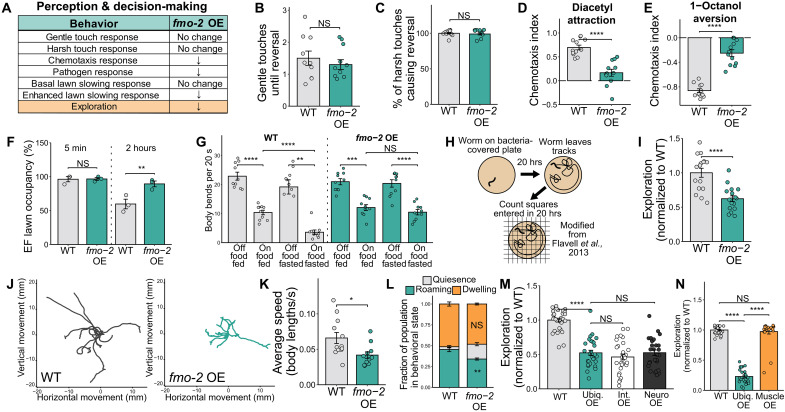 Figure 1
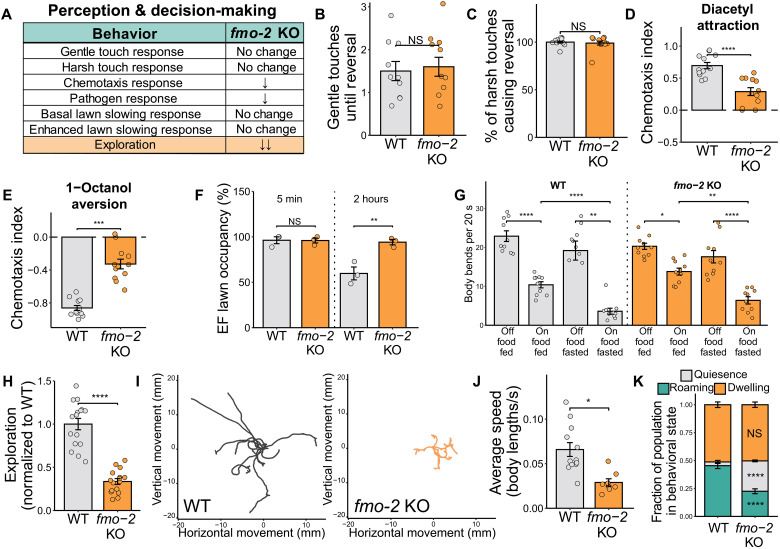 Figure 2
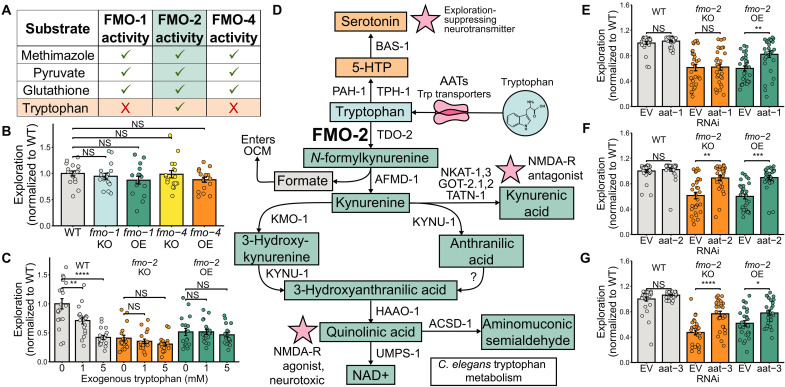 Figure 3
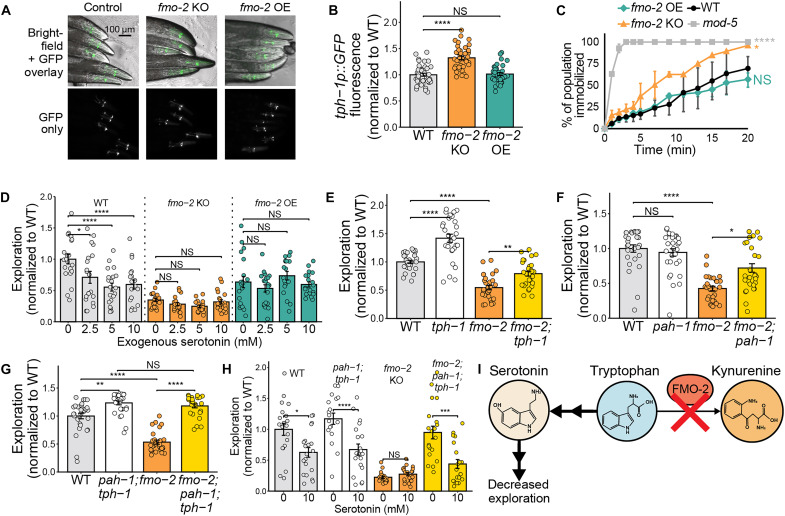 Figure 4
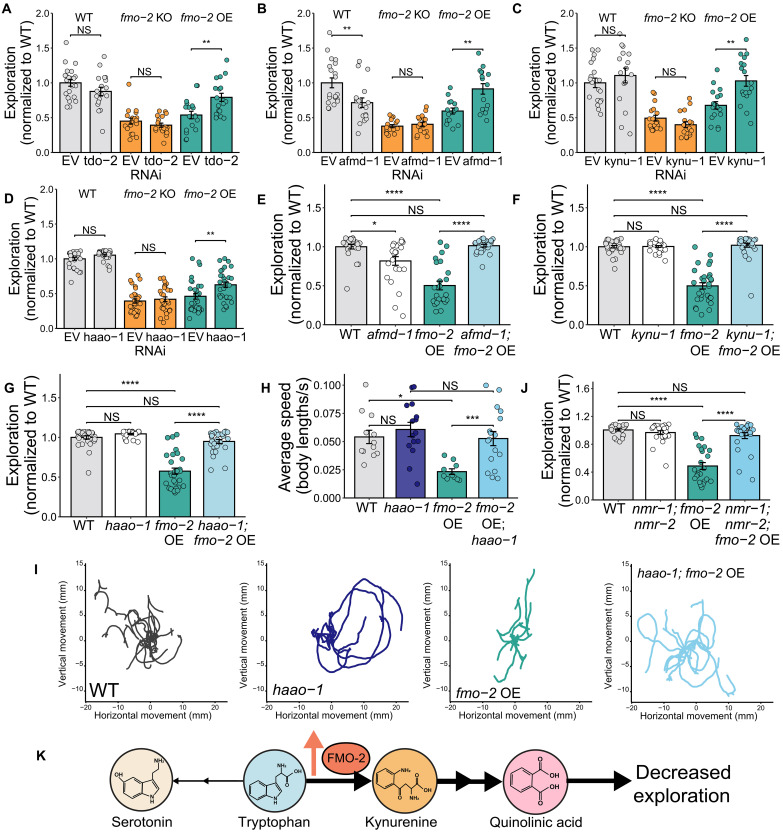 Figure 5
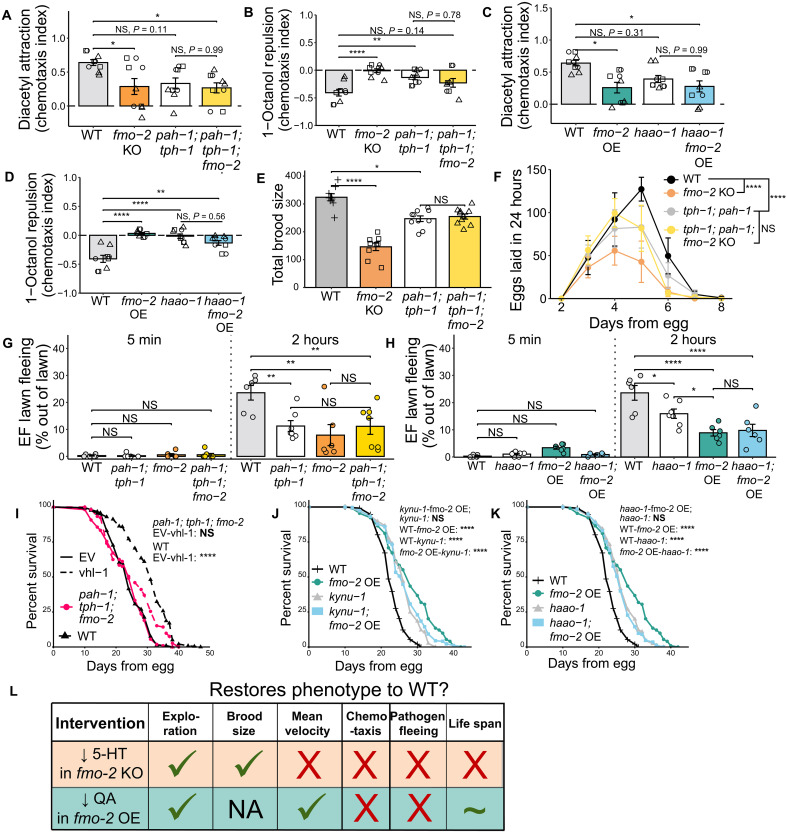 Figure 6
Peer Reviews
No public reviews on file for this paper yet. If you reviewed it on a platform where reviews are public (OpenReview, ICLR, NeurIPS, ICML), you can paste yours below so the community can read it here.
Videos
No videos yet. Explain this paper in a talk, walkthrough, or lecture? Add one.
Taxonomy
TopicsGenetics, Aging, and Longevity in Model Organisms · Circadian rhythm and melatonin · Diet and metabolism studies