Using natural landscape and instream habitat to identify stream reference groups for bioassessment
Joseph J. Dyer, Daniel Dvorett, Joseph Flotemersch

TL;DR
This study simplifies stream classification in Oklahoma by grouping streams based on natural habitat and climate factors to improve ecological assessments.
Contribution
A simplified, hierarchical classification of Oklahoma streams using natural drivers instead of ecoregions for bioassessment.
Findings
Six stream groups were identified that capture regional and local habitat variability as effectively as 13 ecoregion-based groups.
Three stream archetypes (Plains, Valley, Rocky) were defined based on shared habitat characteristics across Oklahoma.
The new classification is not influenced by human activities and better reflects natural ecological patterns.
Abstract
Grouping streams into reference groups based on their similarities is a critical component of developing multi-metric indices to evaluate biotic integrity. The use of level III ecoregions is a common approach that has been successful for many geopolitical regions. However, the diversity in ecoregions across the state of Oklahoma results in excessive complexity in the application of reference groups. In this study, we sought to simplify Oklahoma’s reference groups by considering the natural drivers of species distribution in wadeable streams. We used two K-means clustering algorithms to create hierarchical stream groups. In the first K-means analysis, we grouped wadeable streams using several climatic and geologic features expected to influence fish distributions across the state (Tier I). Next, we subdivided the stream groups identified in the Tier I analysis based on water chemistry…
Genes, proteins, chemicals, diseases, species, mutations and cell lines named across the full text — each resolved to its canonical identifier and authoritative record.
Click any figure to enlarge with its caption.
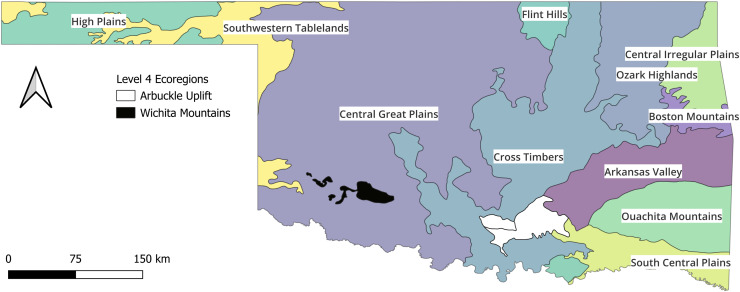 Figure 1
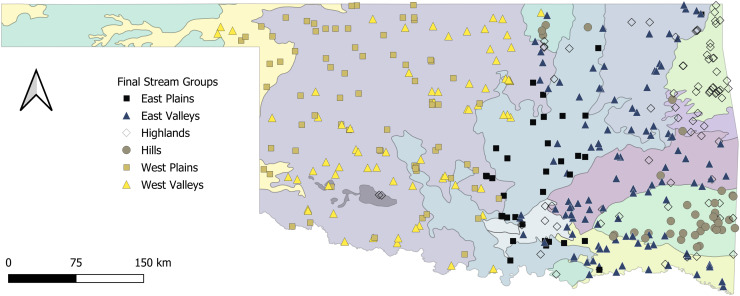 Figure 2
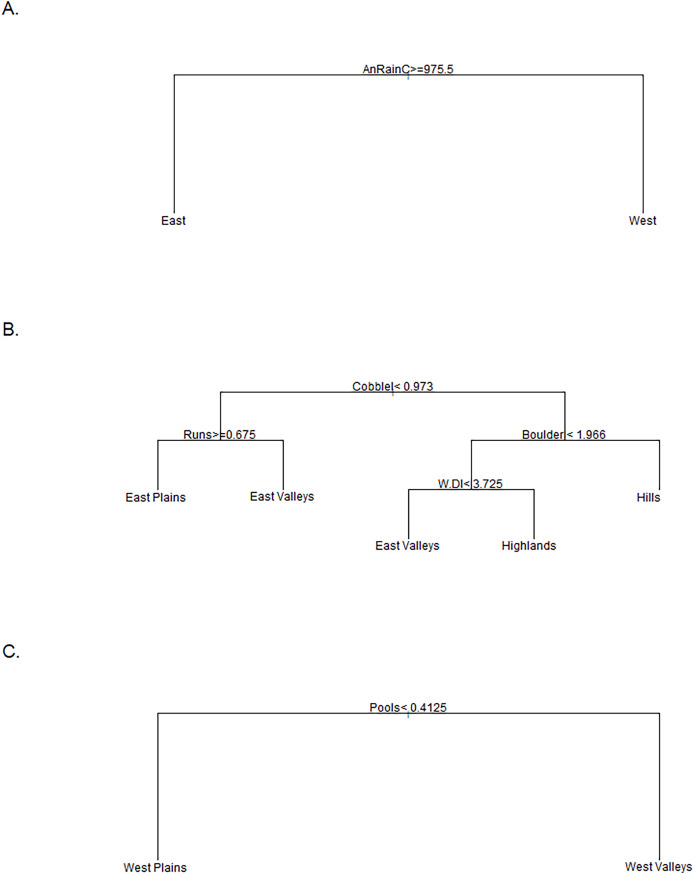 Figure 3
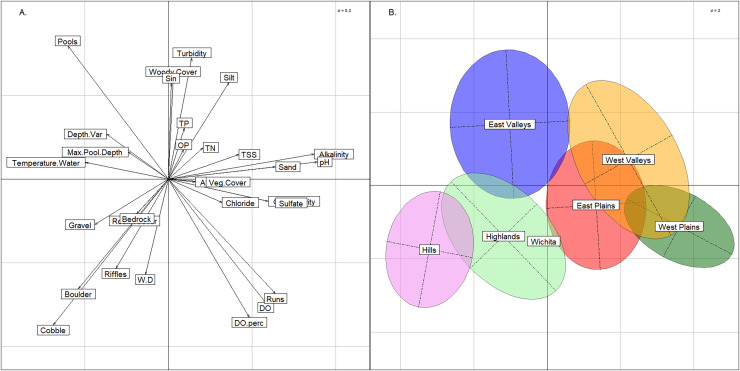 Figure 4
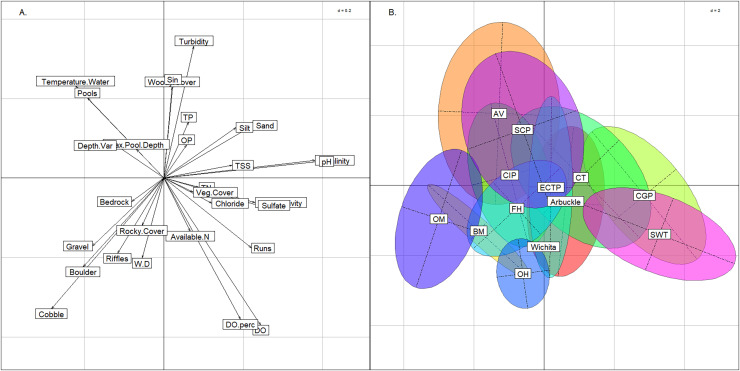 Figure 5
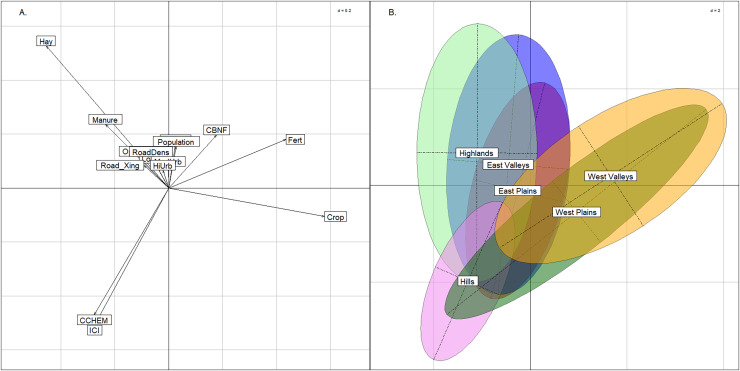 Figure 6
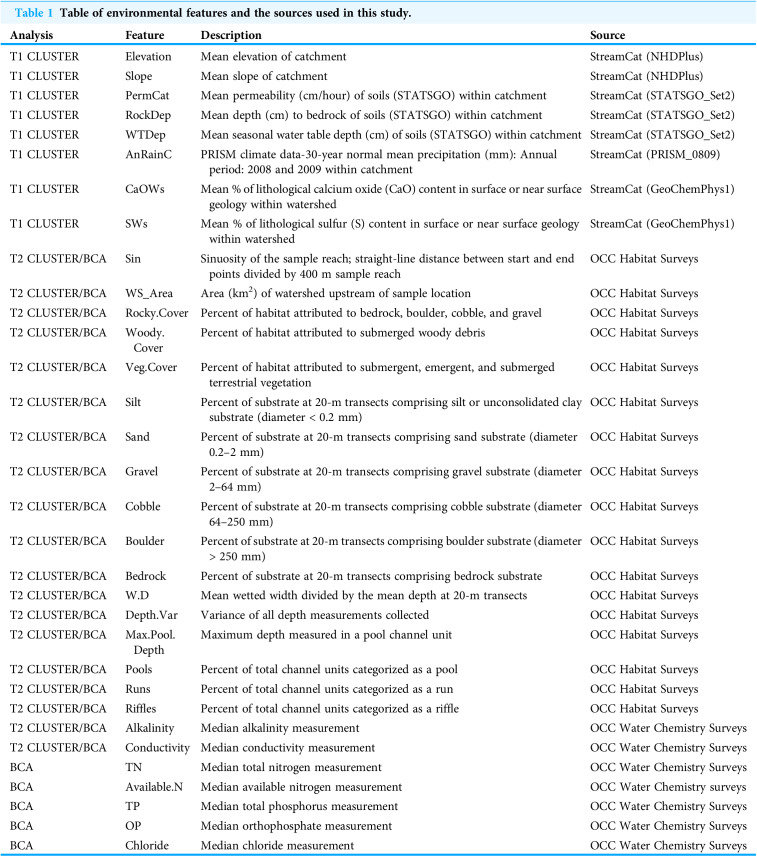 Figure 7
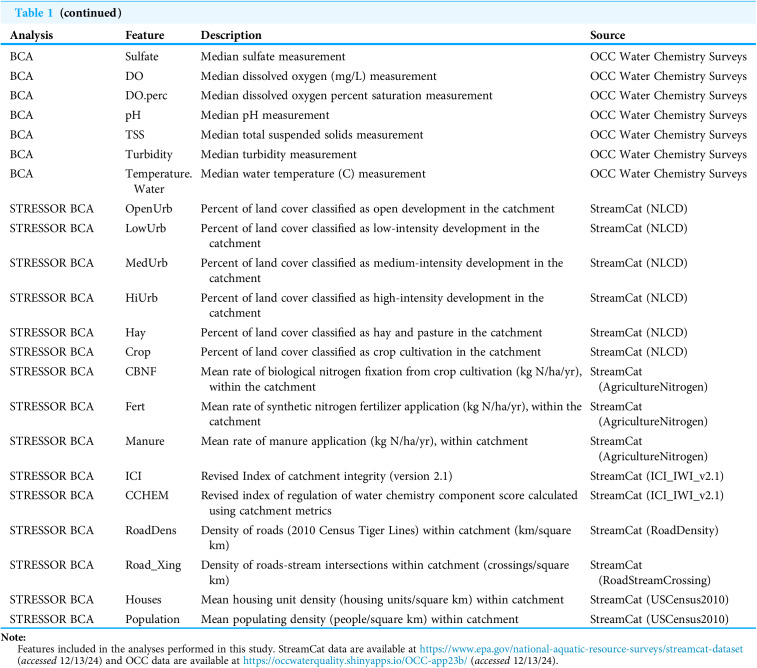 Figure 8
Peer Reviews
No public reviews on file for this paper yet. If you reviewed it on a platform where reviews are public (OpenReview, ICLR, NeurIPS, ICML), you can paste yours below so the community can read it here.
Videos
No videos yet. Explain this paper in a talk, walkthrough, or lecture? Add one.
Taxonomy
TopicsFish Ecology and Management Studies · Freshwater macroinvertebrate diversity and ecology · Hydrology and Sediment Transport Processes