Corpus Callosum Structural Alterations in Essential Tremor with and Without Resting Tremor: A Multimodal MRI Study
Valerio Riccardo Aquila, Maria Celeste Bonacci, Maria Eugenia Caligiuri, Rita Nisticò, Maria Salsone, Andrea Quattrone, Aldo Quattrone, Fabiana Novellino

TL;DR
This study found that essential tremor patients with and without resting tremor have similar structural changes in the corpus callosum, suggesting shared underlying brain mechanisms.
Contribution
The study is the first to compare corpus callosum structural alterations between ET with and without resting tremor using multimodal MRI.
Findings
Both ET and ETrt patients showed corpus callosum thinning and increased mean diffusivity compared to healthy controls.
No structural differences were found between ET and ETrt groups, indicating shared abnormalities.
Clustering analysis grouped ET and ETrt together, distinct from healthy controls.
Abstract
Essential tremor (ET) is a common movement disorder characterized by postural and kinetic tremor. Some patients also show resting tremor, being classified as the ET-plus distinct subtype. The corpus callosum (CC) involvement is proven in several neurological diseases, including ET, but differences between ET with and without resting tremor have not been studied. In this study, we investigated structural characteristics of the CC in a cohort of ET and ET with resting tremor (ETrt) patients, compared to healthy controls (HC). We enrolled 128 participants (63 ET, 38 ETrt, and 27 HC). We performed a multimodal MRI evaluation (thickness, mean diffusivity [MD], and fractional anisotropy [FA]) of the CC’s genu, body, and splenium, using different statistical approaches. We first performed a traditional group-based comparison, controlling for relevant covariates. Then, we used an unsupervised…
Genes, proteins, chemicals, diseases, species, mutations and cell lines named across the full text — each resolved to its canonical identifier and authoritative record.
Click any figure to enlarge with its caption.
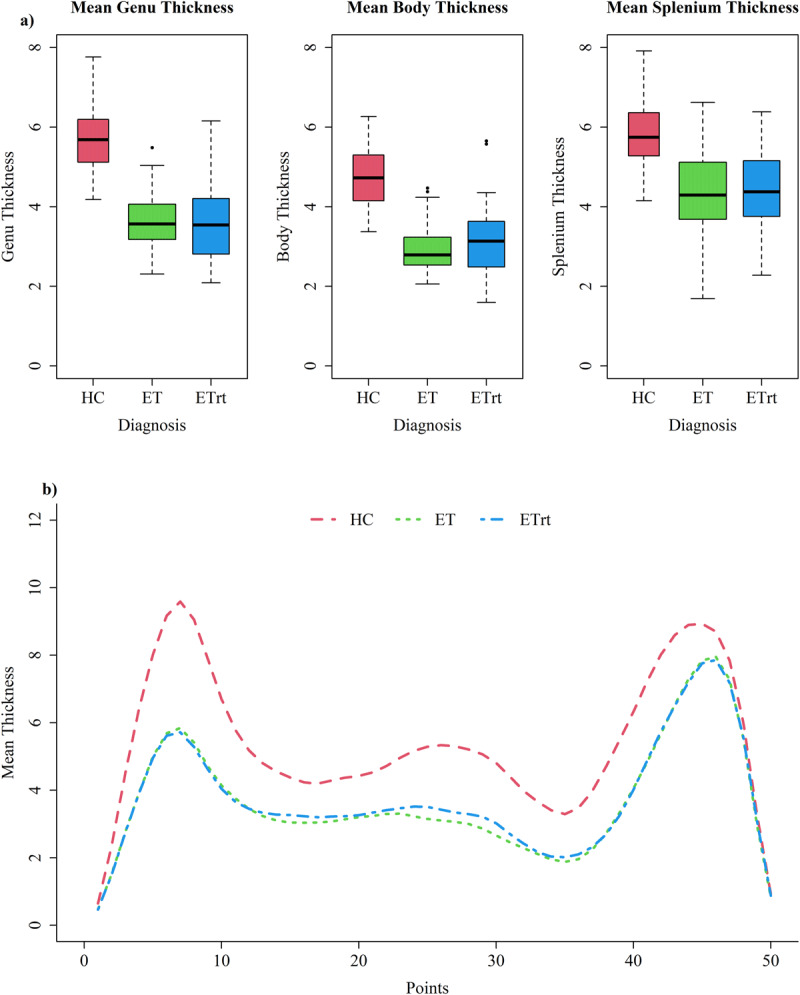 Figure 1
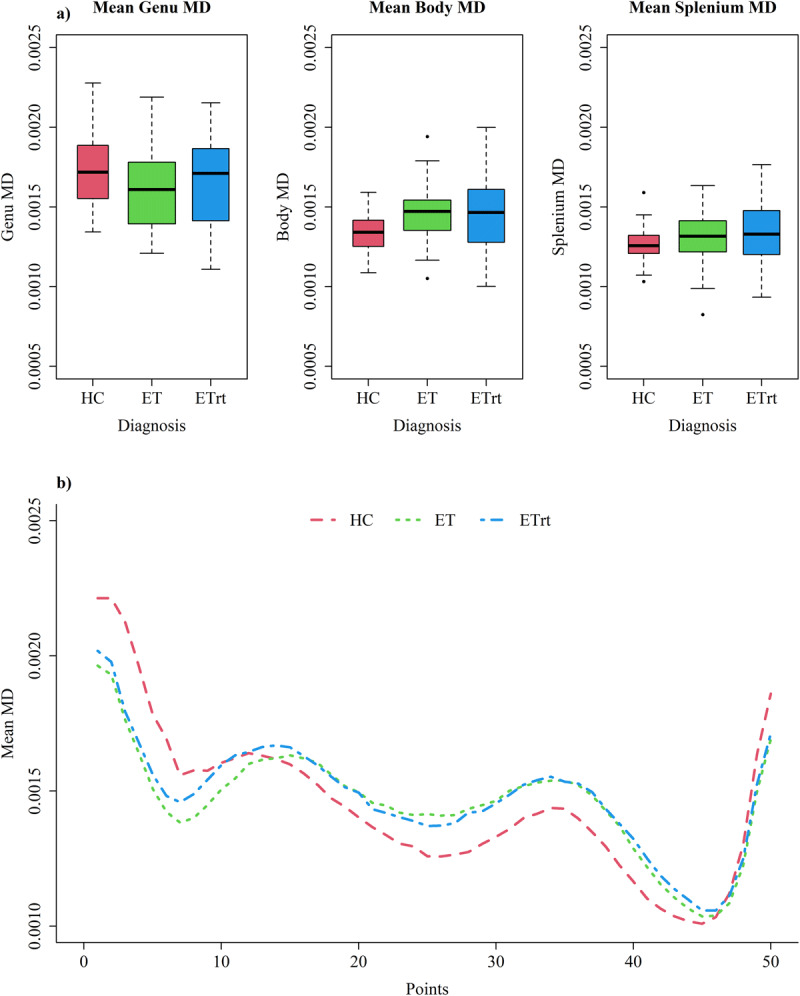 Figure 2
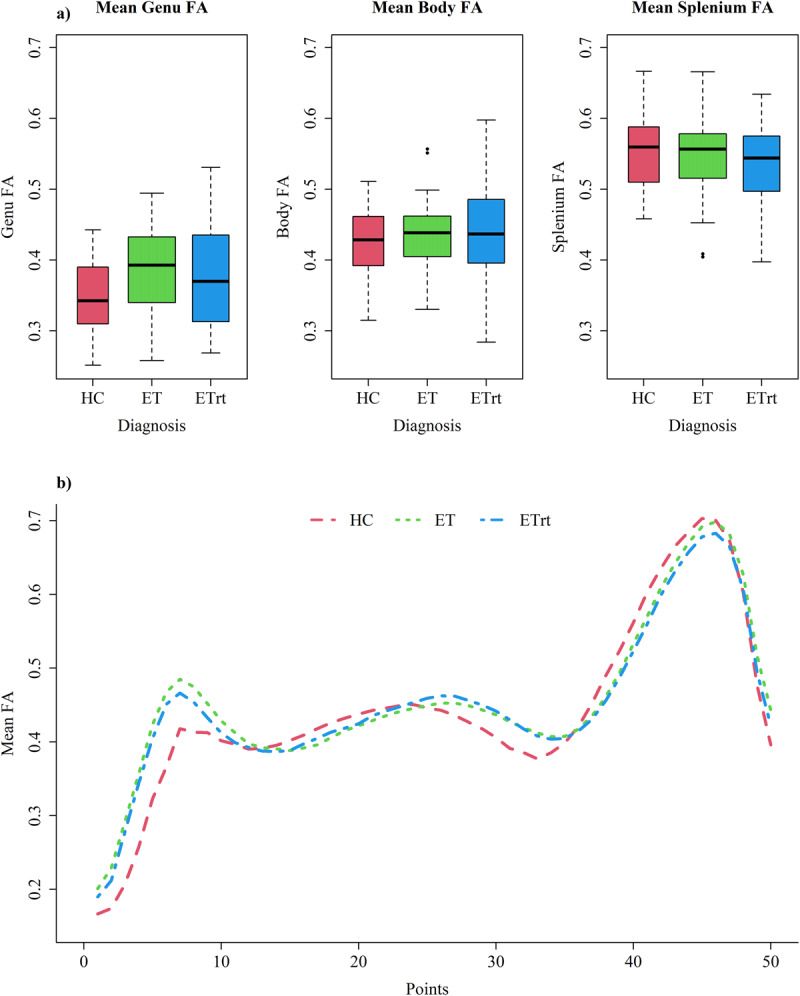 Figure 3
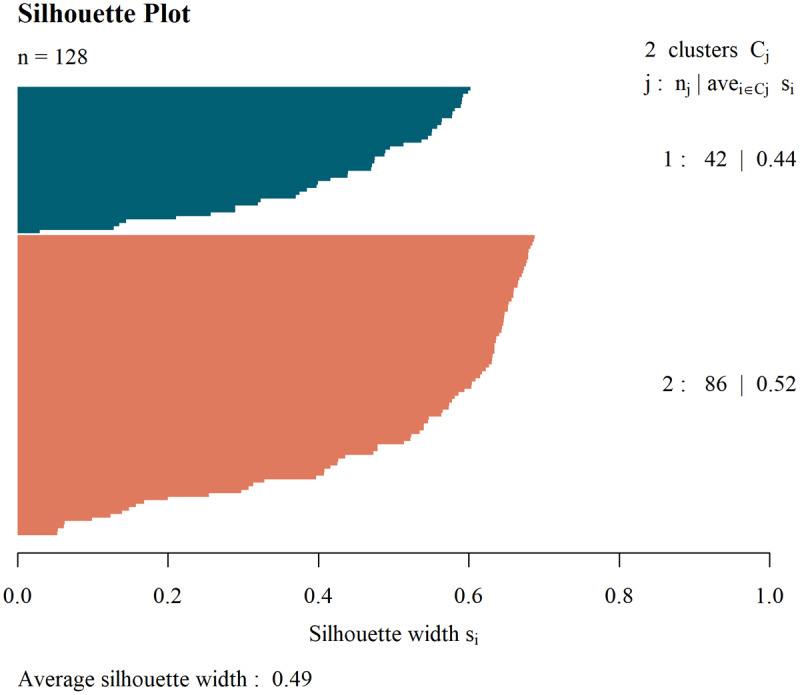 Figure 4
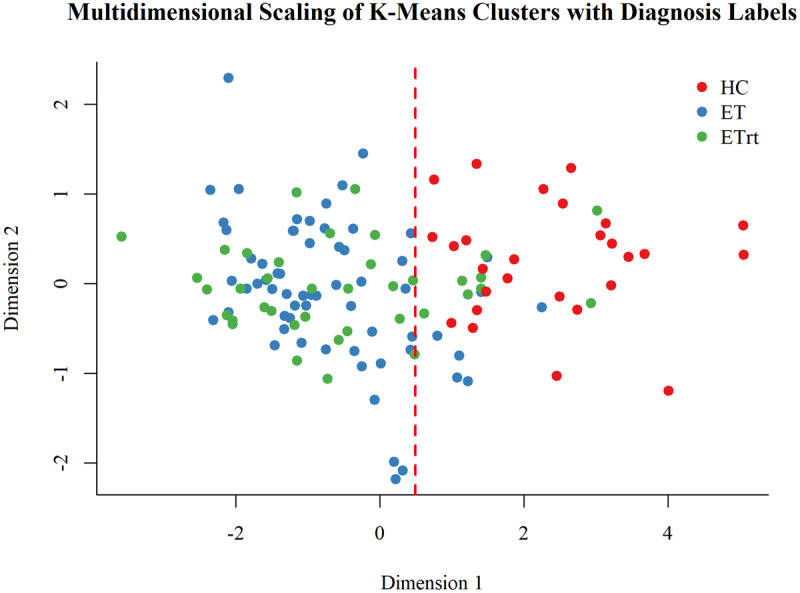 Figure 5
Peer Reviews
No public reviews on file for this paper yet. If you reviewed it on a platform where reviews are public (OpenReview, ICLR, NeurIPS, ICML), you can paste yours below so the community can read it here.
Videos
No videos yet. Explain this paper in a talk, walkthrough, or lecture? Add one.
Taxonomy
TopicsNeurological disorders and treatments · Genetic Neurodegenerative Diseases · Neurological and metabolic disorders