Limited genomic diversity and convergent adaptation of Brucella melitensis isolated from human in East China, from 2011 to 2024
Lan Huang, Lu Zhou, Nan Zhang, Weizhong Zhou, Buyun Xu, Jie Hong, Wei Zhang, Ying Zhang, Ke Xu, Changjun Bao, Hai Jiang, Zhongming Tan, Jingxin Li

TL;DR
This study examines the genomic diversity of Brucella melitensis in Jiangsu, China, finding limited genetic variation and new genotypes linked to human brucellosis.
Contribution
Identification of four novel core gene sequence types (cgSTs) and evidence of convergent adaptation in Brucella melitensis isolates.
Findings
85.24% of isolates were Brucella melitensis biovar 3 and 98.06% were sequence type 8 (ST8).
Two distinct clades were identified, one linked to Middle East strains and the other to hyper-endemic regions in China.
Isolates showed limited genetic diversity and signs of adaptation to host and environment.
Abstract
This study aimed to investigate the genomic epidemiology of Brucella melitensis in Jiangsu Province, a typical low-endemic region in East China where the incidence of human brucellosis has been increasing in recent years. Accordingly, a molecular epidemiological study was conducted on the 2,552 reported brucellosis patients in Jiangsu province, from 2011 to 2024. All B. melitensis isolated from these patients were sequenced using next-generation sequencing (NGS), and 515 strains met the criteria for subsequent analysis. Core genome multi-locus sequence typing (cgMLST), pan-genome analysis and core genome single nucleotide polymorphism (cgSNP) were utilized to analyze genomic characteristics and establish the epidemiological linkages among global strains. Among 515 isolates, 439 (85.24%) and 505 (98.06%) were identified as B. melitensis biovar 3 and sequence type 8(ST8), respectively.…
Genes, proteins, chemicals, diseases, species, mutations and cell lines named across the full text — each resolved to its canonical identifier and authoritative record.
Click any figure to enlarge with its caption.
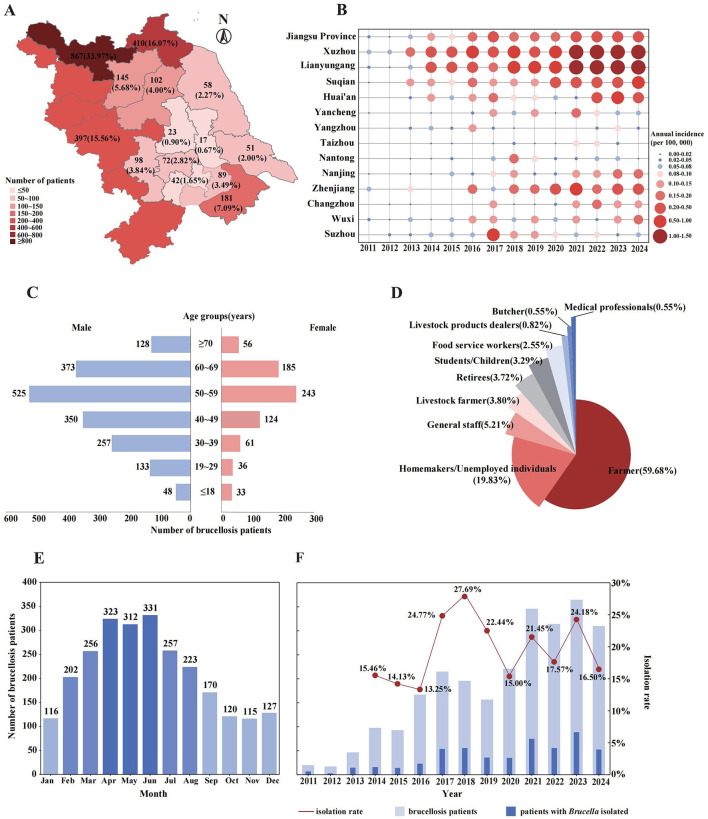 Figure 1
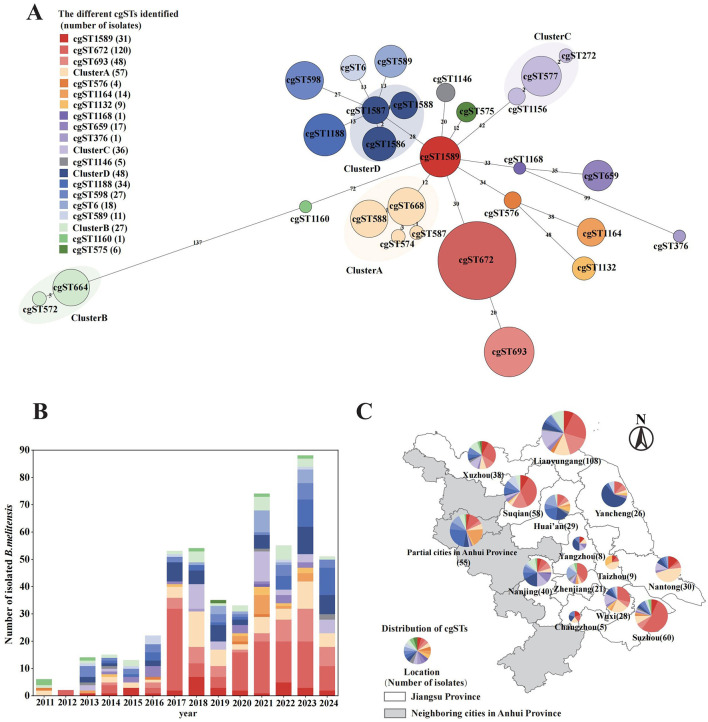 Figure 2
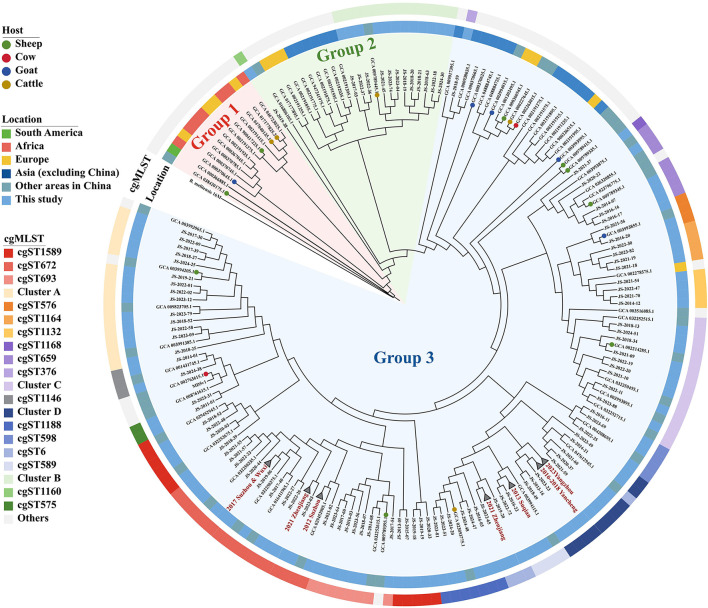 Figure 3
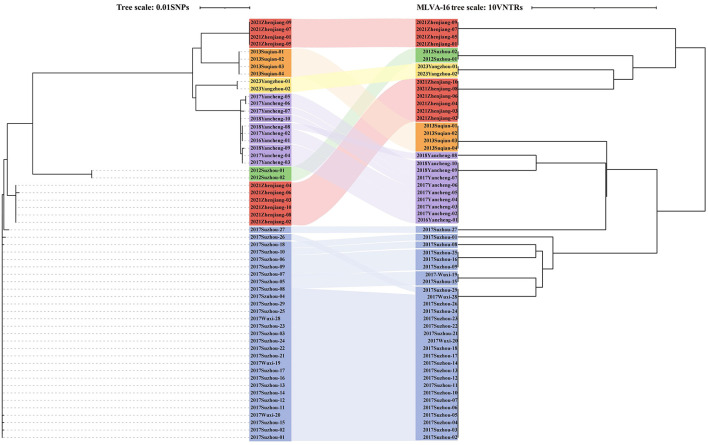 Figure 4
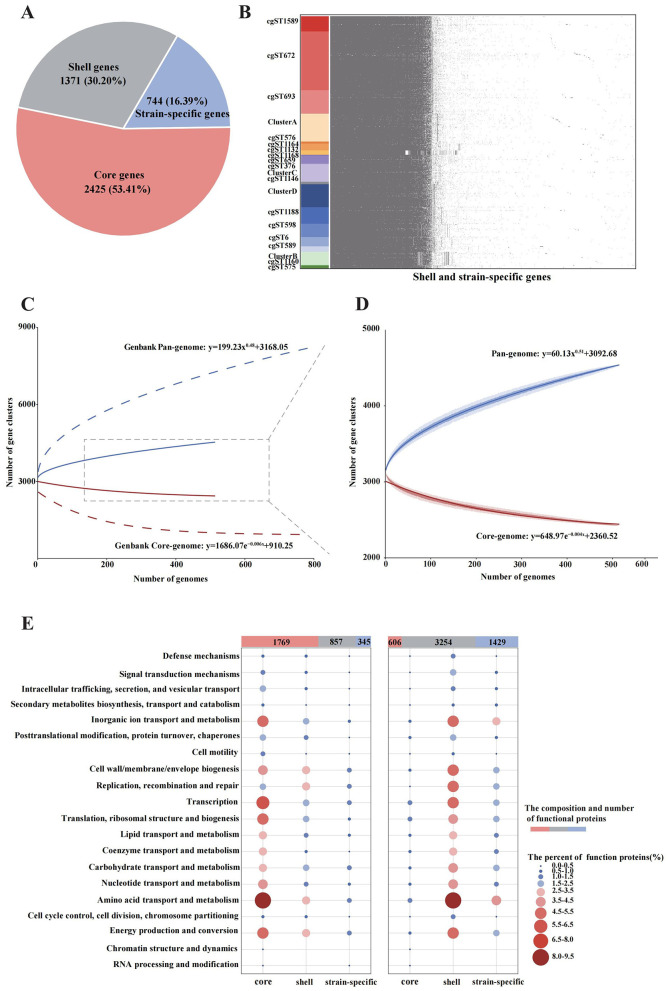 Figure 5
Peer Reviews
No public reviews on file for this paper yet. If you reviewed it on a platform where reviews are public (OpenReview, ICLR, NeurIPS, ICML), you can paste yours below so the community can read it here.
Videos
No videos yet. Explain this paper in a talk, walkthrough, or lecture? Add one.
Taxonomy
TopicsBrucella: diagnosis, epidemiology, treatment · Salmonella and Campylobacter epidemiology · Escherichia coli research studies