Is Night Shift Work Associated with Ovarian Cancer? A Systematic Review and Meta-Analysis
Ahmed Arafa, Mazin Alhussein, Amin Alayyan, Haytham A. Sheerah, Mona S. Ibrahim, Abeer S. Alasmari, Sarah A. Barzanji, Samah A. Bukhari, Alhanouf K. Althaydi, Ehab Elkady, Tarig A. Y. Ali, Abdulrahman Almazrooa

TL;DR
This study reviews and analyzes research to determine if night shift work increases the risk of ovarian cancer.
Contribution
The study provides a meta-analysis of multiple studies to clarify the association between night shift work and ovarian cancer risk.
Findings
Overall, night shift work was not significantly associated with ovarian cancer (OR = 1.13; 95% CI: 0.96, 1.32).
Case–control studies showed a significant association (OR = 1.36; 95% CI: 1.12, 1.66).
Exposure misclassification in some studies may have reduced risk estimates.
Abstract
Background: Night shift work has been classified as a probable carcinogen due to its disruption of circadian rhythms. However, whether night shift work can increase the risk of ovarian cancer remains unclear. Herein, we investigated this association using a systematic review and meta-analysis. Methods: We systematically searched several databases until June 2025 for relevant studies. Effect estimates were extracted and pooled using a random-effects model to calculate odds ratios (ORs) with 95% confidence intervals (CIs). Heterogeneity across studies was assessed using the I2 statistic, and publication bias was assessed using Egger’s regression test and funnel plot asymmetry. Results: Seven studies (eight cohorts) involving >2.5 million women were included. Overall, night shift work was not significantly associated with ovarian cancer (OR = 1.13; 95% CI: 0.96, 1.32; I2 = 49%). However,…
Genes, proteins, chemicals, diseases, species, mutations and cell lines named across the full text — each resolved to its canonical identifier and authoritative record.
Click any figure to enlarge with its caption.
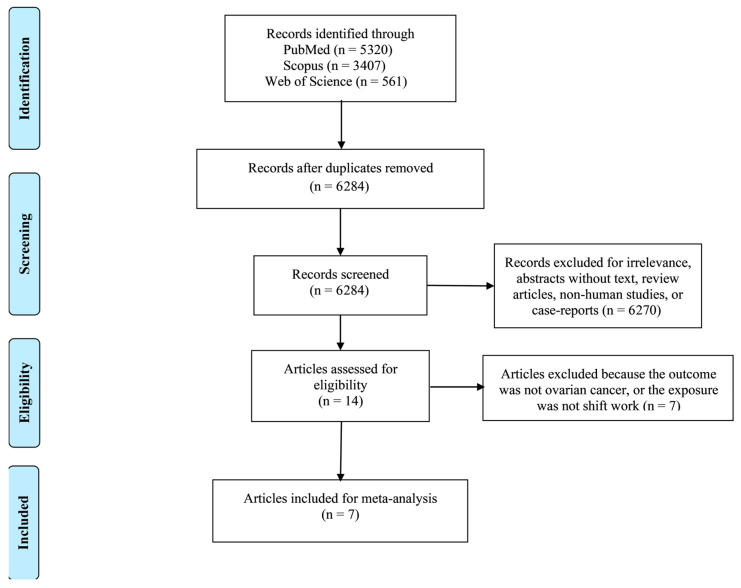 Figure 1
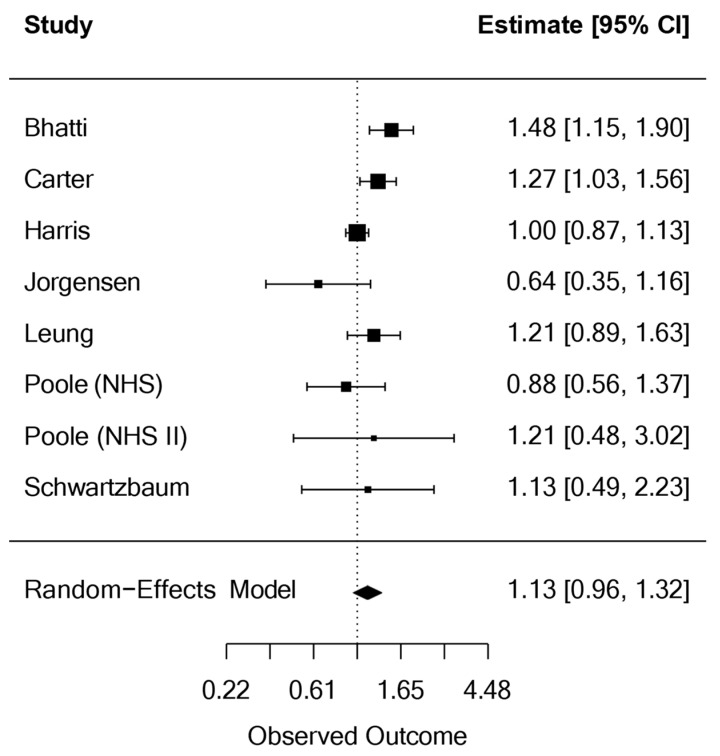 Figure 2
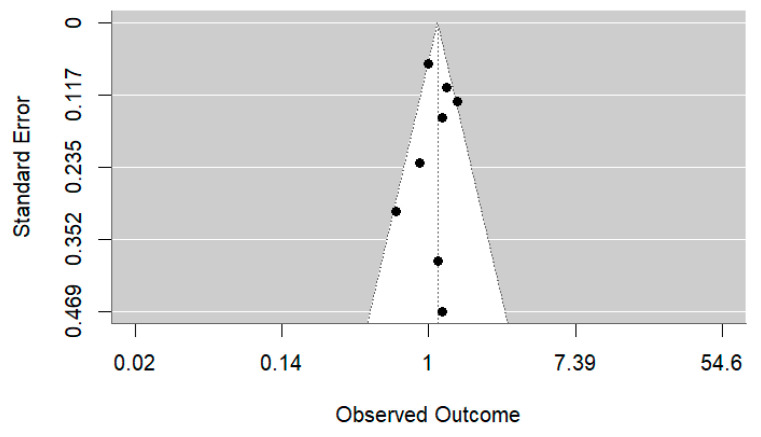 Figure 3
Peer Reviews
No public reviews on file for this paper yet. If you reviewed it on a platform where reviews are public (OpenReview, ICLR, NeurIPS, ICML), you can paste yours below so the community can read it here.
Videos
No videos yet. Explain this paper in a talk, walkthrough, or lecture? Add one.
Taxonomy
TopicsCircadian rhythm and melatonin · Psychological and Temporal Perspectives Research · Sleep and Work-Related Fatigue
1. Introduction
Ovarian cancer ranks as the eighth most common cancer among women worldwide, with an estimated 324,398 new cases and 206,839 deaths reported in 2022 [1]. Unlike breast or cervical cancer, where screening programs and early detection strategies exist, ovarian cancer is often diagnosed at an advanced stage, resulting in poor survival outcomes. This late detection contributes not only to high mortality, but also to substantial healthcare costs and productivity losses, with treatment requiring extensive surgery, chemotherapy, and prolonged hospitalizations. Identifying modifiable risk factors is therefore a priority in efforts to reduce the global burden of ovarian cancer [1,2].
While established risk factors for ovarian cancer include advancing age, a family history of the disease, BRCA1/2 mutations, reproductive factors, and hormone use, there is growing interest in the role of occupational exposures in ovarian carcinogenesis [3]. Among these, night shift work has garnered attention due to its potential to disrupt circadian rhythms, which may, in turn, influence cancer development. The International Agency for Research on Cancer (IARC) has classified night shift work as a probable human carcinogen (Group 2A), citing evidence for its role in disturbing endogenous circadian regulation [4]. Epidemiological studies have linked night shift work to increased risks of several cancers, including breast [5], prostate [6], esophageal [7], and colorectal cancers [8].
Mechanistically, the suppression of melatonin, a hormone with antioxidant and oncostatic properties, caused by exposure to light at night, is the main biological rationale behind these associations. It may hinder DNA repair, increase oxidative stress, and alter estrogen signaling, all of which are associated with hormone-sensitive cancers [9]. Given the presence of estrogen receptors on ovarian tissue and evidence of circadian gene dysregulation in ovarian tumor cells, there is biological plausibility for a link between circadian disruption and ovarian carcinogenesis [10].
Despite these potential mechanisms, epidemiological evidence on the association between night shift work and ovarian cancer remains inconsistent. Some studies have reported increased risks among women exposed to night shift work [11,12], while others have observed no association [13,14,15,16,17]. Additionally, a previous meta-analysis investigating the association between shift work and several cancers, including ovarian cancer, did not reach conclusive findings [18]. In this context, we conducted an updated systematic review and meta-analysis of observational studies to evaluate the association between night shift work and the risk of ovarian cancer.
2. Materials and Methods
2.1. Registration
This systematic review and meta-analysis adhered to the Preferred Reporting Items for Systematic Reviews and Meta-Analyses (PRISMA) guidelines [19]. The protocol was registered in the International Prospective Register of Systematic Reviews (PROSPERO) with the ID CRD420241066955.
2.2. Eligibility Criteria
We included observational studies that met the following criteria: (1) the exposure was night shift work, including night, rotating, or irregular work schedules; (2) the outcome was incident or fatal ovarian cancer; (3) the study design was cohort or case–control; (4) effect estimates such as odds ratios (ORs), relative risks, or hazard ratios with 95% confidence intervals (CIs) were reported; and (5) articles were published in English. We excluded reviews, case reports, editorials, animal studies, and duplicate publications.
2.3. Search Strategy
A systematic search was conducted on PubMed, Web of Science, and Scopus for articles published before 5 June 2025, using predefined search terms related to night shift work and cancer (Table A1). Two reviewers independently screened titles and abstracts for eligibility. Full texts of relevant articles were reviewed, and reference lists of included articles and relevant reviews were checked for additional studies. Full texts of potentially relevant studies were then assessed against the inclusion criteria. Disagreements were resolved through discussion.
2.4. Data Extraction
Two reviewers independently extracted data using a pre-designed form. Variables included the following: first author, publication year, country, study design, follow-up period, sample size, population details, definitions and assessment methods for night shift work, outcome definitions, adjusted covariates, and effect estimates with 95% CIs. When multiple estimates were available, the most fully adjusted was used.
2.5. Quality Assessment
Study quality was assessed using a modified version of the Newcastle–Ottawa Scale (NOS), which scores on a 9-star system [20]. The scale covers selection, comparability, and outcome/exposure domains, with a maximum score of 9. Scores of 7–9 indicated high quality, 4–6 moderate quality, and 0–3 low quality. Independent assessments were conducted by two authors, with disagreements resolved through consensus.
2.6. Statistical Analysis
The most adjusted risk estimates for the highest dose or frequency of night shift work from each study were pooled using a random-effects model (DerSimonian and Laird method) [21]. Heterogeneity was evaluated using τ^2^, I^2^, and H^2^ statistics [22]. Publication bias was assessed with Egger’s regression test and funnel plot asymmetry [23]. Sensitivity analyses, excluding one study at a time, tested the robustness of the results. The subgroup analyses examined study design (cohort vs. case–control), exposure assessment method (questionnaire vs. job-exposure matrix), study quality, and outcome type (incidence vs. mortality). All analyses were performed using R software (version 3.2.0) with the ‘metafor’ package [24].
3. Results
3.1. Study Selection
After removing duplicates, reviews, and studies with unrelated exposures or outcomes, seven studies (comprising eight cohorts) were included in the meta-analysis (Figure 1).
3.2. Study Characteristics
The included studies were published between 2007 and 2020 and were conducted in North America and Northern Europe (the US, Canada, Denmark, and Sweden). Five studies had a cohort design [12,13,14,16,17], while two were population-based case–control studies [11,15]. Across all studies, 2,533,187 women were included. Night shift work was assessed either through self-administered questionnaires or job-exposure matrices, and the outcomes included both ovarian cancer incidence and mortality. Most studies adjusted for relevant confounders such as age, parity, oral contraceptive use, and body mass index (Table 1). Of the eight cohorts, two studies (Bhatti et al. [11] and Carter et al. [12]) reported a statistically significant positive association between night shift work and ovarian cancer. The remaining six cohorts found no significant association [13,14,15,16,17]. Using the modified NOS, all included studies were rated as having moderate or high quality (Table 2).
3.3. Results of Syntheses
The contribution of each cohort to the overall meta-analysis weight was as follows: Bhatti et al. [11]: 17.6%; Carter et al. [12]: 20.4%; Harris et al. [13]: 25.8%; Jørgensen et al. [14]: 5.8%; Leung et al. [15]: 14.7%; Poole et al. (NHS) [16]: 9.0%; Poole et al. NHS II [16]: 2.8%; and Schwartzbaum et al. [17]: 3.9%. The pooled analysis of all seven studies (eight cohorts) found no statistically significant association between night shift work and ovarian cancer: pooled OR = 1.13 (95% CI: 0.96, 1.32). Moderate but statistically non-significant heterogeneity was observed across studies (τ^2^ = 0.02, I^2^ = 49.04%, H^2^ = 1.96; p = 0.056) (Figure 2).
3.4. Publication Bias
Visual inspection of the funnel plot (Figure 3) and results from Egger’s regression test indicated no evidence of publication bias (z = −0.626, p = 0.531), suggesting that small-study effects were unlikely to have influenced the overall results.
3.5. Sensitivity Analyses
We conducted leave-one-out analyses to assess the influence of individual studies. The exclusion of Jørgensen et al. [14] made the overall estimate statistically significant: (OR = 1.16; 95% CI: 1.00, 1.35). Removing Bhatti et al. [11] substantially reduced heterogeneity (I^2^ = 24.11%), suggesting that it was a key source of variability (Table 3).
3.6. Subgroup Analyses
Stratification by study design indicated a positive association in case–control studies (OR = 1.36; 95% CI: 1.12, 1.66; I^2^ = 0.83%), but not in cohort studies (OR = 1.04; 95% CI: 0.89, 1.23; I^2^ = 29.62%). Confining the analysis to high-quality studies, as indicated by modified NOS, made the association statistically significant (OR = 1.17; 95% CI: 1.00, 1.37; I^2^ = 52.01%) (Table 4).
4. Discussion
This systematic review and meta-analysis synthesizes data from over 2.5 million women to evaluate the association between night shift work and ovarian cancer. Although the overall pooled estimate did not reach statistical significance, subgroup analyses revealed important patterns. Case–control studies and high-quality studies showed a statistically significant positive association, suggesting that methodological differences may account for the inconsistencies observed across the literature.
The stronger associations observed in case–control studies may reflect more detailed and accurate exposure assessment. These studies typically collected retrospective information on the frequency and duration of night shift work, thereby reducing exposure misclassification. In contrast, cohort studies assessed night shift work only at baseline, relying on current job titles or occupational codes without accounting for cumulative exposure or changes over time. These methodological limitations likely introduced non-differential misclassification, biasing results toward the null.
Still, recall bias is a notable concern in retrospective designs, as cancer patients may recall or report their occupational history differently than healthy controls, potentially inflating associations. Such bias can arise from differential memory, selective reporting, or increased awareness of suspected risk factors after diagnosis [25,26]. Evidence from breast cancer research shows that women who believed that shift work increased cancer risk were more likely to report past exposure to shift work, suggesting that personal beliefs may influence exposure reporting. However, the study also shows that prompting participants to recall shift work did not increase the likelihood of believing in its carcinogenic potential, indicating that the observed association between belief and reporting was more likely due to exposed individuals endorsing the exposure–disease link rather than classical recall bias [27].
Moreover, study quality also appeared to influence results. High-quality studies (as rated by the modified NOS) showed a significant association, while moderate-quality studies did not. This suggests that rigorous exposure assessment, appropriate control selection, and comprehensive adjustment for confounders may be critical in detecting true associations between night shift work and ovarian cancer.
Several mechanisms support a potential link between night shift work and ovarian carcinogenesis. Disruption of the circadian rhythm suppresses nocturnal melatonin production, a hormone with known oncostatic properties, including antioxidant activity, inhibition of cell proliferation, and modulation of estrogen receptor expression [9,28]. Reduced melatonin levels can lead to hyperestrogenism, a recognized risk factor for hormone-sensitive malignancies such as ovarian cancer [28]. Additionally, chronic exposure to light at night may elevate systemic inflammation and oxidative stress, both of which are implicated in tumorigenesis [29]. Altered sleep–wake cycles can also result in metabolic dysfunction, including insulin resistance and abnormal adipokine signaling, further contributing to an environment conducive to malignant transformation [30]. Furthermore, circadian misalignment can dysregulate the expression of core clock genes such as CLOCK, BMAL1, PER, and CRY, which play vital roles in cell cycle regulation, DNA damage repair, and apoptosis. Dysregulation of these genes has been observed in ovarian tumor tissues and is thought to promote carcinogenesis by impairing genomic stability and enhancing proliferation [31].
From a public health perspective, while this analysis does not conclusively establish night shift work as a risk factor for ovarian cancer, the positive associations observed in specific study subgroups raise important concerns. Millions of women worldwide are engaged in night shift work, particularly in the healthcare and service industries. Even a modest increase in cancer risk could have significant population-level implications. Although current screening guidelines for ovarian cancer do not consider occupational history [32], clinicians should consider night shift work when assessing overall risk, particularly for women with additional risk factors such as family history or BRCA mutations.
It is also important to consider health equity. Women in lower socioeconomic groups and minority populations are disproportionately represented in night shift work occupations, which may exacerbate existing disparities in cancer outcomes [33]. This environmental justice perspective strengthens the rationale for workplace interventions and targeted preventive strategies.
The main strength of this study is the large-pooled sample, which enabled precise effect estimates and subgroup analyses. However, some limitations should be addressed. First, there was heterogeneity in study design, populations, and how night shift work was defined and measured. Most studies lacked detailed exposure metrics that would allow for a proper assessment of the intensity, frequency, and duration of night shift work. Some studies relied on current job titles or general occupational classifications without lifetime work histories, resulting in potential misclassification. For example, Carter et al. [12] classified exposure based on the current job and had no data on prior night shift work or exposure frequency. Harris et al. [13] used proxy occupational categories rather than direct night shift work data. Jørgensen et al. [14] had no night shift work duration data and likely included misclassification due to early-career night shift work in older nurses. Leung et al. [15] reported a relatively small number of long-term exposed cases and potential selection bias due to low control participation, which may have skewed the exposure prevalence. Poole et al. [16] potentially misclassified permanent night workers as unexposed, biasing results toward the null. Schwartzbaum et al. [17] used aggregated job-level data instead of individual exposure histories. Second, few studies distinguished fixed-night work from rotating night shift work; therefore, we could not examine it separately, and our findings mainly reflect rotating shift schedules. Third, generalizability may be restricted, as the studies included were conducted on Western populations.
5. Conclusions
While our meta-analysis did not confirm a statistically significant association between night shift work and ovarian cancer overall, evidence from case–control and higher-quality studies suggested a possible increased risk. To confirm this association, future research should focus on large-scale prospective cohort studies with standardized and repeated assessments of night shift work exposure, detailed adjustment for established ovarian cancer risk factors, and integration of biological investigations to explore pathways linking circadian disruption to ovarian carcinogenesis.
The reference list from the paper itself. Each links out to its DOI / PubMed record.
- 1Bray F. Laversanne M. Sung H. Ferlay J. Siegel R.L. Soerjomataram I. Jemal A. Global cancer statistics 2022: GLOBOCAN estimates of incidence and mortality worldwide for 36 cancers in 185 countries CA Cancer J. Clin.20247422926310.3322/caac.2183438572751 · doi ↗ · pubmed ↗
- 2Adjei N.N. Haas A.M. Sun C.C. Zhao H. Yeh P.G. Giordano S.H. Toumazis I. Meyer L.A. Cost of ovarian cancer by the phase of care in the United States Am. J. Obstet. Gynecol.202523220410.1016/j.ajog.2024.08.023PMC 1201424439159781 · doi ↗ · pubmed ↗
- 3Teglia F. Collatuzzo G. Boffetta P. Occupational cancers among employed women: A narrative review Cancers 202315133410.3390/cancers 1504133436831675 PMC 9954144 · doi ↗ · pubmed ↗
- 4IARC Working Group on the Evaluation of Carcinogenic Risks to Humans Painting, Firefighting, and Shiftwork IARC Monographs on the Evaluation of Carcinogenic Risks to Humans, No. 98; International Agency for Research on Cancer Lyon, France 2010 Available online: https://www.ncbi.nlm.nih.gov/books/NBK 326814/(accessed on 8 June 2025)PMC 478149721381544 · pubmed ↗
- 5Moon J. Ikeda-Araki A. Mun Y. Night shift work and female breast cancer: A two-stage dose-response meta-analysis for the correct risk definition BMC Public Health 202424206510.1186/s 12889-024-19518-239085800 PMC 11293116 · doi ↗ · pubmed ↗
- 6Moon J. Holzhausen E.A. Mun Y. Risk of prostate cancer with increasing years of night shift work: A two-stage dose-response meta-analysis with duration of night shift work as exposure dose Heliyon 202410 e 2908010.1016/j.heliyon.2024.e 2908038628771 PMC 11016962 · doi ↗ · pubmed ↗
- 7Arafa A. Eshak E.S. Iso H. Muraki I. Tamakoshi A. Night Work, Rotating Shift Work, and the Risk of Cancer in Japanese Men and Women: The JACC Study J. Epidemiol.20213158559210.2188/jea.JE 2020020832801280 PMC 8593580 · doi ↗ · pubmed ↗
- 8Wang X. Ji A. Zhu Y. Liang Z. Wu J. Li S. Meng S. Zheng X. Xie L. A meta-analysis including dose-response relationship between night shift work and the risk of colorectal cancer Oncotarget 20156250462506010.18632/oncotarget.450226208480 PMC 4694814 · doi ↗ · pubmed ↗