Amputation risk from Providencia stuartii infection in a patient with diabetes mellitus: A case report
Yen-Ning Chang, Jian-Jr Lee, Chi Lo

TL;DR
A diabetic patient developed a severe Providencia stuartii infection leading to amputation, highlighting the risks of such infections in diabetics.
Contribution
This case report highlights the rare but severe progression of P. stuartii infection in a diabetic patient.
Findings
Providencia stuartii infection in a diabetic patient progressed to bacteremia and septic shock.
The patient required below-knee amputation despite empirical treatment.
Early detection and intervention are critical to prevent severe outcomes in such infections.
Abstract
We describe the emergence of Providencia stuartii infection and subsequent bacteremia in a bedridden patient with poorly controlled diabetes mellitus. Despite empirical treatment, the disease progressed, leading to septic shock and below-knee amputation. We examine the timing and clinical progression of the infection, highlighting that P. stuartii wound infections in diabetic patients can lead to severe complications. Early detection and appropriate intervention are crucial to prevent such outcomes. •Diabetic wound infection progressing to bacteremia and amputation caused by Providencia stuartii Diabetic wound infection progressing to bacteremia and amputation caused by Providencia stuartii
Genes, proteins, chemicals, diseases, species, mutations and cell lines named across the full text — each resolved to its canonical identifier and authoritative record.
Click any figure to enlarge with its caption.
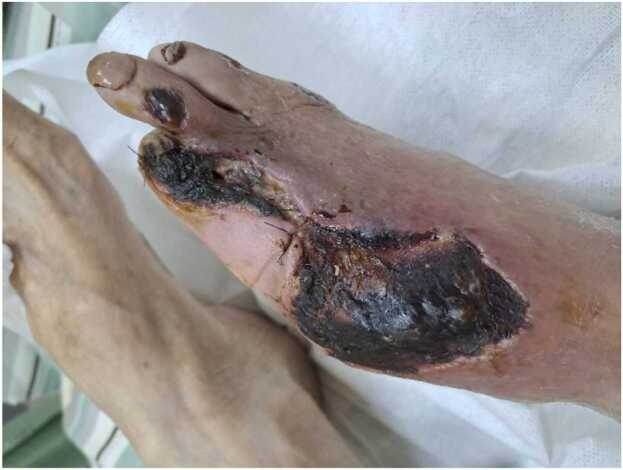 Figure 1
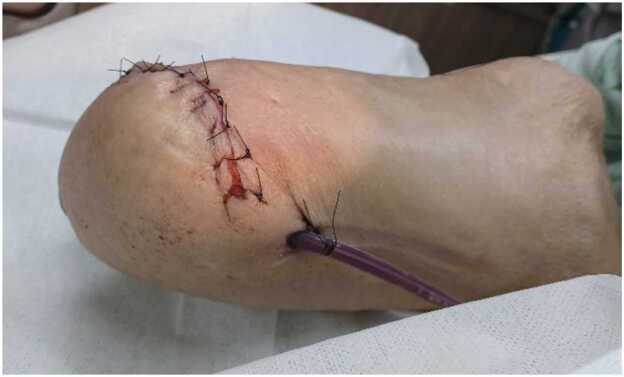 Figure 2
Peer Reviews
No public reviews on file for this paper yet. If you reviewed it on a platform where reviews are public (OpenReview, ICLR, NeurIPS, ICML), you can paste yours below so the community can read it here.
Videos
No videos yet. Explain this paper in a talk, walkthrough, or lecture? Add one.
Taxonomy
TopicsInfective Endocarditis Diagnosis and Management · Neutropenia and Cancer Infections · Diabetic Foot Ulcer Assessment and Management
Introduction
The genus Providencia is a urease-producing, gram-negative bacillus within the family Enterobacteriaceae. This genus includes five species: Providencia stuartii, Providencia rettgeri, Providencia alcalifaciens, Providencia heimbachae, and Providencia rustigianii [1], [2]. Providencia is an opportunistic pathogen which often causes infection in immunocompromised patients, such as diabetic patients, elders, infants, and long-term bedridden patients [3]. Human isolates of Providencia species have been recovered from urine, throat, perineum, axilla, stool, blood, and wound specimens [2]. Although the most common site of infection is the urinary tract, Providencia stuartii still sometimes causes severe wound infections and bacteremia [4]. P. stuartii appears to be sensitive to the antimicrobial agent imipenem. Fluoroquinolones, aminoglycosides, and fourth-generation cephalosporins are also likely to provide useful options for antibiotic therapy [5]. However, drug resistance is increasing recently, so the treatment should be based on the antimicrobial sensitivities, site of infection, cost and comorbid conditions [4], [5]. Due to the rarity of P. stuartii bacteremia developed from wound infections, few cases have been documented. This report presents a patient with poorly controlled type 2 diabetes mellitus (DM) who developed bacteremia from a wound infection of P. stuartii, highlighting the challenges in controlling the progression of sepsis.
Case presentation
An 87-year-old bedridden patient presented with gangrene and bone necrosis of the right big toe was admitted through the emergency department. His medical history included stroke, prostate cancer, hypertension, and poorly controlled type 2 DM. During hospitalization, the patient underwent sequestrectomy and amputation of the right first to third toes. The wound was dressed daily but healed poorly (Fig. 1), requiring multiple bedside debridement. Amoxicillin/ Clavulanate 600 mg three times a day was prescribed initially for the prevention of infection. However, a new onset of fever still noted with hypotension, dyspnea, and drowsy consciousness during the hospitalization, prompting surveillance of cultures of urine, deep pus, and blood. Laboratory data revealed an elevated high-sensitivity C-reactive protein (hsCRP) level of 12.08 mg/dL and leukocytosis with a white blood cell count of 13,200/μL, with 62.7 % neutrophils.Fig. 1. Despite amputation of the right first to third toes and repeated surgical debridement, the wound demonstrated delayed healing.Fig. 1
Both deep pus and blood cultures confirmed P. stuartii infection; therefore, the patient was empirically treated with intravenous cefepime at 2 g daily, adjusted for renal function. Due to the patient's bedridden status and infection, empirical intravenous antibiotic was continued for sepsis management. The organism was reported to be sensitive to cefmetazole, cefotaxime, cefepime, ciprofloxacin, levofloxacin, trimethoprim/sulfamethoxazole, piperacillin-tazobactam, ertapenem, carbapenem, and amikacin. Cefepime was maintained for one week, and follow-up blood and wound cultures seven days after treatment initiation showed no bacterial growth. Despite this, the wound still healed poorly, the patient's consciousness remained drowsy, and septic shock persisted, requiring increasing oxygen support. The patient was intubated and transferred to the intensive care unit for close monitoring. Further bedside debridement failed to control the necrosis, and below-knee amputation was ultimately performed (Fig. 2). The patient was weaned off the ventilator and extubated after the condition was stable. The total stay in the intensive care unit was 47 days.Fig. 2. Below-knee amputation was performed to control the infection and progressive wound necrosis.Fig. 2
Discussion
Providencia stuartii is an opportunistic organism. Although the incidence rate of Providencia bacteremia is low in the general population, it can be increased in patient groups with long-term indwelling urinary catheters, especially in elderly patients who are hospitalized or reside in a nursing care facility [2]. In this case, the patient had several risk factors for infection, including bedridden, having a long-term Foley catheter, advanced age, and type 2 DM. Previous studies have highlighted the risk of bacteremia associated with urinary tract infections. In a 12-year-period study in Ohio hospital, 49 patients were found to have bacteremia with P. stuartii infection, where 78 % of the cases are above 70 years, 96 % are from a nursing home, while 92 % have chronic Foley catheters on admission [6]. The urinary tract was definitely proven to be the source of bacteremia in 35 patients (71 %) and was the probable source in another 5 patients (11 %) [6]. While P. stuartii is more commonly reported in urinary tract infections, in this case, the bacterium was isolated from deep pus and blood cultures, indicating that wound infections can also lead to severe bacteremia.
P. stuartii infections were proved to be more difficult to treat in diabetic patients, most of them being healthcare-associated bacteremia which require improved infection control measures [3]. Early antibiotic treatment is essential to prevent septic shock and potential mortality in such vulnerable patients. In 2015, Wie SH. reported that Providencia is susceptible to cefepime, isepamicin, imipenem, piperacillin-tazobactam, and amikacin. Empirical treatment should favor third- or fourth-generation cephalosporins over first-generation cephalosporins and fluoroquinolones [7]. Recently, the high virulence, pathogenicity, invasive properties, strong biofilm forming capability and multidrug resistance pattern indicates this bacterium to be a highly potential threat for infections in burn and immunocompromised patients. The evidence of being resistant to carbapenems indicates an alarming condition as carbapenems are considered to be the last line drug to treat P. stuartii [8]. While not every P. stuartii infection results in severe bacteremia, early treatment and antibiotic adjustments based on culture and sensitivity reports are critical for patients with multiple risk factors for prolonged infection.
In summary, wound infection leading to severe P. stuartii bacteremia is rarely reported. However, in patients with poorly controlled DM and multiple comorbidities, early and targeted treatment is essential. Cefepime is a reasonable empiric antibiotic choice. With the increasing prevalence of multidrug resistance, the severity of P. stuartii wound infection should not be underestimated.
Authors’ contributions
Yen-Ning Chang, Jian-Jr Lee, and Chi Lo contributed to the manuscript conceptualization. Yen-Ning Chang wrote the original draft, while Jian-Jr Lee and Chi Lo each contributed to editing and revision. All authors read and approved the final manuscript.
CRediT authorship contribution statement
Chi Lo: Writing – review & editing. Jian-Jr Lee: Writing – review & editing. Yen-Ning Chang: Writing – original draft.
Funding
This research did not receive any specific grant from funding agencies in the public, commercial, or not-for-profit sectors.
Declaration of Competing Interest
The authors declare that there are no conflicts of interests
The reference list from the paper itself. Each links out to its DOI / PubMed record.
- 1O'Hara C.M.Brenner F.W.Miller J.M.Classification, identification, and clinical significance of proteus, providencia, and morganella Clin Microbiol Rev 1342000 Oct 53454610.1128/CMR.13.4.53411023955 PMC 88947 · doi ↗ · pubmed ↗
- 2Wie S.H.Clinical significance of providencia bacteremia or bacteriuria Korean J Intern Med 3022015 Mar 16716910.3904/kjim.2015.30.2.167Epub 2015 Feb 27. PMID: 25750557; PMCID: PMC 4351322.25750557 PMC 4351322 · doi ↗ · pubmed ↗
- 3Rus M.Licker M.Musuroi C.Muntean D.Vulpie S.Magiar O.Association of proteus mirabilis and providencia stuartii infections with diabetes Med (Kaunas)5822022 Feb 1127110.3390/medicina 58020271 PMID: 35208593; PMCID: PMC 8880118.PMC 888011835208593 · doi ↗ · pubmed ↗
- 4Lin K.Lin A.N.Linn S.Reddy M.Bakshi A.Recurrent primary suprahepatic abscess due to providencia stuartii: a rare phenomenon Cureus 992017 Sep 16e 169110.7759/cureus.1691 PMID: 29158999; PMCID: PMC 5690289.PMC 569028929158999 · doi ↗ · pubmed ↗
- 5Liu J.Wang R.Fang M.Clinical and drug resistance characteristics of providencia stuartii infections in 76 patients J Int Med Res 48102020 Oct 10.1177/0300060520962296 PMID: 33081537; PMCID: PMC 7588764.PMC 758876433081537 · doi ↗ · pubmed ↗
- 6Woods T.D.Watanakunakorn C. Bacteremia due to providencia stuartii: review of 49 episodes South Med J 8921996 Feb 22122410.1097/00007611-199602000-00013 PMID: 8578355.8578355 · doi ↗ · pubmed ↗
- 7Malviya M.Kale-Pradhan P.Coyle M.Giuliano C.Johnson L.B.Clinical and drug resistance characteristics of providencia infections Microorganisms 12102024 Oct 18208510.3390/microorganisms 12102085 PMID: 39458394; PMCID: PMC 11510300.39458394 PMC 11510300 · doi ↗ · pubmed ↗
- 8Mondol S.M.Islam I.Islam M.R.Shakil S.K.Rakhi N.N.Mustary J.F.Genomic landscape of NDM-1 producing multidrug-resistant providencia stuartii causing burn wound infections in Bangladesh Sci Rep 1412024 Jan 26224610.1038/s 41598-024-51819-9PMID: 38278862; PMCID: PMC 10817959.38278862 PMC 10817959 · doi ↗ · pubmed ↗