Temperature-dependent dynamic disproportionation in LiNiO2
Andrey D. Poletayev, Robert J. Green, Jack E. N. Swallow, Lijin An, Leanne Jones, Grant Harris, Peter Bencok, Ronny Sutarto, Jonathon P. Cottom, Benjamin J. Morgan, Robert A. House, Robert S. Weatherup, M. Saiful Islam

TL;DR
This study reveals how nickel ions in lithium nickel oxide dynamically change states with temperature, explaining the material's properties and potential uses.
Contribution
The paper introduces a model of dynamic nickel ion disproportionation in LiNiO2, verified by experiments and simulations.
Findings
Ni ions in LiNiO2 disproportionate into three states that interconvert dynamically.
Temperature affects the population of these nickel states, influencing material properties.
The model explains various physical behaviors like magnetism and electronic conduction.
Abstract
Nickelate materials offer diverse functionalities for energy and computing applications. Lithium nickel oxide (LiNiO2) is an archetypal layered nickelate, but the electronic structure of this correlated material is not yet fully understood. Here we investigate the temperature-dependent speciation and spin dynamics of Ni ions in LiNiO2. Ab initio simulations predict that Ni ions disproportionate into three states, which dynamically interconvert and whose populations vary with temperature. These predictions are verified using x-ray absorption spectroscopy, x-ray magnetic circular dichroism, and resonant inelastic x-ray scattering at the Ni L3,2-edge. Charge-transfer multiplet calculations consistent with disproportionation reproduce all experimental features. Our results support a model of dynamic disproportionation that explains diverse physical observations of LiNiO2, including…
Genes, proteins, chemicals, diseases, species, mutations and cell lines named across the full text — each resolved to its canonical identifier and authoritative record.
Click any figure to enlarge with its caption.
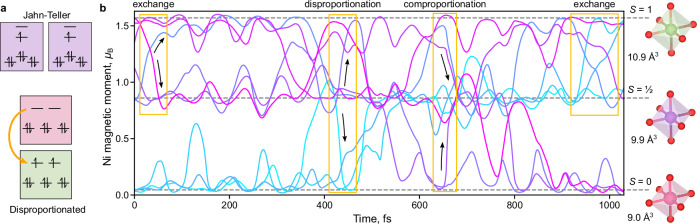 Figure 1
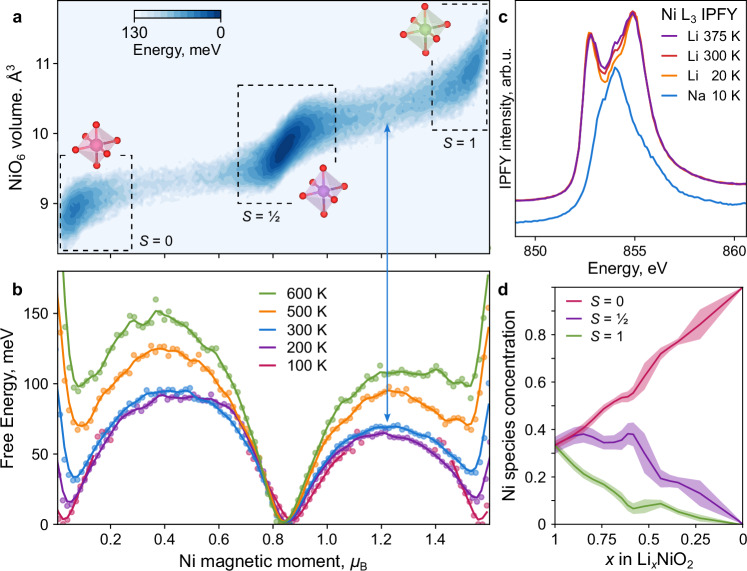 Figure 2
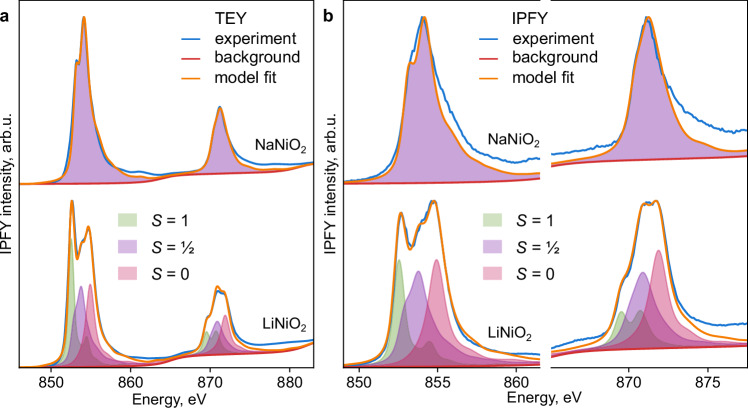 Figure 3
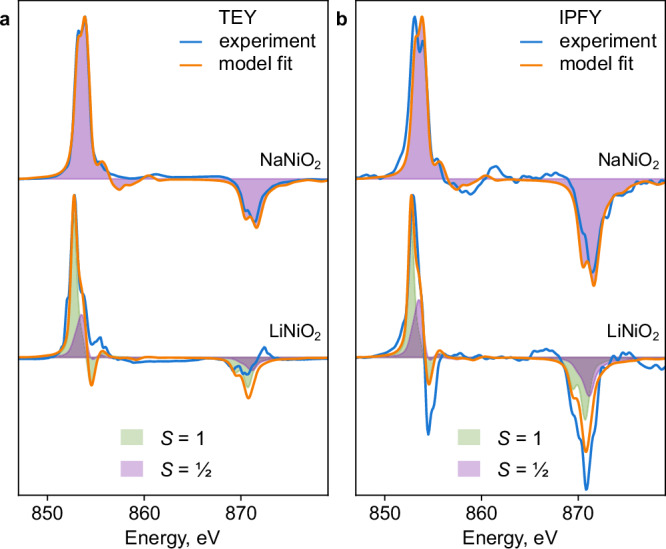 Figure 4
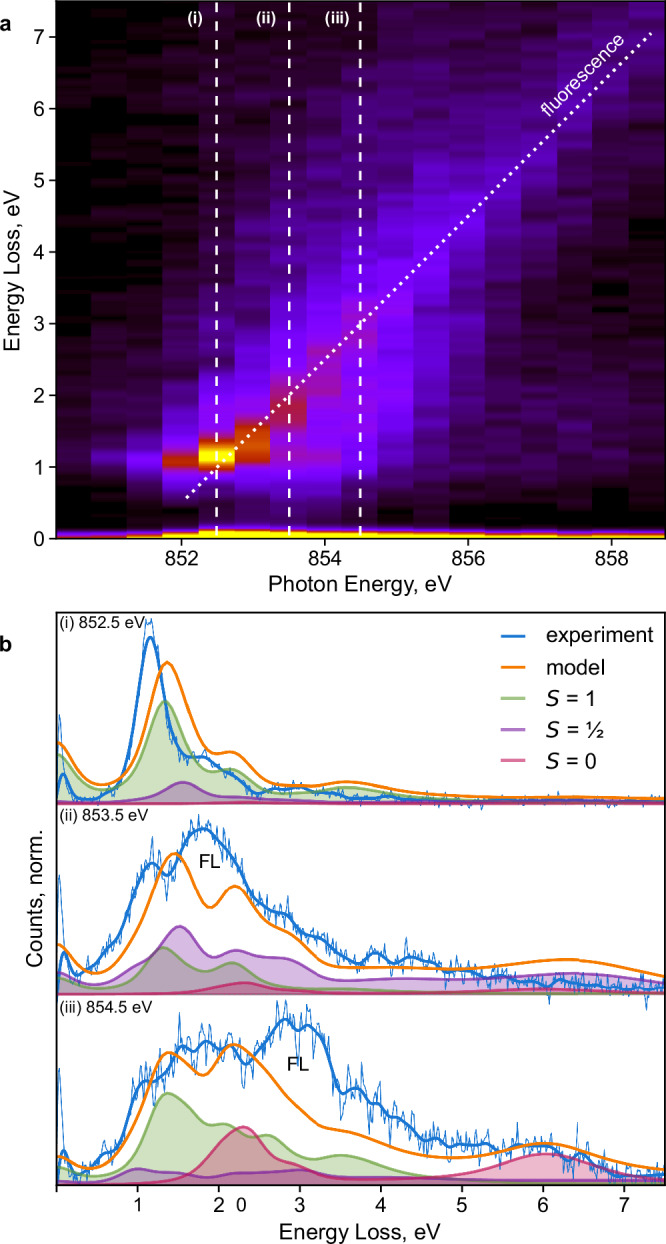 Figure 5
- —https://doi.org/10.13039/100010663EC | EU Framework Programme for Research and Innovation H2020 | H2020 Priority Excellent Science | H2020 European Research Council (H2020 Excellent Science - European
- —https://doi.org/10.13039/501100000288Royal Society
- —https://doi.org/10.13039/501100000266RCUK | Engineering and Physical Sciences Research Council (EPSRC)
- —The Faraday Institution, grant reference numbers FIRG016, FIRG024, FIRG030. CAMS-UK Fellowship: Analytical Chemistry Trust Fund. UKRI: MR/V024558/1. Natural Sciences and Engineering Research Council o
Peer Reviews
No public reviews on file for this paper yet. If you reviewed it on a platform where reviews are public (OpenReview, ICLR, NeurIPS, ICML), you can paste yours below so the community can read it here.
Videos
No videos yet. Explain this paper in a talk, walkthrough, or lecture? Add one.
Taxonomy
TopicsAdvanced Condensed Matter Physics · Advancements in Battery Materials · Magnetic properties of thin films
Introduction
The broad relevance of nickel-based oxides to applications such as energy storage^1^, catalysis^2^, and superconductivity^3,4^, and the possibility to tune their properties by redox and intercalation^5^ motivates a rigorous understanding of the rich underlying physics of these materials^6^. Lithium nickel oxide, LiNiO_2_, is a widely studied model layered nickelate. In catalysis, LiNiO_2_ has found use as an effective oxygen evolution catalyst^7^. In Li-ion battery cathodes, the formal Ni^3+/4+^ redox couple offers the highest conventional redox capacity for a given cutoff voltage^1^. Despite this broad interest in LiNiO_2_, however, to our knowledge, no single model for the electronic structure of LiNiO_2_ exists that is consistent with all its observed properties.
Since LiNiO_2_ has previously been comprehensively reviewed in the context of Li-ion batteries^8^, here we provide a summary of its key behaviors, including, where relevant, comparisons to other layered alkali metal nickelates ANiO_2_ and rare-earth perovskite nickelates RNiO_3_. The formally 3d^7^ low-spin (S = ½) configuration of Ni in NiO_6_ octahedra is orbitally degenerate. Two possible mechanisms for relieving this orbital degeneracy (Fig. 1a) are a symmetry-lowering Jahn-Teller distortion or disproportionation^9,10^, whereby different Ni ions adopt distinct electronic and geometric local environments. Here we define disproportionation simply as the presence of distinct Ni environments and a process of interconversion between them. Considering other layered nickelates, NaNiO_2_ exhibits a cooperative and collinear Jahn-Teller distortion^11,12^, while AgNiO_2_ exhibits static disproportionation to multiple distinct nickel environments^13–15^. RNiO_3_ perovskites show similar disproportionation at temperatures below the metal-to-insulator transition, with the oxygens shared unequally between neighboring Ni ions^16–18^.Fig. 1. Ab initio simulation of spin dynamics in LiNiO_2_.a Simplified schematic of two pathways of relieving orbital degeneracy: Jahn-Teller distortions preserving spin-half electronic structure (purple), and disproportionation (formal electron donation from pink to green). b Ab initio molecular dynamics trajectories of Ni spins in a layer containing nine NiO_6_ octahedra over 1 ps at 300 K, colored by the initial Ni spin from low (light blue) to high (pink). Exchange, disproportionation, and comproportionation events are highlighted near 50 fs, 420 fs, and 650 fs. NiO_6_ volumes are annotated for Ni states (green, purple, and pink octahedra).
In the case of LiNiO_2_, both a dynamic non-cooperative Jahn-Teller effect^8,19,20^ and a disproportionation of Ni–O bond lengths^21,22^ have been proposed, but neither model alone accounts for all the above observations. Here we revisit the mechanism for relieving orbital degeneracy in LiNiO_2_. We focus on five characteristic behaviors influenced by the local Ni chemistry of LiNiO_2_:
- Antisite defects, Ni_Li_, where excess Ni occupies Li sites, are near-impossible to eliminate from LiNiO_2_, distinguishing it from other layered oxide cathodes^8^ and from the sodium analog NaNiO_2_.
- LiNiO_2_ exhibits temperature-activated p-type electronic conductivity^23^. This temperature dependence indicates either Anderson localization or a small-polaron–hopping energy that decreases upon cooling. LiNiO_2_ with [Ni_Li_] <3% appears approximately two orders of magnitude more electrically conductive at room temperature than NaNiO_2_^24^, whereas all known polymorphs of AgNiO_2_ are metallic^25,26^.
- Extended X-ray fine structure (EXAFS) measurements at the Ni K-edge are consistent with distortions of NiO_6_ octahedra^7,27,28^. These previous studies differ in the direction of the Jahn-Teller distortions assumed when modelling these spectra, and do not consider possible dynamics. Temperature-resolved neutron pair distribution function (PDF) analysis^29^ and x-ray diffraction^20^ show a gradual transition between cryogenic and room-temperature structures upon heating, rather than an abrupt change of phase.
- Room-temperature Ni L_3,2_-edge x-ray absorption spectroscopy^22^ (XAS) and low-temperature neutron PDF data^29^ show substantial differences between LiNiO_2_ and NaNiO_2_.
- The Ni magnetic moments in LiNiO_2_ are approximately 10% too high for a spin-half 3d^7^ formal state^30^, but regain consistency with a formal Ni^3+/4+^ redox process upon delithiation to 50%, i.e., for Li_xNiO_2 when x ≤ 0.5.
Using a combination of ab initio molecular dynamics, three Ni L-edge spectroscopies, and ligand-field multiplet modelling, we show that a dynamic disproportionation model accounts for the five sets of observations above.
Results
Dynamic disproportionation
We first examine the behavior of Ni environments in LiNiO_2_ using spin-polarized ab initio molecular dynamics simulations (Methods). At 300 K (Fig. 1), the spins of Ni ions are principally distributed across three states: below 0.1 μ_B_ (S = 0), near 0.86 μ_B_ (S = ½), or near 1.57 μ_B_ (S = 1). The spins rapidly convert between these three states via three processes: (i) disproportionation of S = ½ Ni ions to S = 1 and S = 0, e.g., near 420 fs in Fig. 1b, (ii) the reverse comproportionation, e.g., near 650 fs, and (iii) exchange, e.g., near 50 fs and 900 fs. All three processes preserve an average formal spin-half state of the Ni ions.
The limiting case for this three-state system is a structure consisting of three sublattices in the NiO_2_ layer, each occupied by Ni exclusively in one of the three spin states^21^. In this limiting case, all NiO_6_ octahedra are somewhat distorted, with the S = ½ octahedra showing the strongest Jahn-Teller elongation, as expected. In the three-sublattice structure, all bond distances are below 2.10 Å, consistent with EXAFS^7,27,28^. A small departure from hexagonal lattice symmetry (below 1°) is further consistent with neutron scattering and core-level spectra^21,22,29^. We note the similarity between this limiting structure and the three transition-metal sublattices in Li(NiMnCo)O_2_^31^, noncollinear spin models for hexagonal lattices^32^, and the disproportionated structure of AgNiO_2_^13–15^.
We next evaluate the ab initio thermodynamics of spin interconversion and disproportionation in LiNiO_2_. We construct free energy (F) surfaces as F(s) = - kBT ln(p(s)), where p(s) is the probability distribution of coordinates, s, sampled over ab initio trajectories (over 10 ps, Supplementary Information), and kB and T are Boltzmann’s constant and temperature, respectively. As coordinates, s, we use Ni magnetic moments and NiO_6_ volumes, which vary by about 10% with spin states (Fig. 1b). The three Ni states appear as basins in the resulting two-dimensional free-energy surface (Fig. 2a). The magnetic coordinate distinguishes these states more clearly than the NiO_6_ volume or bond lengths (Supplementary Information), consistent with experiments on perovskite nickelates that demonstrate the primacy of the electronic coordinate^33^.Fig. 2. Temperature dependence of spin disproportionation from simulation and experiment.a Simulated free energy surface at 300 K, versus Ni magnetic moments and NiO_6_ octahedral volume, with three basins corresponding to spin states highlighted. b Simulated free energy profiles versus Ni magnetic moments and temperature. Lines are drawn via a Gaussian filter with bandwidth equal to 1 bin of the histogram that defines the free-energy surface. The arrow connecting (a) and (b) highlights the saddle point between the S = ½ and S = 1 states. c Ni L_3_-edge x-ray absorption spectra of LiNiO_2_ in inverse partial fluorescence yield (IPFY) mode as a function of temperature. The NaNiO_2_ spectrum (blue) is offset for clarity. Fits of these spectra to three species are plotted in Supplementary Fig. 1. d Concentrations of Ni species (green: S = 1, purple: S = ½, pink: S = 0) during delithiation from Monte-Carlo sampling of a DFT-based cluster expansion (Methods). The shaded uncertainty values are ±1 s.e. over eight distinct supercell sizes.
To assess how changes in temperature affect the Ni spin populations, we performed ab initio molecular dynamics at temperatures from 100 K to 600 K. The ab initio free energy surfaces projected onto the spin coordinate (Fig. 2b) show that the spin-zero and spin-one states rise in energy from 100 K to 600 K; hence, disproportionation becomes less favorable with heating. Because the local geometric and electronic coordinates are coupled, changes in the relative populations of the three states provide a possible explanation for the experimentally observed gradual evolution of lattice angle with temperature^20,29^. At elevated temperatures, the spin-half state predominates, while the overall rate of transitions between states increases (Supplementary Information).
Spectroscopic verification
We focus on the qualitative temperature trend for experimental validation. The computational prediction of an increasing fraction of S = ½ Ni species with heating is verifiable if spin states can be distinguished experimentally. Core-level spectra are sensitive to changes in the local electronic states, and we, therefore, measured the temperature evolution of the Ni L_3_-edge XAS in inverse partial fluorescence yield (IPFY) mode^22,34^ (Fig. 2c). Two dominant peaks are apparent. Upon heating, these peaks decrease in intensity, while the intensity at the energies between them increases. We therefore discuss these three features in order of increasing energy. First, the low-energy peak is characteristic of NiO-like formally 3d^8^ species (S = 1). Second, the interpeak energy region that grows in intensity with temperature is at an energy that matches the only peak in the corresponding spectrum of NaNiO_2_ (Fig. 2c, blue). Since NaNiO_2_ exhibits exclusively a collective Jahn-Teller distortion of S = ½ Ni species (Fig. 1a), we ascribe this middle energy region to S = ½ Ni species in LiNiO_2_. Third, the high-energy peak could plausibly arise from a lower-spin state such as S = 0.
This evolution of the Ni L-edge is analogous to that observed in rare-earth perovskite nickelates RNiO_3_, where double-peaked edge shapes morph into a broad and flat edge with heating across the metal-to-insulator transition^17,18^. The overall temperature evolution of LiNiO_2_ XAS spectra is weaker than predicted by the increase in the relative proportion of S = ½ Ni species with temperature in our ab initio simulations (Fig. 2b), but the two are qualitatively consistent. We conclude that LiNiO_2_ exhibits Ni-disproportionation that is both dynamic and temperature-dependent. Notably, if a Jahn-Teller distortion, collective or not, exclusively accounted for the low-temperature local geometry of LiNiO_2_, or if disproportionation were only activated with heating, then a stronger semblance to the NaNiO_2_ spectra would be expected at low temperature, and the evolution of the spectra should be reversed, i.e., the low- and high-energy peaks would be expected to grow with heating.
The continuous rather than abrupt evolution of the L_3_-edge spectra of LiNiO_2_ (Fig. 2c) suggests that the mechanism underpinning it differs from that in perovskites, whose spectra switch at the metal-insulator transition: the switching in LiNiO_2_ is not collective. The continuous evolution of spectra is consistent with an incremental re-equilibration of the fractions of its constituent species at every temperature. Such re-equilibration requires continuous dynamic interconversion and confirms our computational predictions.
Having experimentally validated our model of three-fold dynamic disproportionation, we use this model to predict Ni speciation upon delithiation, as occurs during battery cycling. Using grand canonical Monte-Carlo simulations (Fig. 2d), we predict that during the first half of delithiation (Li content x > 0.5 in Li_x_NiO_2_), the high-spin Ni species are first to be oxidised, corresponding to net formal Ni^2+/4+^ redox. For x < 0.5, the expected Ni^3+/4+^ redox dominates, as reported from bulk-sensitive x-ray Raman scattering^35^. This predicted sequence of redox events is also consistent with magnetometry^30^.
Spectral shapes of nickel species
To understand the origin of the observed changes in spectral features, we perform ligand-field charge-transfer multiplet simulations^36^. Accounting for unequal Ni–O bond lengths arising from both the NiO_6_ volume differences and the Jahn-Teller distortion predicted from simulation (Methods) affords a first-principles prediction of state-specific spectral shapes for LiNiO_2_ and NaNiO_2_ (Fig. 3 and Supplementary Fig. 1). Our predicted spectra reproduce the experimentally observed TEY and IPFY spectra for both materials. In LiNiO_2_, the S = 1 and S = 0 components account for the low- and high-energy L_3_-edge peaks, respectively. This picture is consistent with both a partial disproportionation and with the usual small Ni excess in LiNiO_2_, which contributes to the S = 1 feature (3–5% in IPFY; Fig. 3b and Supplementary Fig. 1). For the spectra in Fig. 2c, the proportion of S = ½ species grows from 35% at 20 K to 41% at 375 K (Supplementary Fig. 1). Even though a precise quantitative agreement may be beyond the accuracy of the predictions of density-functional theory (DFT), our experimental results are consistent with disproportionation in LiNiO_2_ and confirm the increase in the proportion of S = ½ ions with temperature. We discuss the sensitivity of computational predictions further in the Supplementary Information.Fig. 3. Decomposition of Ni L_3,2_-edge spectra of NaNiO_2_ and LiNiO_2_.a TEY spectra, b IPFY spectra. NaNiO_2_ (top) was measured at 10 K modelled exclusively using the spin-half component (Methods). LiNiO_2_ (bottom) was measured at 6 K and fit to 42%-35%-23% S = 1, S = ½, and S = 0 components, respectively, (TEY) or 33%-39%-28% of the same (IPFY). The IPFY L_2_-edge was rescaled due to saturation.
The calculated partial densities of states for the three Ni species (Supplementary Fig. 2b) verify that both S = 1 and S = ½, but not S = 0, species contribute to the valence band edge. As with other high-valence Ni compounds^37^, strong covalency is predicted here for the S = ½ (mostly d^8^L) and S = 0 (mostly d^7^L and d^8^L^2^) species (Supplementary Fig. 2a). A key novelty of our work is the confirmation that these formally high-valence species are present in the pristine, fully lithiated material. Therefore, we next verify the detection of S = 1 and S = 0 species with x-ray magnetic circular dichroism (XMCD) and resonant inelastic x-ray scattering (RIXS), respectively.
XMCD was performed at the Ni L_3,2_-edge under 8 T applied field (Fig. 4). Circular dichroism is specifically sensitive to unpaired electrons at the Ni centers and can elucidate the competing degrees of charge transfer and covalency^38^. The XMCD spectra thereby assist in constraining the charge transfer multiplet calculations^36^. The L_3_ XMCD spectra differ between LiNiO_2_ and NaNiO_2_ (Fig. 4), mirroring the different x-ray absorption spectra, above. The LiNiO_2_ L_3_ XMCD spectrum has a maximum at about 1 eV lower energy and exhibits a sign change near 855 eV in IPFY. The disproportionation model reproduces the XMCD spectra of both compounds in TEY and IPFY modes. The broader dichroism features of NaNiO_2_ versus the S = ½ Ni species in LiNiO_2_ are consistent with NaNiO_2_ exhibiting a stronger Jahn-Teller distortion; XMCD (Fig. 4) appears more sensitive to Jahn-Teller distortions than x-ray absorption (Fig. 3), where the S = ½ shapes are more similar for the two materials. The computed signature of S = 1 Ni species in LiNiO_2_ (green in Fig. 4) includes a sign change characteristic of spinel Ni^2+^, as seen for NiFe_2_O_4_ spinel^39,40^. This feature accounts for the lower-energy L_3_ peak and sign change of the dichroism in LiNiO_2_ relative to NaNiO_2_, especially in the more bulk-sensitive IPFY mode. The presence of about 10% excess reduced Ni species near the surface of LiNiO_2_ observed in TEY mode relative to IPFY (Fig. 3) prevents a more quantitative assignment of the LiNiO_2_ TEY XMCD spectrum. Nevertheless, the differences between XMCD spectra of the two materials are consistent with the presence of S = 1 Ni in bulk LiNiO_2_ due to disproportionation.Fig. 4. Ni L_3,2_-edge X-ray magnetic circular dichroism (XMCD) of LiNiO_2_ and NaNiO_2_.a TEY, b IPFY. NaNiO_2_ (top) was measured at 10 K and 8 T field, LiNiO_2_ (bottom) was measured at 10 K and 8 T field. The models (orange) are fit using the same compositions as in Fig. 3. The XMCD signature of the spin-zero component is negligible. The calculated L_2_ IPFY XMCD was scaled up by the same factor as the linear L_2_ spectra in Fig. 3b. Raw spectra: Supplementary Fig. 3.
The S = 0 species does not possess an XMCD signature. We, therefore, verify its presence using the added dimension of inelastic energy loss in RIXS. The L_3_ RIXS map of LiNiO_2_ (Fig. 5a) includes two features that distinguish it from prior reports of nickelate RIXS^18^. First, there is intensity approaching the elastic line near 853.5 eV, which is about 1 eV higher than in metallic NdNiO_3_^18^. Second, features near 2 eV and 6 eV loss at 854 eV–855 eV have not, to our knowledge, previously been reported. The fluorescence feature (dotted diagonal in Fig. 5a) extends to <1 eV loss at 852.0 eV, suggesting that LiNiO_2_ possesses a nonzero optical bandgap^18^. To interpret the RIXS maps, we extended the same Anderson impurity model of three-fold disproportionation as used to interpret the XAS and XMCD data, without any additional optimization (Supplementary Information), and computed RIXS maps for three Ni species, weighted as for IPFY (Fig. 3b). We discuss loss spectra at three incident photon energies, denoted (i)–(iii) in Fig. 5a.Fig. 5. Ni L_3_-edge resonant inelastic x-ray scattering (RIXS) of LiNiO_2_.a RIXS intensity map measured across the L_3_-edge at 20 K with maximum intensity in yellow and minimum intensity in black, b energy loss spectra (blue) at incident photon energies (i) 852.5 eV, (ii) 853.5 eV, and (iv) 855.0 eV compared to calculated loss spectra (orange). Calculated spectra were normalized to 85% of the maximum experimental intensity to account for the fluorescence feature (FL). Relative compositions of nickel species (green, purple, pink) were the same as for IPFY (Fig. 3b). Full calculated d-d and charge-transfer intensity maps are shown in Supplementary Fig. 7.
At 852.5 eV (Fig. 5b, (i)), the main contributions come from S = 1 Ni species. This energy loss spectrum is similar to spectra of materials containing d^8^ states, such as the binary oxide NiO^41^ and perovskite NdNiO_3_^18^. Here, the model slightly over-estimates the crystal field splitting and reproduces the experimental spectrum with a slight shift to higher loss energies. However, surface reduction and the overlap of the main d–d excitation with fluorescence near 1 eV loss may contribute to the mismatch here.
At 853.5 eV (Fig. 5b (ii)), low-loss excitations attributed to S = 1 and S = ½ Ni species extend to the elastic line, consistent with the presence of states just below and above the Fermi level attributable to both species in DFT calculations (Supplementary Fig. 2b). Broad states above 4 eV loss, above the fluorescence feature (seen at 2 eV loss for this photon energy) and attributable to S = ½ Ni species, likely arise from charge-transfer excitations, consistent with the d^8^L contribution to its ground state.
Finally, at 854.5 eV (Fig. 5b, (iii)) our model attributes the feature at 6 eV loss exclusively to S = 0 Ni species. The high energy loss of this component suggests it is also of charge-transfer origin, but this feature is not present in NdNiO_3_^18^. Strong contributions of the S = 0 species are also evident at 2 eV loss, similar to oxidized Ni species in charged Ni-Mn spinel cathodes^42^. As at lower photon energies, the model slightly overestimates energy loss but reproduces the major spectral features. We conclude that RIXS specifically detects the presence of S = 0 Ni species and confirms disproportionation in LiNiO_2_. Additional weak transitions at 1-2 eV loss above 856 eV (Fig. 5a) are also attributable to the S = 0 Ni species (Supplementary Information). While additional fine-tuning of the charge-transfer multiplet model parameters is possible based on the RIXS spectra, we forego this here because of the contributions of reduced surface layers, which likely resemble NiO, to the main S = 1 feature, as in TEY (Fig. 3a).
Consistency with observables
The model of dynamic and temperature-dependent disproportionation presented here is consistent with the five observed behaviors of LiNiO_2_ detailed above, summarized in order:
- Additional S = 1 Ni ions, arising from disproportionation with the NiO_2_ layers, are predicted to stabilize Ni_Li_ defects through favorable antiferromagnetic (AFM) interactions (Supplementary Information), explaining the ubiquity of this antisite defect.
- Activated electronic conduction plausibly arises from exchange (Fig. 1a) between S = ½ and S = 1 Ni species. Indeed, the simulated free energy at the saddle point (Fig. 2b) is close to half of the activation energy of electronic conductivity^23^. The increase in this saddle-point energy as the S = ½ state predominates at high temperatures (Fig. 2b) is consistent with increased activation of conductivity upon heating. Electron and hole polarons can be localized in the disproportionated structures, supporting a correspondence between formal spin and charge states (Supplementary Information). In contrast, in NaNiO_2_, the collective Jahn-Teller distortion precludes the exchange of spin states and reduces electronic conductivity.
- The small distortion of the LiNiO_2_ unit cell is consistent with that of the limiting three-fold disproportionated cell, while the gradual decrease in this unit cell distortion with heating^20,29^ is consistent with the gradually increasing proportion of S = ½ species.
- Previously not reported XMCD (Fig. 4), Ni L_3_-edge RIXS (Fig. 5), and temperature-resolved XAS (Fig. 2c) data provide strong experimental evidence for the disproportionation of Ni species in LiNiO_2_. Accounting for S = 0 and S = 1 species affords an interpretation consistent across the Ni L-edge spectroscopies of LiNiO_2_ (Figs. 3–5) and of the spectroscopic differences between LiNiO_2_ and NaNiO_2_. These observations, combined with charge-transfer multiplet modelling, confirm a negative charge-transfer regime for both compounds^43^, but highlight their distinct mechanisms of relieving degeneracy (Fig. 1a). The continuous evolution of L-edge spectra with temperature (Fig. 2c) supports the same pattern: the lack of a phase transition signifies continuous dynamic interconversion between Ni species.
- The presence of S = 1 Ni species in bulk LiNiO_2_ until 50% delithiation accounts for the increased Ni magnetic moments relative to those expected from formal Ni^3+^ in LiNiO_2_^30^ and is further consistent with bulk-sensitive x-ray Raman scattering^35^.
Discussion
We have identified temperature-dependent dynamic disproportionation as the mechanism relieving orbital degeneracy in the archetypal layered nickelate LiNiO_2_. Our results support a unified model where Ni species in LiNiO_2_ exhibit three states with formal spins S = 0, S = ½, and S = 1 (which correspond to the formal oxidation states Ni^4+^, Ni^3+^, and Ni^2+^, respectively) and interconvert between these on a picosecond timescale. We have verified this behavior with characterization of the nickel L-edge using XAS, XMCD, and RIXS. The low-spin species exhibit strong Ni-O covalency within a charge-transfer multiplet model. These results enable the fingerprinting of the nickel L_3,2_ absorption edges based on first-principles calculations. The temperature dependence and dynamic nature of the disproportionation extend earlier models^21,22^ and allow for consistency with a diverse set of experimental observables: thermally activated electronic conductivity^23^, local structure from neutron diffraction^29^, magnetometry^30^, stabilization of antisite Ni excess defects, and, more generally, the gradual changes in the properties of LiNiO_2_ with heating and delithation. The fast-timescale dynamic interconversion could be further probed more directly by ultrafast methods such as x-ray photon correlation spectroscopy. Overall, our unified picture of Ni behavior will advance characterisation and understanding of the physics of nickelate materials for a range of applications, including rechargeable batteries, catalysis, and superconductivity.
Methods
Sample preparation
Uncoated, polycrystalline LiNiO_2_ powder was obtained from BASF. NaNiO_2_ was prepared in house by a solid-state reaction. Appropriate molar amounts of Na_2_CO_3_ and NiO were ground together in a pestle and mortar, pressed into a pellet, and then heated at 650 °C under flowing O_2_ for 12 hours. The heating and cooling rates were controlled at 10 °C min^-1^. Powder X-ray diffraction data were collected for LiNiO_2_ and NaNiO_2_ on Cu-source Rigaku diffractometers. GSAS-II software was used to perform the Rietveld refinement analysis. To prepare free-standing electrodes for spectroscopic measurements, cathode powders were mixed with acetylene black and polytetrafluoroethylene (PTFE) as binder in weight ratios 80:10:10, and calendared.
IPFY XAS and XMCD
Temperature dependent XAS measurements of LiNiO_2_ were performed at the REIXS beamline of the Canadian Light Source (CLS). Samples were transported to the facility in sealed vials under argon atmosphere, pressed onto carbon tape on copper sample plates under argon atmosphere in a glovebox, and loaded into the x-ray experimental chamber without exposure to atmosphere. Measurements were performed at 20-375 K at pressures below 10^–9^ mBar. The incident beam was horizontally polarized and the normal of the sample plate was aligned with the beam. XAS was collected with TEY by monitoring sample drain current, and IPFY and PFY using a silicon drift detector with ~70 eV resolution. The silicon drift detector was positioned at an angle approximately 60 degrees from the sample normal.
Temperature dependent XMCD and XMLD measurements of LiNiO_2_ and NaNiO_2_ were performed in IPFY mode, with simultaneous TEY and FY detection at both the O K and Ni L_3,2_-edges on the high-field magnet end station at the I10 beamline, Diamond Light Source, UK. Powder and electrode samples were mounted onto a copper sample plate using carbon tape in an inert Ar-filled glovebox atmosphere, before being transported directly to the chamber in an Ar-filled sealed transfer vessel (avoiding exposure to air). Measurements were performed at 6-300 K under ultra-high vacuum conditions. The incident beam was directed at a 60^◦^ angle to the normal of the sample plate. FY was acquired in the same 60^◦^ back-scattering geometry using a Si diode with an Al cover to filter out emitted electrons, mounted in front of the beam entrance port. IPFY was recorded with a four-element Vortex Si drift detector mounted at 90^◦^ to the incoming beam (30^◦^ to sample normal). XMCD and XMLD measurements were performed at 8 T and collected through the individual detection of right (σ_r_) and left (σ_l_) circular polarizations, or linear horizontal (σ_h_) and vertical (σ_v_) polarizations. The powdered form of the samples means we expect measured signals to be anisotopically averaged, i.e., significant orientation effects are not expected, although this likely reduces the observed extent of dichroism. Both O K-edges and Ni L_3,2_-edges were measured in the continuous scanning mode of the monochromator, with an energy step size of 0.1 eV. All data was divided by the I_0_ signal to remove top-up intensity spikes and energy-dependent intensity variations associated with the beamline. IPFY data was processed by summing the O emission signal over the incident energy range and following the procedure of Achkar et al.^34^. The pre-edge average background was subtracted, and remaining intensity normalized by the post-edge average.
Ni L3-edge RIXS
Ni L_3_-edge RIXS spectra were measured at a temperature of 20 K at the I21 beamline, Diamond Light Source^44^. The incident energy range was 849-859 eV in 0.5 eV steps with energy resolution ≤60 meV. Samples were transferred to the spectrometer using a vacuum-transfer suitcase to avoid air exposure and were pumped down to ultra-high vacuum (UHV) and left to fully degas overnight.
Computational: DFT, ab initio MD, cluster expansion
DFT simulations were carried out using the projector-augmented wave method^45–47^ in the VASP package^48,49^ using the meta-GGA functionals SCAN^50^ and r^2^SCAN^51^ and forgoing empirical parameters such as a Hubbard U correction or the fraction of exact exchange. The revised Vydrov-van Voorhis (rVV10) non-local dispersion correction was applied. As we were not aware of the accurate parameterization of the rVV10 correction for r^2^SCAN^52^ until substantially after running extended ab initio molecular dynamics simulations using the parameterization for SCAN (b = 15.7, c = 0.0063)^53^, and the favorability of disproportionation was sensitive to the functional over the dispersion correction, the molecular dynamics were not re-run. Static calculations were completed with the parameterization for r^2^SCAN (b = 11.95, c = 0.0063), 700 eV plane-wave cutoff, and 0.25 Å^-1^ k-point spacing. Energies and forces were relaxed to 10^-5 ^eV and 10^-2 ^eV/Å, respectively, or better. Ab initio molecular dynamics (AIMD) simulations used a Γ-centered 2×2×2 k-point mesh, 2 fs time steps, constant-volume (NVT) ensemble, Nosé-Hoover thermostat with a time constant of 40 steps, electronic convergence of 10^-4 ^eV, and the preconditioned conjugate gradient algorithm (VASP ALGO = A), unless specified otherwise.
To identify the states of the Ni we use local spin densities, S, as calculated in VASP. This descriptor gives a relatively unambiguous assignment for each Ni without estimating formal charges from the full electronic density in post-processing. The first picosecond of every AIMD run was excluded from analyses for thermostat equilibration. The simulations at 100 K and 200 K, where sampling transitions between Ni states required long trajectories, were initialized by cooling from 300 K over 500 fs or longer. AIMD simulations with a Ni_Li_ defect were initialized with the starting spin of the antisite Ni set to −2 μ_B_, and all others as default (1 μ_B_). The trajectories of the nickel spins were binned into S = 0, S = ½, and S = 1 states by milestoning^54^ with cutoffs of 0.2 μ_B_, 0.7 μ_B_, 1.02 μ_B_, and 1.4 μ_B_. A control simulation in the isobaric (NPT) ensemble was carried out with the Langevin thermostat coupled only to the Li atoms at 12 ps^−1^ to avoid perturbing the dynamics of Ni-O bonding.
A decorated cluster expansion of defect-free LiNiO_2_ was trained to predict the nickel speciation on delithiation^55^. Reference structures for training were chosen to be large enough to allow for disproportionation should that be favorable (4-12 Ni ions per layer, 48-144 atoms), and pre-distorted for accelerating relaxation. The DFT settings for reference structures were as for static calculations above, although some relaxations were shortened when clearly approaching convergence due to the reduced requirements on precision for the purposes of the cluster expansion. The root mean squared errors (RMSE) were 4.6 meV/f.u. over the training set and 5.6 meV/f.u. over the hold-out validation set. Charge-neutral grand canonical Monte-Carlo (CNGCMC) sampling^56^ was used to estimate the nickel speciation at all states of delithiation (Fig. 2d), with spin states used as formal charge states for nickel. To mitigate the effects of commensurate lattice orderings^57^ on predicted speciation, eight different supercell sizes were averaged. For each chemical potential of Li vacancies, the CNGCMC runs were initialized at 1000 K, cooled to 100 K for finding the ground state, heated to 500 K, and sampled for 10^6^ steps, with the first half of those discarded. The concentrations of Ni species were averaged over supercells for each chemical potential of Li vacancies^58^; chemical potentials of Ni species were kept at zero relative to each other. A more detailed study of delithiation in LiNiO_2_ and the limitations of the cluster expansion formalism is the subject of follow-on work.
Defect formation energies were calculated only for charge-neutral structures from relaxed defect-free and defect-incorporating cells^59–62^. The chemical potentials of the elements at synthesis conditions were calculated from the energies of the reference phases^62–64^. At the typical conditions of synthesis—1 atm O_2_ pressure and 700 °C—the chemical potential of oxygen is μ_O_ = -1.065 eV, which determines μ_Li_ = -2.962 eV and μ_Ni_ = -1.379 eV. We account for the antiferromagnetic–paramagnetic transition of NiO at its Néel temperature by taking the energy of paramagnetic NiO as the average of computed AFM and FM energies.
Multiplet ligand field theory modelling of the Ni L3,2-edge
The nickel L_3,2_-edge multiplet ligand field theory (MLFT) simulations were performed using the many-body code Quanty^65^. The simulation was implemented using a single-cluster NiO_6_ Hamiltonian of Oh symmetry for S = 0,1 and D4h symmetry for S = ½. The Ni 2p, Ni 3d, and ligand shells are explicitly included. For all calculations, Slater integrals are scaled to 80% and 85% for the initial and final Hamiltonians, respectively. Additionally, onsite ligand energy shifts of T_pp_ = ±0.75 eV were applied to the ligand orbitals of e_g_ (+) and t_2g_ (-) symmetry.
A charge transfer energy of Δ = -0.5 eV assumed for the 3d^7^ S = ½ Ni, as used by Green et al.^36^. This charge transfer energy, along with a Coulomb interaction energy of Udd = 6 eV, leads to charge transfer energies of 5.5 eV and -6.5 eV for the S = 1 (3d^8^) and S = 0 (3d^6^) clusters, respectively. A core-valence Coulomb interaction parameter of Upd = 7 eV was used, which is the standard ~1 eV larger than Udd. Hopping integrals and crystal field energies are obtained directly from bond lengths using Harrison’s formulas^36,66^, and hopping integrals were scaled by 80% in the XAS final state^36^. The DFT-determined bond lengths were used for the three sites in LiNiO_2_. For NaNiO_2_, bond lengths of 1.93 Å and 2.16 Å for x/y and z bonds were used, respectively^11,12,67^, which yields a slightly larger Jahn-Teller distortion than for the LiNiO_2_ S = ½ site geometry. To obtain the d^x^L^y^ terms for the ground-state configurations, the wavefunctions are projected onto the corresponding basis set in Quanty. The charge transfer energies, hopping integrals, and crystal field potential energies are listed below for all calculations.
S = 1 calculation (eV): Δ= 5.5, crystal field 10D_q_ = 0.71, hopping integrals V_eg_ = 2.63, V_t2g_ = 1.52.
S = ½ calculation (eV): Δ = -0.5, 10D_q_ = 0.78 with Jahn-Teller splitting of Δ_eg_ = 0.15 and Δ_t2g_ = 0.10. Here, Δ_eg_ denotes the difference between the x^2^ – y^2^ and 3z^2^ – r^2^ onsite energies, and Δ_t2g_ the difference between the xy and xz/yz onsite energies (eV): V_3z2-r2_ = 2.43, V_x2-y2_ = 3.33, V_xz/yz_ = 1.41, V_xy_ = 1.93.
S = 0 calculation (eV): Δ = -6.5, 10D_q_ = 0.93, V_eg_ = 3.456, V_t2g_ = 2.004. S = ½ calculation for NaNiO_2_ (eV): Δ = -0.5, 10D_q_ = 0.70 with Jahn-Teller splitting of Δ_eg_ = 0.19 and Δ_t2g_ = 0.12. V_3z2-r2_ = 2.02, V_x2-y2_ = 3.17, V_xz/yz_ = 1.17, V_xy_ = 1.84.
Supplementary information
Supplementary Information Transparent Peer Review file
The reference list from the paper itself. Each links out to its DOI / PubMed record.
- 1Zhang, Z., Sun, Y. & Zhang, H. T. Quantum nickelate platform for future multidisciplinary research. J. Appl. Phys.131, 120901 (2022).
- 2Wawrzyńska, E. et al. Charge disproportionation and collinear magnetic order in the frustrated triangular antiferromagnet Ag Ni O 2. Phys Rev B 77, 094439 (2008).
- 3Green, R. J. et al. Evidence for bond-disproportionation in Li Ni O 2 from x-ray absorption spectroscopy. ar Xiv:2011.06441 (2020).
- 4Di Mucci, I. M. et al. Scrutinizing formally Ni IV centers through the lenses of core spectroscopy, molecular orbital theory, and valence bond theory. Chem Sci 1–37 10.1039/D 3SC 02001 K (2023).10.1039/d 3sc 02001 k PMC 1030609437389249 · doi ↗ · pubmed ↗
- 5Saha, S. et al. Near-surface electronic structure in strained Ni-ferrite films: An x-ray absorption spectroscopy study. Journal of Vacuum Science & Technology A 42, 012702 (2024).
- 6Hartich, D. & Godec, A. Violation of local detailed balance upon lumping despite a clear timescale separation. Phys. Rev. Research 5, L 032017 (2023).
- 7Lany, S. & Zunger, A. Accurate prediction of defect properties in density functional supercell calculations. Model Simul Mat Sci Eng 17, 084002 (2009).
- 8Poletayev, A. D. et al. (2025). Dataset for the manuscript “Temperature-Dependent Dynamic Disproportionation in Li Ni O 2.” Zenodo. 10.5281/zenodo.14873079 (2025).10.1038/s 41467-025-64429-4PMC 1254982741130941 · doi ↗ · pubmed ↗