Correction: RB1 expression and HR proficiency define a poor prognosis subtype of high grade serous ovarian cancer
Kyle C. Strickland, Zachary D. Wallen, Heidi C. Ko, Michelle F. Green, Alicia Dillard, Sarabjot Pabla, Stephanie Hastings, Alison Roos, Taylor J. Jensen, Marcia Eisenberg, Brian J. Caveney, Shakti Ramkissoon, Eric A. Severson, Rebecca A. Previs

Abstract
Genes, proteins, chemicals, diseases, species, mutations and cell lines named across the full text — each resolved to its canonical identifier and authoritative record.
Click any figure to enlarge with its caption.
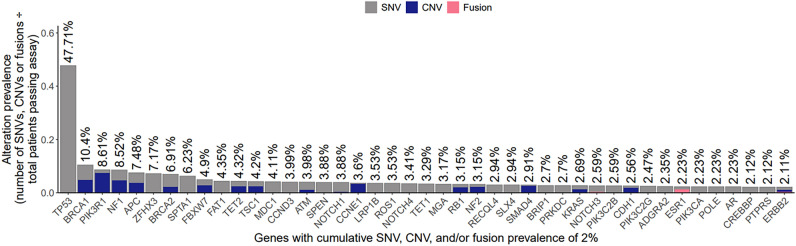 Figure 3
Peer Reviews
No public reviews on file for this paper yet. If you reviewed it on a platform where reviews are public (OpenReview, ICLR, NeurIPS, ICML), you can paste yours below so the community can read it here.
Videos
No videos yet. Explain this paper in a talk, walkthrough, or lecture? Add one.
Taxonomy
TopicsOvarian cancer diagnosis and treatment · Cancer-related molecular mechanisms research · Circular RNAs in diseases
Correction to: Scientific Reports 10.1038/s41598-025-15156-9, published online 12 August 2025
The original version of this Article contained an error where an incorrect version of Fig. 3 was published. The original Fig. 3 and accompanying legend appear below.Fig. 3. Genomic landscape of cases from the OmniSeq HGSOC cohort. The histogram below shows the prevalence and type of alterations for the most commonly altered genes in the OmniSeq HGSOC cohort. Of note, 100% of the tumors harbored pathogenic alterations in TP53 (not shown).
The original Article has been corrected.