Modulation of Depolymerizable Poly(thioether-thioester) Properties in Reversible Covalent Composites
Binoy Maiti, Mridula Nandi, Jaehyun Cho, Liang Yue, Kellie Stellmach, Blair Brettmann, Qi Jerry, Will Gutekunst, M. G. Finn

TL;DR
Scientists created a recyclable plastic using a special polymer composite that can be broken down and reused while maintaining its properties.
Contribution
A new recyclable polymer composite system with tunable properties and reliable depolymerization and repolymerization processes is introduced.
Findings
The composite's thermal and mechanical properties can be adjusted by varying particle amounts.
The material can be 3D printed and depolymerized to recover monomers for reuse.
Repolymerized material retains mechanical properties similar to the original composite.
Abstract
We incorporated thiol-functionalized silica particles as macroinitiators for the construction of composites by ring-opening polymerization of thiolactones. A separate photochemical cross-linking step was employed to enhance the stability of the polymer composite material. The thermal and mechanical properties of the materials can be tuned by varying the amount of particles, and a representative formulation could be 3D printed. The polymer composite was depolymerized in the presence of a catalytic amount of thiol and 1,8-diazabicyclo(5.4.0)undec-7-ene (DBU) base to recover substantial amounts of monomer, which were repolymerized and photo-cross-linked to give a material very similar in mechanical properties to the virgin composite. The modular nature of this system and the reliability of the bond-forming and bond-breaking steps suggest that it may prove to be useful as a new type of…
Genes, proteins, chemicals, diseases, species, mutations and cell lines named across the full text — each resolved to its canonical identifier and authoritative record.
Click any figure to enlarge with its caption.
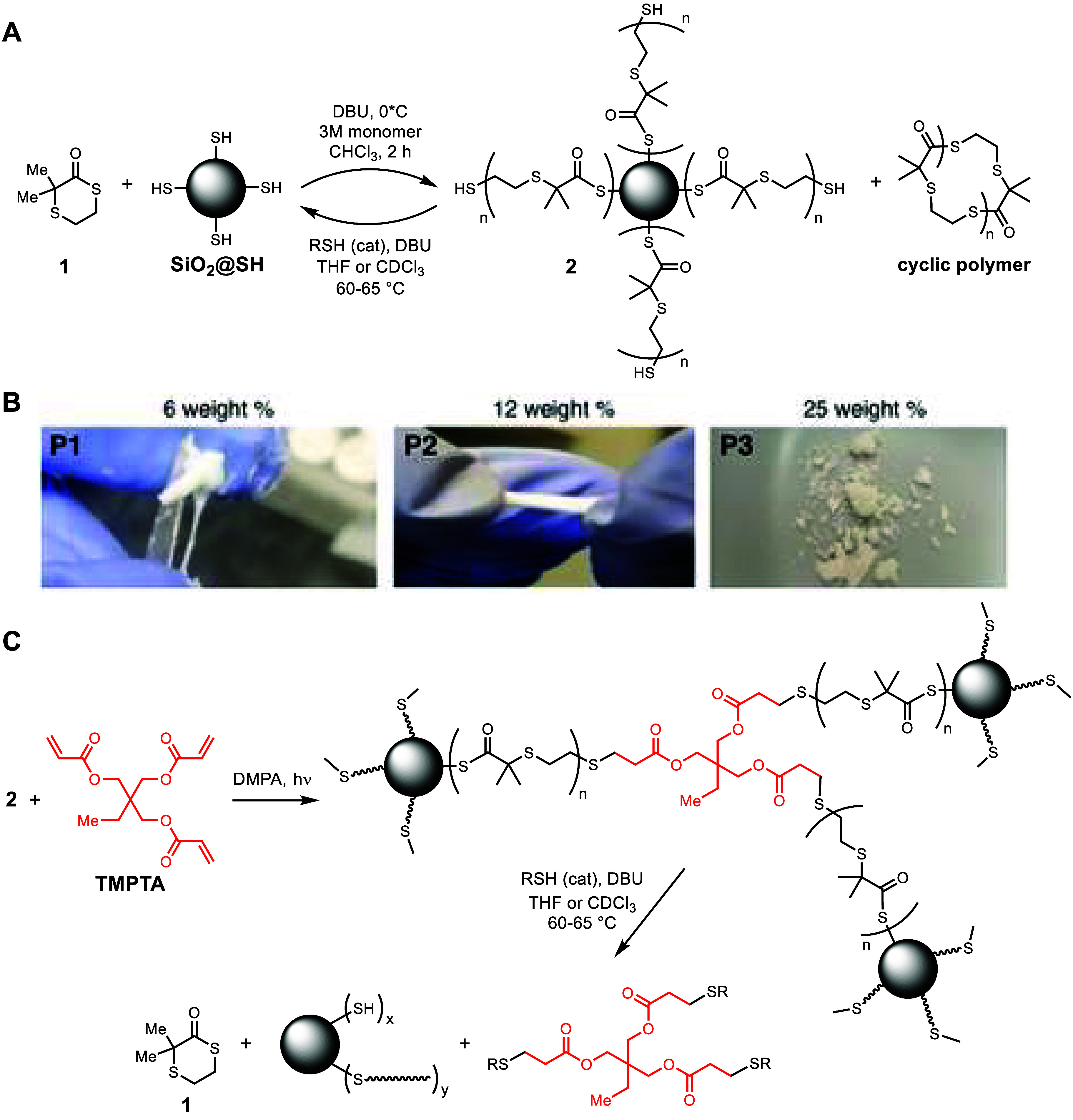 Figure 1
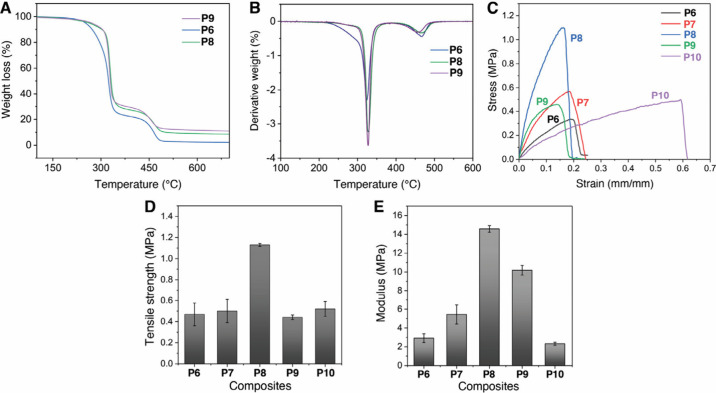 Figure 2
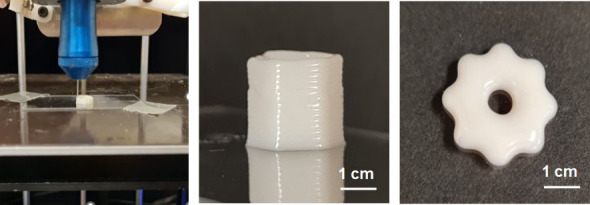 Figure 3
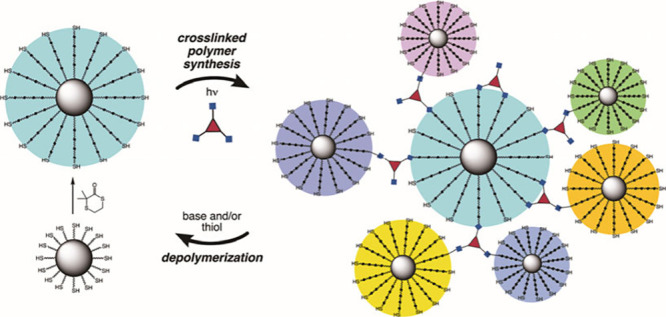 Figure 4
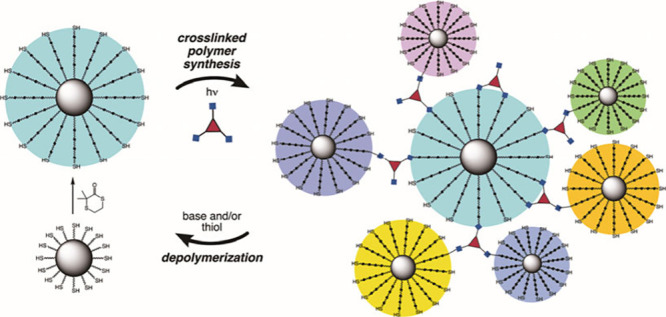 Figure 5
- —Office of Naval Research10.13039/100000006
Peer Reviews
No public reviews on file for this paper yet. If you reviewed it on a platform where reviews are public (OpenReview, ICLR, NeurIPS, ICML), you can paste yours below so the community can read it here.
Videos
No videos yet. Explain this paper in a talk, walkthrough, or lecture? Add one.
Taxonomy
TopicsCovalent Organic Framework Applications · Polymer composites and self-healing · biodegradable polymer synthesis and properties
The recycling of bulk plastics is an important goal for sustainability, energy, and environmental concerns. However, the goals of mechanical and chemical stability seem at odds with the goal of recyclability, with the former requiring strong and lasting bonds, and the latter requiring their breakage. Industrial-scale mechanical recycling often suffers from a significant loss of polymer properties. ?,? An alternative approach is chemical recycling in which the polymer is depolymerized under conditions different from those in which the material is used, allowing the recovery of monomers that can be subsequently repolymerized to get virgin-quality polymeric materials. ?−? ? ? ?
One approach to depolymerizable materials employs reversible bond formation in polymer synthesis, placing the integrity of the material in the hands of thermodynamics. The ceiling temperature (T c) of such materials is defined as the temperature at which polymerization and depolymerization occur at the same rate, depolymerization thereby being favored at higher temperatures. Common bulk polymers, such as polyolefins, are known for their high T c values, making depolymerization either energy-intensive or prone to decomposition. Lower T c materials are thereby better candidates for chemical recycling to a monomer. Numerous monomers have been examined for their applicability in the synthesis of low T c polymers, including lactones, ?−? ? ? ? ? thiolactones, ?−? ? phthalaldehydes,? carbonates, ?,? and cyclic acetals.? When T c exceeds the polymerization temperature, catalysts are often used to trigger depolymerization, even above the critical temperature. For example, poly(γ-butyrolactone) (PγBL) requires heating at 300 °C for depolymerization in the absence of catalysts, whereas the introduction of an organic or metal catalyst allows depolymerization to occur rapidly, even at room temperature. For example, PγBL exhibited T c = −9 °C at [γ-BL]0 = 10 M, and T c = −136 °C at [γ-BL]0 = 1.0 M.? Similarly, while poly(trithiocarbonate)s made by ring-opening polymerization (ROP) of seven-membered cyclic trithiocarbonates can be depolymerized at 250 °C without catalyst,? the depolymerization of several dithiolactone-based polymers is accelerated by DBU and thiol at lower temperatures.?
Low T c materials often lack sufficiently robust physical and mechanical properties for practical, common applications. Functional fillers and reinforcements are often used to enhance such properties in polymer composites while maintaining flexibility, including nanostructures such as metal nanoparticles, metal oxides, three-dimensional porous nanofillers, and a wide range of carbon materials, most notably including graphene ?−? ? and carbon nanotubes ?,? due to their high aspect ratios, mechanical stability, and impressive thermal and electrical conductivity. A popular inorganic nanofiller is silica (SiO_2_), with the advantages of adaptable morphology, expansive specific surface area, ease of functionalization, and cost-effectiveness.
The enhancement of the overall performance in polymer–silica nanocomposites is contingent upon the careful consideration of surface modification, structural characteristics, and bonding mechanisms of SiO_2_. In recent years, many such advanced nanocomposites have been documented, ?−? ? ? but recyclability remains a major challenge.? We describe here the exploration of nanoparticulate silica combined with a low-T c poly(thiolactone) polymer. We compare materials made by ring-opening ROP of cyclic thiolactone using a thiol-functionalized silica particle (SiO_2_@SH) with a standard composite formulation in which nonfunctionalized silica is mixed with the bulk polymer. We also describe the UV cross-linking of these materials, which produces composites with good thermal and mechanical properties tuned by varying the amount of particle and cross-linker. 3D printing, depolymerization, and repolymerization were demonstrated with mechanical properties comparable to the virgin composite.
Thiol-modified SiO_2_ (SiO_2_@SH): Spherical silica nanoparticles (average diameter = 20 nm) were functionalized by a standard sol–gel procedure under an inert atmosphere using (3-mercaptopropyl)trimethoxysilane (MPS) to obtain thiol-modified particles designated as SiO_2_@SH. X-ray photoelectron spectroscopy (XPS, Figure S1) showed new signals for carbon and silicon, as expected. ^29^Si cross-polarization magic angle spinning (CP/MAS) NMR data confirmed the attachment of additional silicon atoms to the surface of the T^2^ and T^3^ type (Figure S3), observed as new peaks, in addition to Q^2^, Q^3^, and Q^4^ Si centers observed for the basic silica (where the superscript indicates the number of siloxane Si–O bonds). ?,? Thermogravimetric analysis (TGA, Figure S2) showed a 6.0% weight loss in excess of that observed for bare silica at 700 °C, which translates ?,? to a value of approximately 0.58 mmol of thiol groups per gram of particle. This represents the monolayer occupancy of the theoretical number of surface SiOH groups, assuming that the surface area is as reported by the manufacturer (approximately 640 m^2^/g).
Synthesis and characterization of polymer composites: Consistent with the prior report of ring-opening polymerization of thiolactone 1 using thiol as initiator and DBU as a catalyst,? we employed thiol-functionalized silica as a macroinitiator. The use of different amounts of silica (from 6 to 25 wt %) produced materials (P1, P2, and P3) of different bulk properties (gummy to rubbery), as shown in Figure. These were compared to the cyclic polymer? made in the presence of DBU without initiator (P0), the standard linear polymer made with an organic thiol initiator (P5), and a mixture of P0 with 12 wt % of unfunctionalized silica (designated P4).
TGA and derivative thermogravimetric (DTG) characterization of these composite materials are shown in Figures S4 and S5 and summarized in Table. After loss of residual adsorbed water (<2%) below 200 °C, the onset of thermal decomposition was found to be 30–50 °C higher for the silica-containing materials than for the purely organic materials. The comparison of P2 with P5* provides the best test of covalent vs noncovalent incorporation of the nanoparticles, as they both have the same particle content (∼12 wt %). However, the same values of T onset (308 ± 9 °C for P2 and 302.3 ± 1.3 °C for P5*), and T D50 values (314 ± 2.3 °C for P2 and 311 ± 0.9 °C for P5*) were observed, within experimental error, and glass transition temperatures of all samples were quite similar, whether or not they contained silica particles. The similarity in T g values of P0 and P1 suggests that P1 may contain significant amounts of cyclic polymer due to the competitive rates of the initiator-free (DBU catalyzed) cyclopolymerization and macroinitiated linear polymerization.?
Cross-linked composites: Taking advantage of the presence of free thiols at the polymer chain ends, we created cross-linked materials using trimethylolpropane triacrylate (TMPTA) as a cross-linker and 2,2-dimethoxy-2-phenylacetophenone (DMPA or Irgacure 819) as a photoinitiator (FigureC). This efficient reaction was completed within 30 s for a series of polymer compositions (P6–P10), as summarized in Table. (The P8 formulation was characterized by FTIR before and after irradiation, showing the expected disappearance of the acrylate CC bond, and by gel fraction (72%), indicating significant cross-linking.) The resulting materials exhibited two-stage thermal degradation profiles by TGA (FigureA,B), assigned to successive thioester depolymerization and cross-linker retro-Michael and/or decomposition reactions.
Universal tensile testing of cross-linked materials P6–P10 (Table) showed the cross-linked P8 composite to display the highest tensile strength, modulus, and rigidity. That P8 (12 wt % SiO_2_@SH) was significantly stronger than both P7 (6 wt % SiO_2_@SH) and P9 (12 wt % SiO_2_) suggests an active role of covalent cross-linking of the nanoparticle into the polymer matrix in modulating bulk properties. This is further highlighted by the significant difference in bulk properties between P8 and P10, which differed only in the amount of TMPTA cross-linker present (monomer:TMPTA molar ratios of 10:1.0 vs 10:0.8, respectively): cross-linked P8 was the most rigid, whereas cross-linked P10 was the most deformable. The attempted cross-linking of organic polymer P5 using the same TMPTA and initiator stoichiometries produced a material too fragile to form a film suitable for tensile testing.
Photochemical cross-linking was also used to stabilize materials processed by direct ink writing (DIW) 3D printing. The P2 composite showed rheological behavior advantageous for this application, with the storage modulus (G′) exceeding the loss modulus (G″) at low strains, followed by a crossover point at higher strains, indicative of yielding behavior (Figure S12A). In addition, steady shear measurements revealed a clear decrease in viscosity with an increasing shear rate (Figure S12B), confirming pronounced shear-thinning behavior. A corresponding ink performed well in a standard DIW format (Figure) and was easily photocured with a hand-held 405 nm ultraviolet lamp.
Depolymerization and repolymerization: Reversible polymerization/depolymerization is characterized by the ceiling temperature (T c) at which the entropy and enthalpy balance to reach equilibrium. Since polymer P5 has a reported T c of 58 °C,? we were able to depolymerize the composite materials under mild conditions, as shown in Figures and S7 and summarized in Table. Composite P2 was slow to decompose, generating only 5–10% of monomer in the absence of dodecanethiol in 1 h (entries 1–2). The addition of catalytic thiol greatly enhanced this process, resulting in near-complete depolymerization of P2 and the recovery of nearly 70% of monomer 1 by column chromatography (Figure S8). This monomer was smoothly repolymerized to regenerate P2 and P8 with very similar NMR spectra (Figure S9) and physical properties (Figure S10). As reported by Gutekunst and colleagues, the linear polymer P5 underwent depolymerization to a similar extent under the same thiol-catalyzed conditions. ?,?
Heating of a suspension of cross-linked material P8 and the 3D-printed version of the same material netted 40 ± 10% of isolated 1 after 12 h at 62 °C. The reduced yield relative to P2 can be attributed to the formation of thiol adducts with TMPTA, which require much higher temperatures to reverse. As expected, when used in polymerization reactions to remake P2 and P8 in three cycles of polymerization/depolymerization, the recovered monomer performed identically to the starting monomer. In contrast, direct repolymerization of the crude depolymerized liquid, initiated by the addition of DBU and additional TMPTA produced yellowed and more brittle cross-linked material that was not film-forming.
Ring-opening polymerization of a cyclic thiolactone has been implemented with thiol-functionalized silica particles (SiO_2_@SH) as macroinitiators and augmented by cross-linking via conjugate addition. Such covalent modifications require fast and strongly thermodynamically driven reactions to overcome entropic and surface-accessibility constraints on bond formation on the surfaces of nanoparticle additives. The combination of these added components provided a broad range of properties. Covalent cross-linking was also used to provide convenient 3D printability. Depolymerization of the silica-thiol-initiated materials gave recyclable monomer in high yields, whereas covalent cross-linking to acrylate cut such yields approximately in half.
While the effects were relatively modest in magnitude, the most important aspect of this work so far is the demonstration that covalent integration of a silica filler can produce measurable enhancements of bulk thermal and mechanical properties relative to the filler alone. We believe that two factors may be at play, both impacting the way in which the hard nanoparticles and soft bulk polymer matrix interact at their interface. The most obvious difference is the presence in P2 and P8 of covalent silica–polymer bonds, which must differ from noncovalent interactions in strength and dynamic behavior. In addition, surface modification of silica nanoparticles reduces particle surface polarity and surface energy,? which can significantly change particle agglomeration or dispersion. These factors remain to be independently addressed and augmented in follow-on studies.
Supplementary Material
The reference list from the paper itself. Each links out to its DOI / PubMed record.
- 1Schyns Z. O. G.Shaver M. P.Mechanical Recycling of Packaging Plastics: A Review Macromol. Rapid Commun.202142200041510.1002/marc.20200041533000883 · doi ↗ · pubmed ↗
- 2Billiet S.Trenor S. R.100th Anniversary of Macromolecular Science Viewpoint: Needs for Plastics Packaging Circularity ACS Macro Lett.202091376139010.1021/acsmacrolett.0c 0043735638627 · doi ↗ · pubmed ↗
- 3Zhu J.-B.Watson E. M.Tang J.Chen E. Y. X.A synthetic polymer system with repeatable chemical recyclability Science 201836039840310.1126/science.aar 549829700260 · doi ↗ · pubmed ↗
- 4Coates G. W.Getzler Y. D. Y. L.Chemical recycling to monomer for an ideal, circular polymer economy Nat. Rev. Mater.2020550151610.1038/s 41578-020-0190-4 · doi ↗
- 5Vollmer I.Jenks M. J. F.Roelands M. C. P.White R. J.van Harmelen T.de Wild P.van der Laan G. P.Meirer F.Keurentjes J. T. F.Weckhuysen B. M.Beyond Mechanical Recycling: Giving New Life to Plastic Waste Angew. Chem., Int. Ed.202059154021542310.1002/anie.201915651 PMC 749717632160372 · doi ↗ · pubmed ↗
- 6Sathe D.Zhou J.Chen H.Su H.-W.Xie W.Hsu T.-G.Schrage B. R.Smith T.Ziegler C. J.Wang J.Olefin metathesis-based chemically recyclable polymers enabled by fused-ring monomers Nat. Chem.20211374375010.1038/s 41557-021-00748-534294914 · doi ↗ · pubmed ↗
- 7Hong M.Chen E. Y. X.Chemically recyclable polymers: a circular economy approach to sustainability Green Chem.2017193692370610.1039/C 7GC 01496 A · doi ↗
- 8Zhou L.Zhang Z.Sangroniz A.Shi C. X.Gowda R. R.Scoti M.Barange D. K.Lincoln C.Beckham G. T.Chen E. Y. X.Chain-End Controlled Depolymerization Selectivity in α,α-Disubstituted Propionate PH As with Dual Closed-Loop Recycling and Record-High Melting Temperature J. Am. Chem. Soc.2024146298952990410.1021/jacs.4c 1192039413833 · doi ↗ · pubmed ↗