Association of prehospital pupillary diameter with return of spontaneous circulation and neurological outcome after out-of-hospital cardiac arrest: A multicenter retrospective analysis
Munekazu Takeda, Ryokan Ikebe, Takuya Oshiro, Mizuho Namiki, Shimpei Asada, Shusuke Mori

TL;DR
This study finds that larger pupil size in cardiac arrest patients is linked to worse outcomes, suggesting it could help guide emergency care decisions.
Contribution
The study identifies prehospital pupillary diameter as an independent predictor of ROSC and neurological outcomes in OHCA patients.
Findings
Larger pupillary diameter was associated with reduced odds of favorable 30-day neurological outcomes.
Pupillary diameter inversely correlated with achieving return of spontaneous circulation (ROSC).
Pupil size thresholds of ≥7–8 mm showed high specificity but poor sensitivity for predicting ROSC failure.
Abstract
In Japan, emergency medical services (EMS) routinely record pupillary size and pupillary light reflex (PLR) during prehospital care for out-of-hospital cardiac arrest (OHCA). While hospital-based studies have established the prognostic value of pupillary findings, the significance of prehospital pupillary diameter remains uncertain. To examine whether pupillary diameter at EMS contact predicts prehospital return of spontaneous circulation (ROSC) and 30-day neurological outcomes. This retrospective cohort study analyzed SOS-KANTO 2017, a prospective multicenter OHCA registry. Of 9909 adults, 8494 were eligible after excluding those not in arrest at EMS contact or with missing data. EMS personnel, trained in neurological assessment, documented pupillary diameter using standardized visual charts (0.5-mm increments) but recorded registry values in 1-mm categories (1–8 mm). The primary…
Genes, proteins, chemicals, diseases, species, mutations and cell lines named across the full text — each resolved to its canonical identifier and authoritative record.
Click any figure to enlarge with its caption.
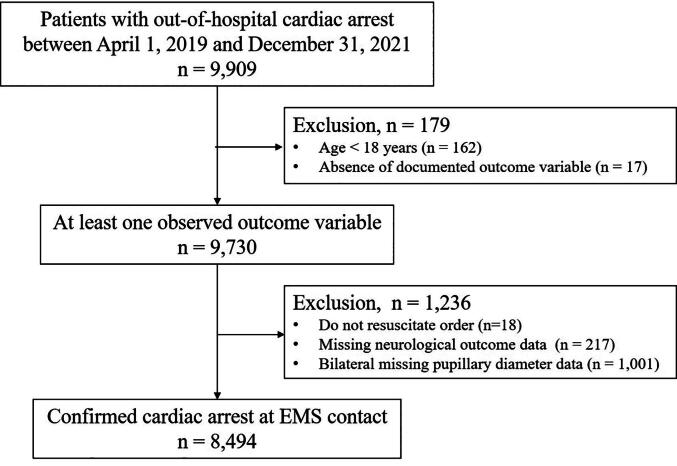 Figure 1
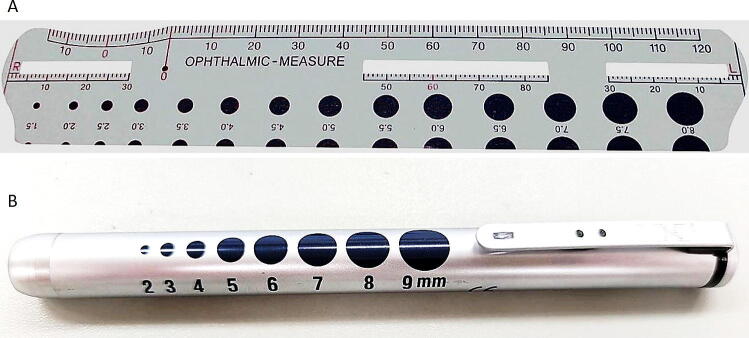 Figure 2
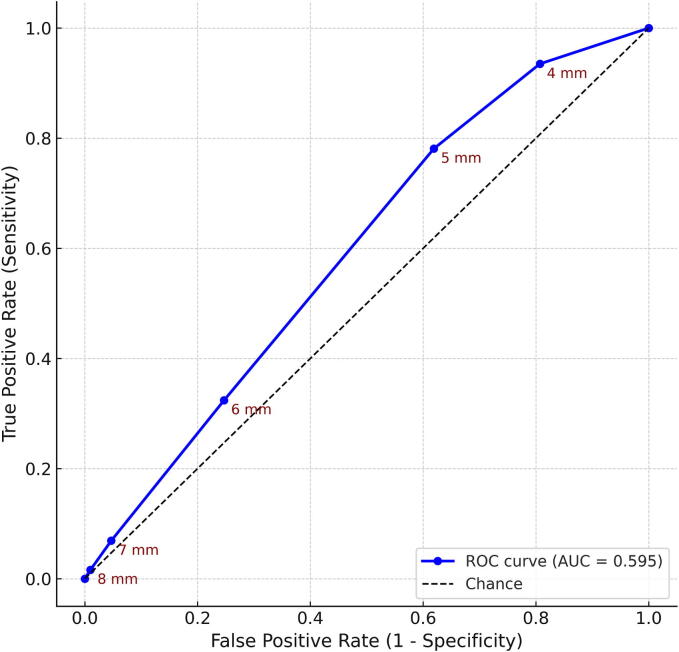 Figure 3
Peer Reviews
No public reviews on file for this paper yet. If you reviewed it on a platform where reviews are public (OpenReview, ICLR, NeurIPS, ICML), you can paste yours below so the community can read it here.
Videos
No videos yet. Explain this paper in a talk, walkthrough, or lecture? Add one.
Taxonomy
TopicsCardiac Arrest and Resuscitation · Traumatic Brain Injury and Neurovascular Disturbances · Restraint-Related Deaths