Peroxidase-Catalyzed and Photo-Oxidation of Tryptophan Results in Distinct Isomeric Tryptophan Dimers
Marcela Morales, Daniel Villegas, Angélica Fierro, Mario Aranda, Maria Fernanda Hornos Carneiro, Michael J. Davies, Camilo López-Alarcón

TL;DR
This study shows that heme peroxidases like HRP can produce distinct isomeric tryptophan dimers through oxidation, with different results depending on the method and pH.
Contribution
The study reveals the formation of multiple tryptophan dimer isomers via HRP/H2O2 oxidation and compares it to photo-oxidation.
Findings
HRP/H2O2 oxidation of tryptophan produces multiple di-Trp isomers, with higher yields at pH 9.2.
Photo-oxidation with riboflavin results in a single dominant di-Trp dimer.
In silico studies suggest di-Trp forms within the HRP catalytic pocket.
Abstract
Heme peroxidases, including horseradish peroxidase (HRP), catalyze the oxidation of a wide variety of substrates by hydrogen peroxide (H2O2) via the peroxidase cycle of these enzymes. Oxidation of free tryptophan (Trp) by HRP/H2O2 has been previously reported, but the formation of tryptophan dimers (di-Trp), which are biologically relevant, has not been studied. Here, we report on di-Trp production arising from oxidation of free Trp, at pH 5.5 and 9.2, by HRP/H2O2, as determined by liquid chromatography–mass spectrometry (LC-MS/MS) and selected reaction monitoring (SRM). These data were compared with those from riboflavin-sensitized photo-oxidation, and the products were rationalized by in silico studies. Incubation of varying concentrations of Trp and H2O2 with HRP, irrespective of the pH, resulted in the consumption of ∼2 mol of Trp per mole H2O2. Formation of multiple di-Trp isomers…
Genes, proteins, chemicals, diseases, species, mutations and cell lines named across the full text — each resolved to its canonical identifier and authoritative record.
Click any figure to enlarge with its caption.
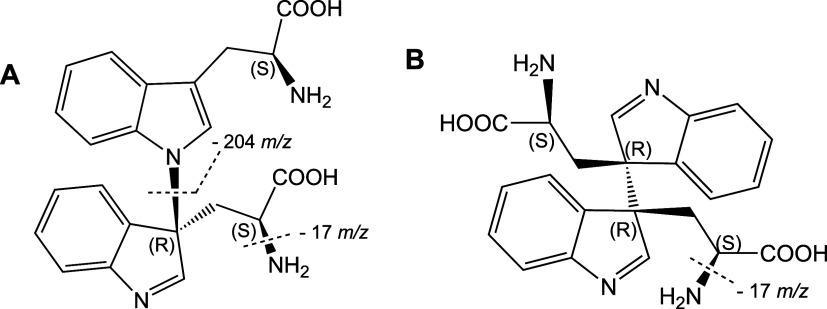 Figure 1
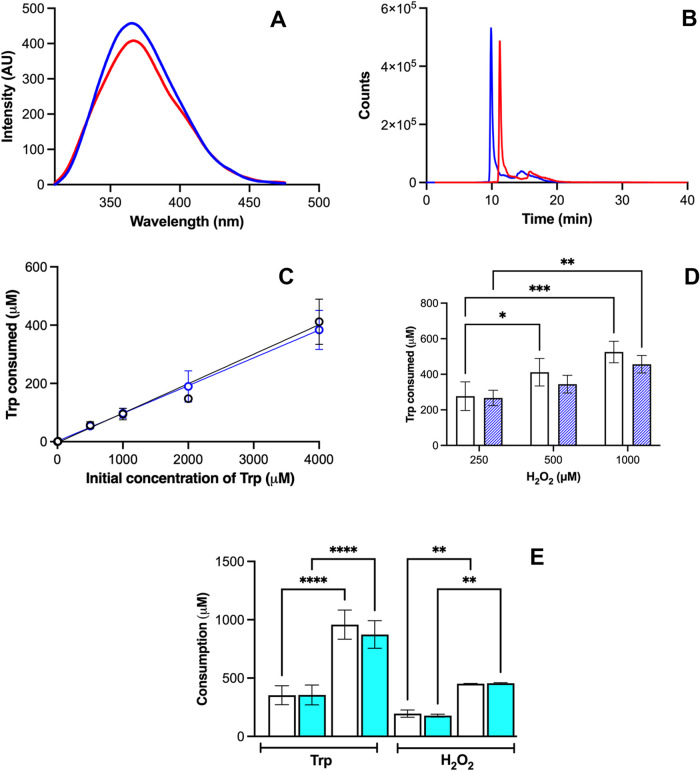 Figure 2
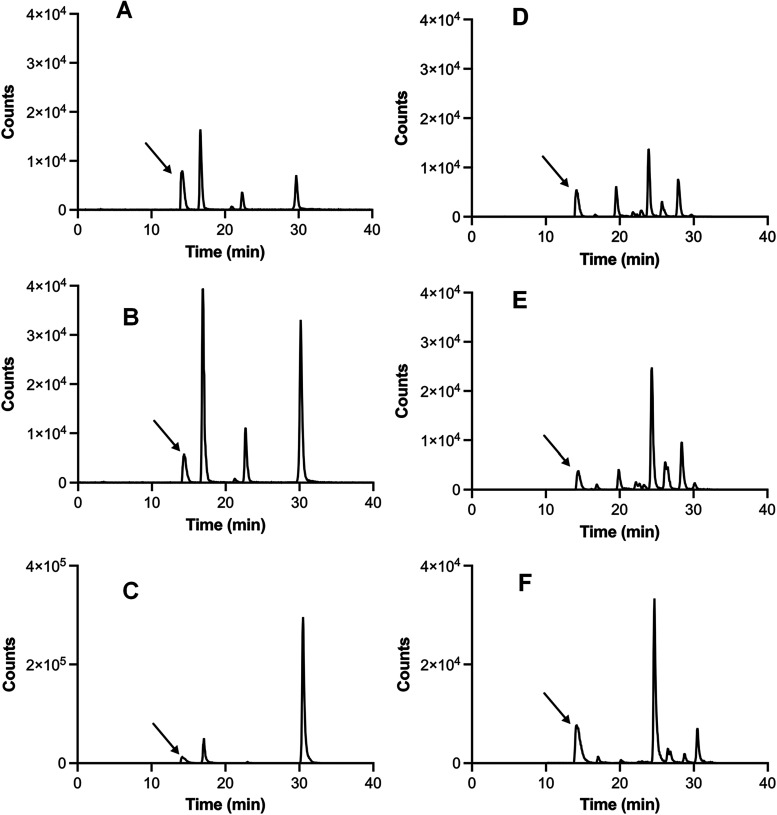 Figure 3
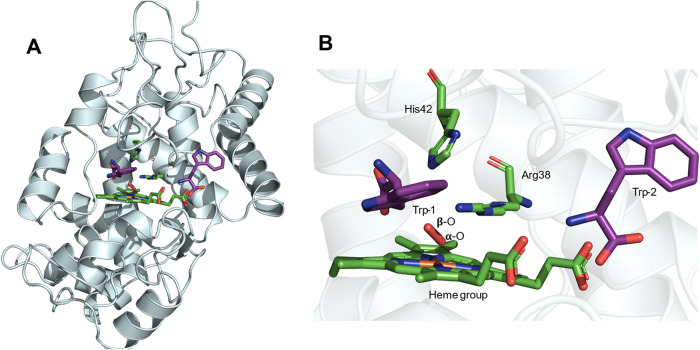 Figure 4
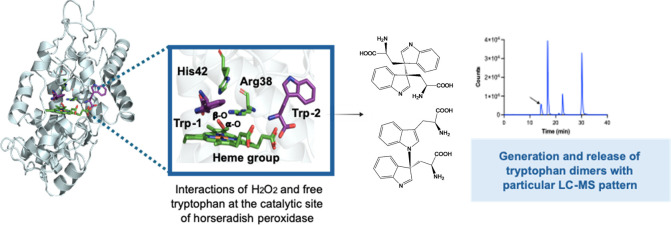 Figure 5
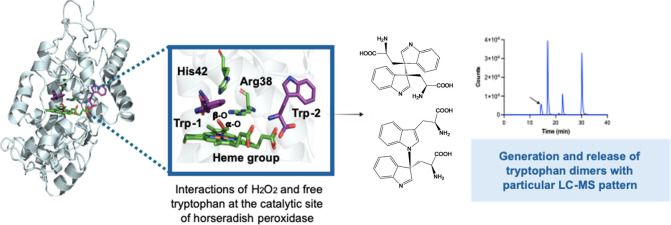 Figure 6
 Figure 7
 Figure 8
 Figure 9
 Figure 10
 Figure 11
Peer Reviews
No public reviews on file for this paper yet. If you reviewed it on a platform where reviews are public (OpenReview, ICLR, NeurIPS, ICML), you can paste yours below so the community can read it here.
Videos
No videos yet. Explain this paper in a talk, walkthrough, or lecture? Add one.
Taxonomy
TopicsTryptophan and brain disorders · Neuroinflammation and Neurodegeneration Mechanisms · Nicotinic Acetylcholine Receptors Study