DUF-721 and N-terminal extension of the helicase loader DciA bind ssDNA to promote replicative DnaB helicase loading in Caulobacter crescentus
Keito Watanabe, Shohei Sato, Naoto Itani, Dengyu Wang, Nanato Kiyohara, Satoshi Matsuoka, Tsutomu Katayama, Shogo Ozaki

TL;DR
This paper shows how a protein called DciA helps load a DNA helicase in the bacterium Caulobacter crescentus by binding to single-stranded DNA.
Contribution
The study identifies specific residues in DciA's DUF-721 domain that are crucial for ssDNA binding and helicase loading.
Findings
Arg106 and Leu119 in DciA's DUF-721 are essential for ssDNA binding and helicase loading.
The N-terminal extension of DUF-721 is crucial for ssDNA binding and helicase loading.
These residues are conserved among DciA family proteins, suggesting a conserved mechanism.
Abstract
The establishment of replication forks relies on a dedicated molecular system by which a ring-shaped replicative DNA helicase is loaded onto the chromosome DNA, facilitating the unwinding of duplex DNA into single-stranded DNA. In most bacteria, the DnaB helicase coevolved with its accessory protein DciA loader, a member of the domain of unknown function (DUF)-721-containing protein family. In the model bacterium Caulobacter crescentus, DciA promotes helicase loading and the C-terminal extension of DUF-721 serves as a specific binding site for the cognate DnaB helicase. However, the mechanistic role of DUF-721 in DnaB helicase loading remains unknown. Here, we provide evidence that the ssDNA binding activity of DUF-721 is crucial for DnaB helicase loading in C. crescentus. Using plasmid complementation assays, we identified DciA Arg106 and Leu119 in DUF-721 as essential residues for in…
Genes, proteins, chemicals, diseases, species, mutations and cell lines named across the full text — each resolved to its canonical identifier and authoritative record.
Click any figure to enlarge with its caption.
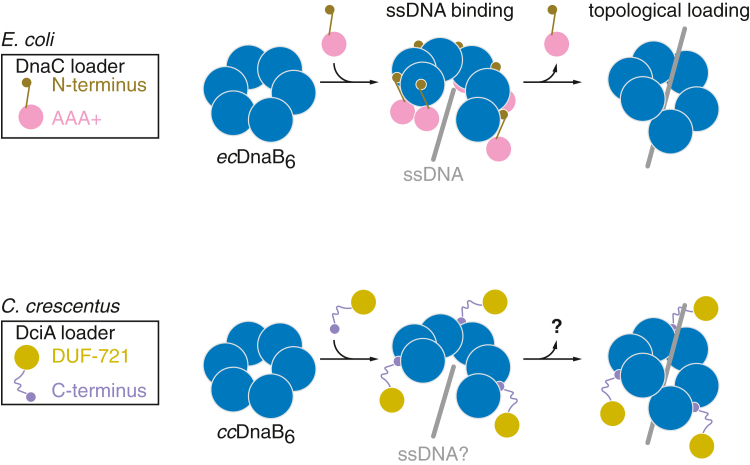 Figure 1
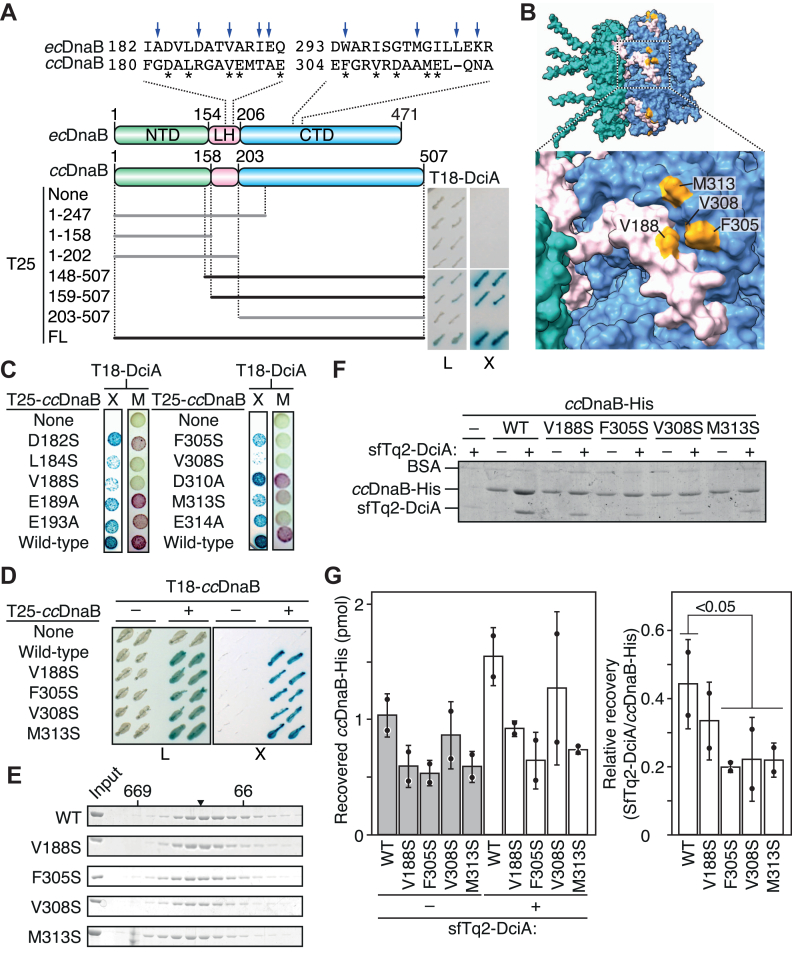 Figure 2
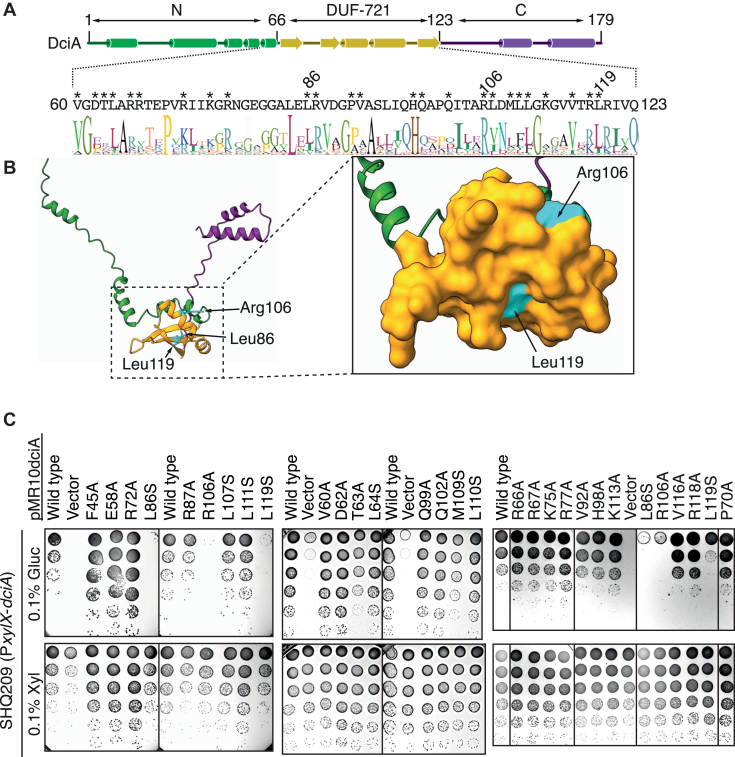 Figure 3
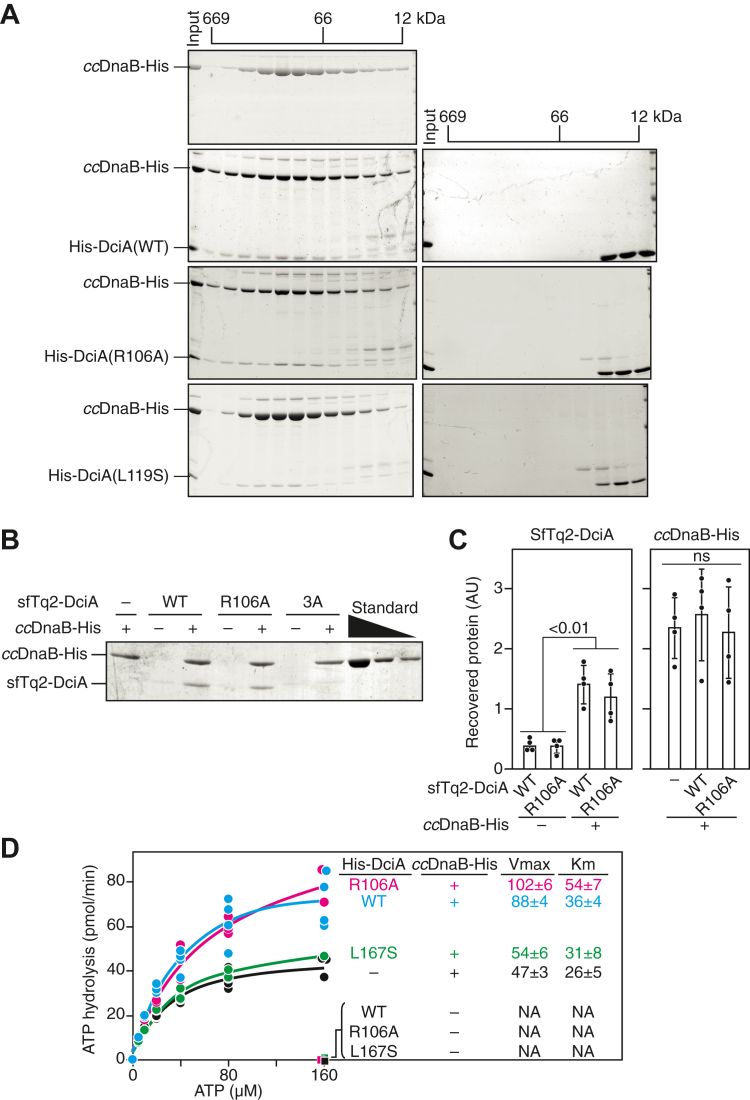 Figure 4
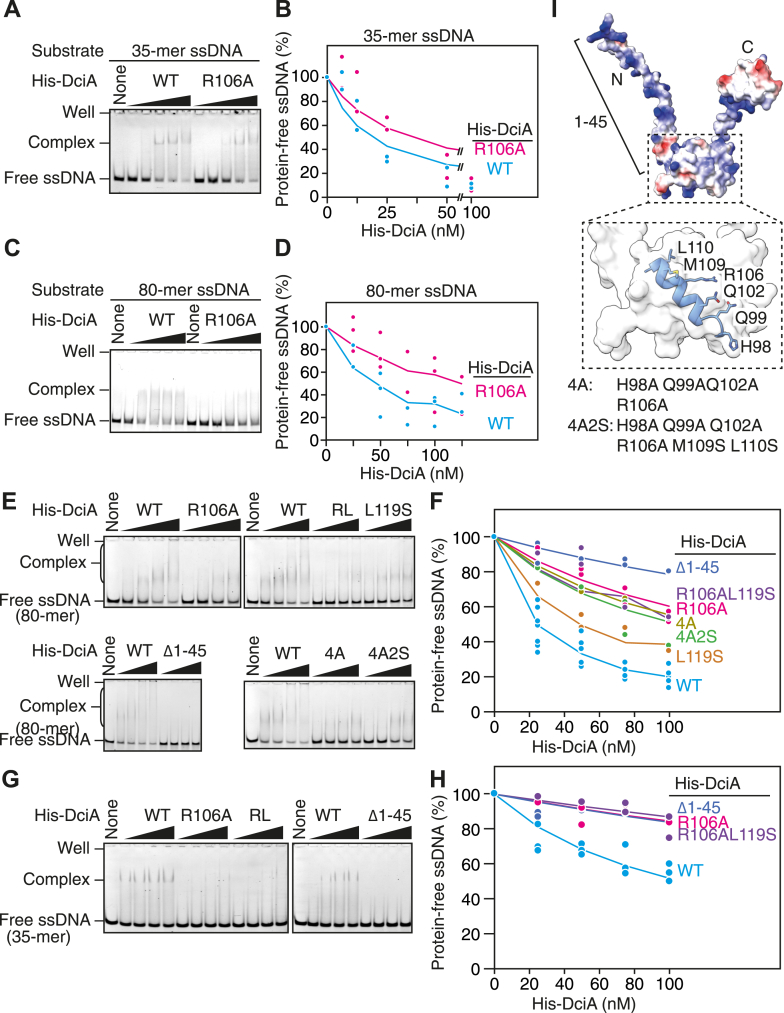 Figure 5
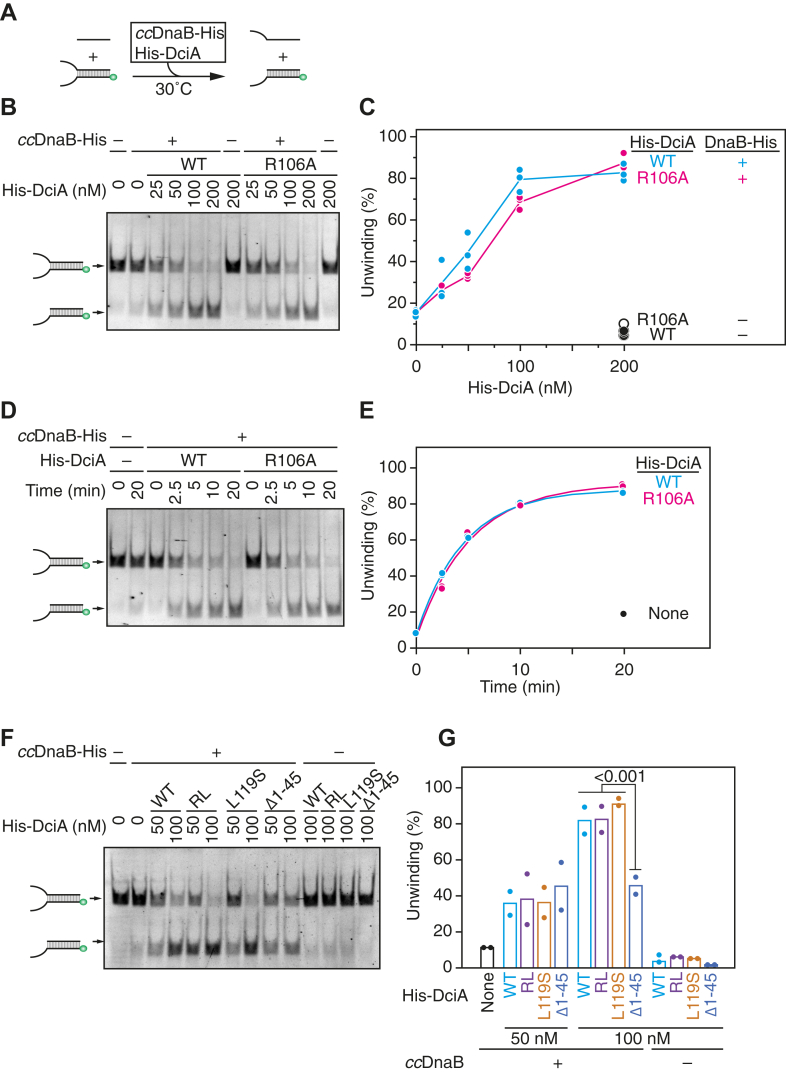 Figure 6
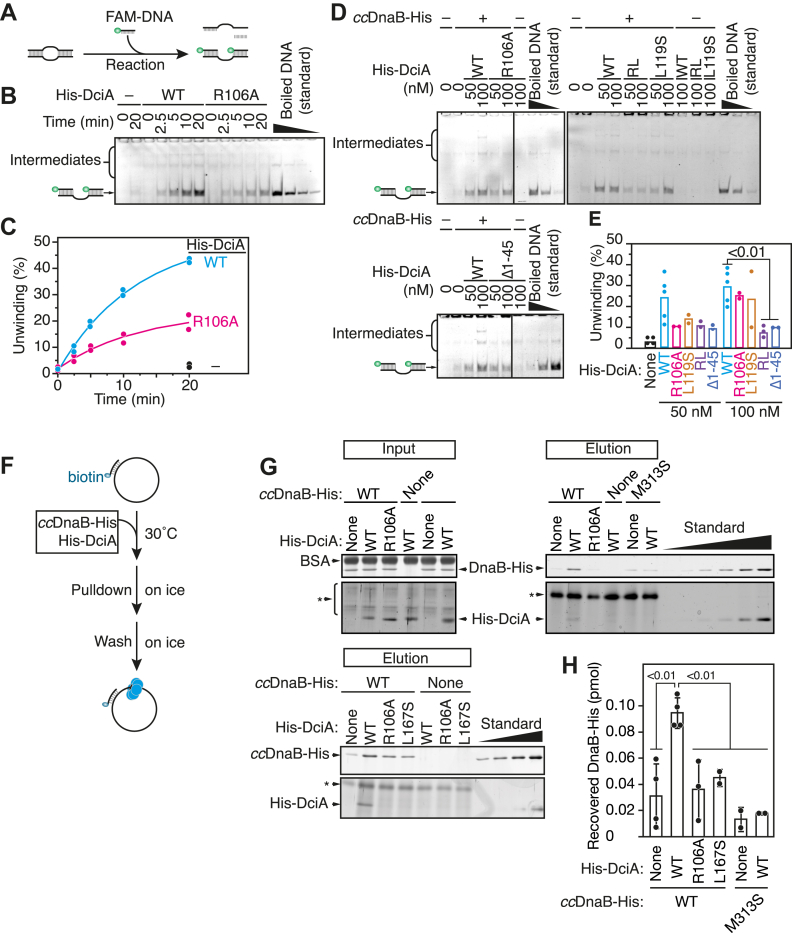 Figure 7
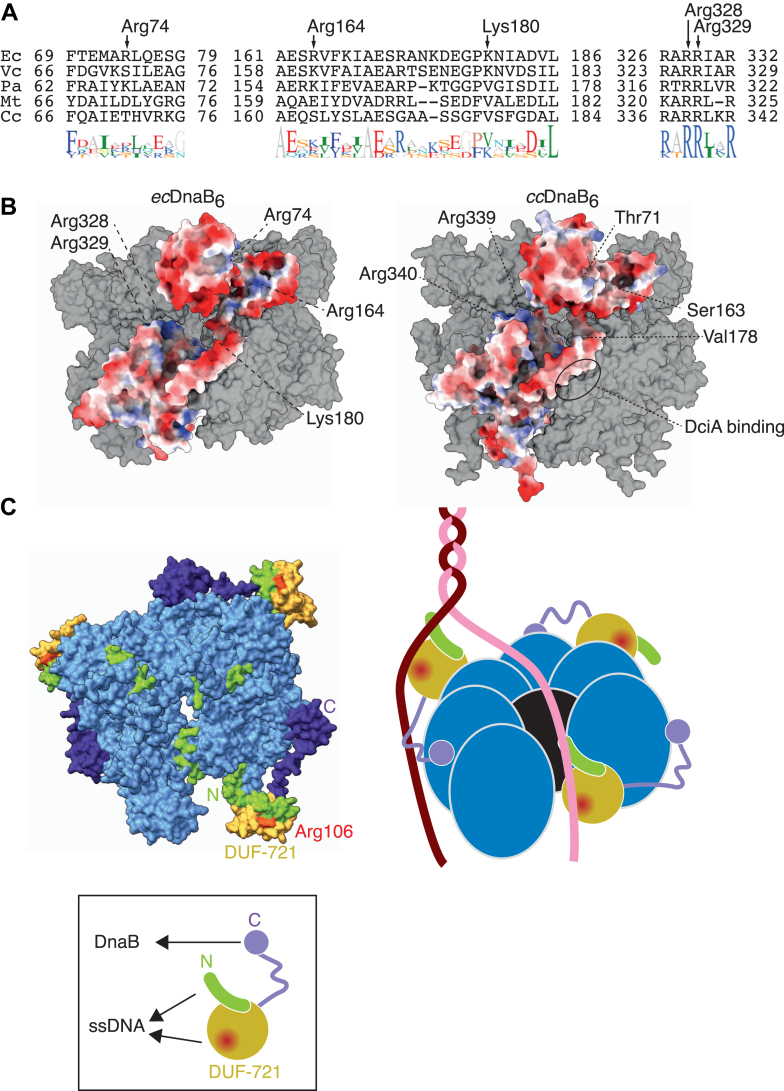 Figure 8
Peer Reviews
No public reviews on file for this paper yet. If you reviewed it on a platform where reviews are public (OpenReview, ICLR, NeurIPS, ICML), you can paste yours below so the community can read it here.
Videos
No videos yet. Explain this paper in a talk, walkthrough, or lecture? Add one.
Taxonomy
TopicsBacterial Genetics and Biotechnology · DNA Repair Mechanisms · Bacteriophages and microbial interactions