Optimised machine learning for time-to-event prediction in healthcare applied to timing of gastrostomy in ALS: a multi-centre, retrospective model development and validation study
Marcel Weinreich, Harry McDonough, Mark Heverin, Éanna Mac Domhnaill, Nancy Yacovzada, Iddo Magen, Yahel Cohen, Calum Harvey, Ahmed Elazzab, Sarah Gornall, Sarah Boddy, James J.P. Alix, Julian M. Kurz, Kevin P. Kenna, Sai Zhang, Alfredo Iacoangeli, Ahmad Al-Khleifat

TL;DR
This study develops a machine learning model to predict when ALS patients will need a gastrostomy, improving clinical decision-making.
Contribution
An optimized deep learning model for time-to-event prediction in ALS, validated across multiple populations and clinical settings.
Findings
The optimal model achieved a median absolute error of 3.7 months for predicting gastrostomy timing.
Model performance was stable across external validation cohorts in the US and Sweden.
Combining models reduced the median absolute error to 1.2 months for the modal group of patients.
Abstract
Amyotrophic lateral sclerosis (ALS) is invariably fatal but there are large variations in the rate of progression. The lack of predictability can make it difficult to plan clinical interventions. This includes the requirement for gastrostomy where early or late placement can adversely impact quality of life and survival. We designed a model to predict the timing of gastrostomy requirement in ALS as indicated by 5% weight loss from diagnosis. We considered >5000 different prediction model configurations including spline models and a set of deep learning (DL) models designed for time-to-event prediction. The optimal prediction model was chosen via a Bayesian framework to avoid overfitting. Model covariates were measurements routinely collected at diagnosis; a separate longitudinal model also incorporated weight at six months. We employed a training dataset of 3000 patients from Europe,…
Genes, proteins, chemicals, diseases, species, mutations and cell lines named across the full text — each resolved to its canonical identifier and authoritative record.
Click any figure to enlarge with its caption.
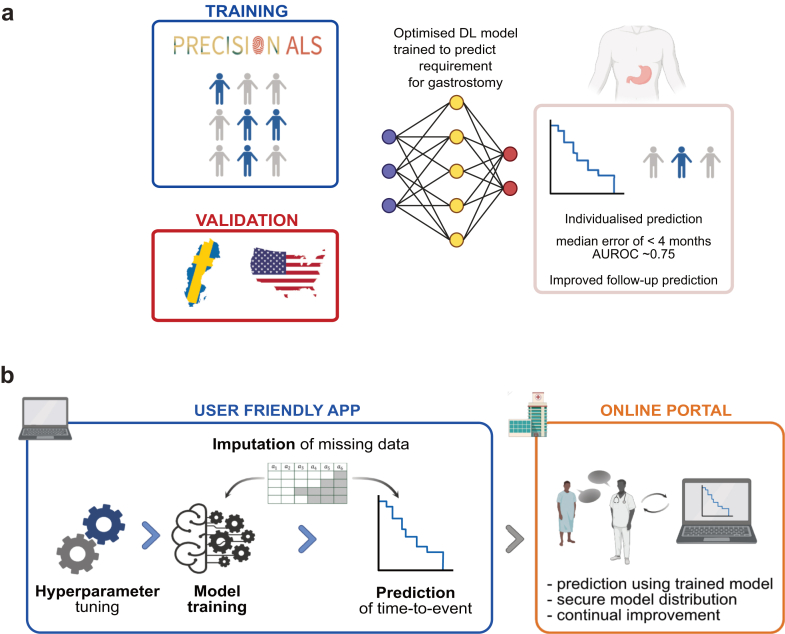 Figure 1
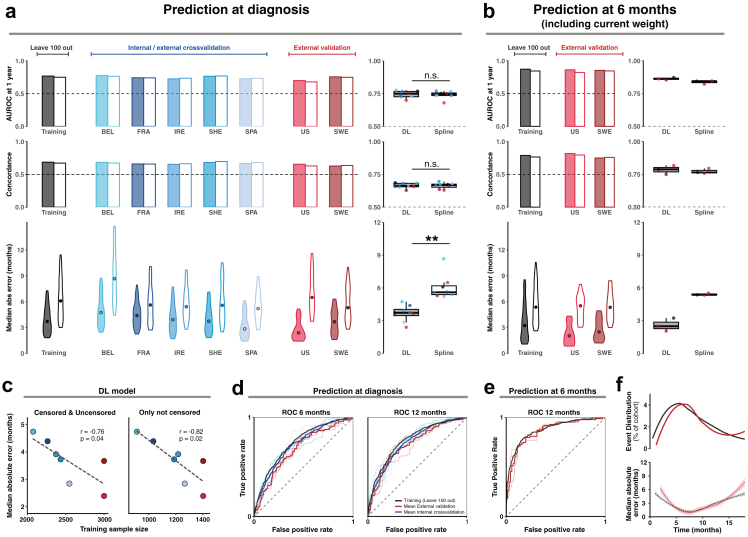 Figure 2
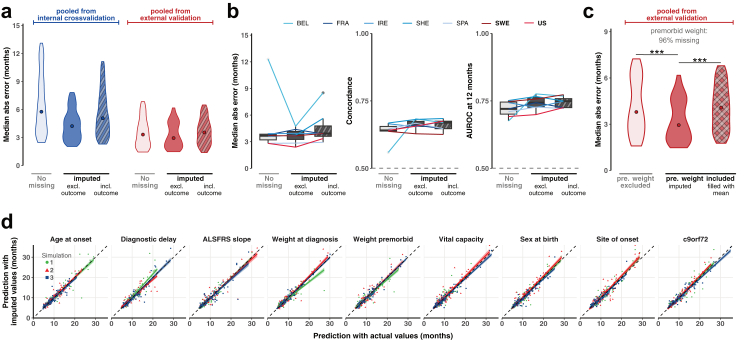 Figure 3
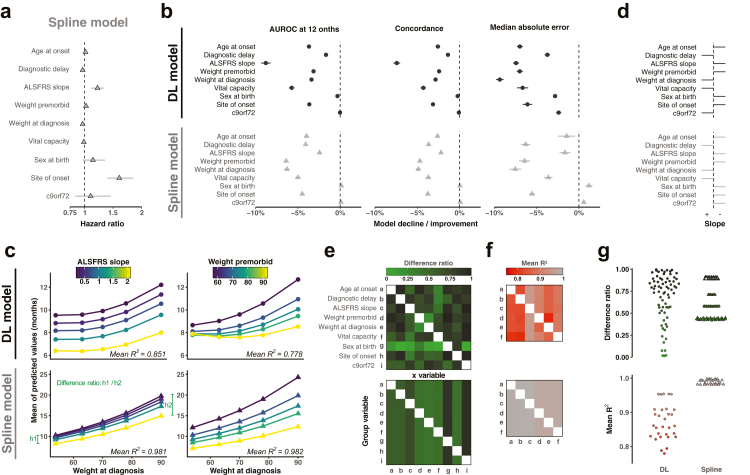 Figure 4
Peer Reviews
No public reviews on file for this paper yet. If you reviewed it on a platform where reviews are public (OpenReview, ICLR, NeurIPS, ICML), you can paste yours below so the community can read it here.
Videos
No videos yet. Explain this paper in a talk, walkthrough, or lecture? Add one.
Taxonomy
TopicsDysphagia Assessment and Management · Intensive Care Unit Cognitive Disorders · Prosthetics and Rehabilitation Robotics