ESR1 analysis of liquid biopsy in breast cancer, one-year routine experience of an Italian clinical referral center
Thais Maloberti, Laura Poppi, Giulia Ciccimara, Sara Coluccelli, Floriana Jessica Di Paola, Giulia Calafato, Viviana Sanza, Elisa Gruppioni, Annalisa Altimari, Sara Quercia, Alessandra Bernardi, Claudio Zamagni, Roberta Minari, Antonio De Leo, Giovanni Tallini, Dario de Biase

TL;DR
This study reports on the detection of ESR1 mutations in breast cancer patients using liquid biopsy, showing their frequency and co-occurring mutations.
Contribution
The paper provides real-world data on ESR1 mutation detection in a clinical setting using two NGS platforms.
Findings
ESR1 mutations were found in 29.1% of 141 analyzed cases.
The most common ESR1 variant was p.Asp538Gly, and co-mutations with PIK3CA and TP53 were frequent.
No significant difference in mutation frequency was found between the two NGS panels.
Abstract
Activating mutations in the ESR1 gene are a known mechanism of secondary resistance to endocrine therapy in metastatic estrogen receptor-positive (ER+)/human epidermal growth factor receptor 2-negative (HER2−) breast cancers. Liquid biopsy has become a non-invasive tool for molecularly characterizing these neoplasms and allows for dynamic monitoring through the analysis of circulating tumor DNA (ctDNA). We analyzed 161 plasma samples from patients with metastatic ER+/HER2− breast cancer who had previously undergone treatment with endocrine therapy and CDK4/6 inhibitors. ESR1 mutation analysis was performed using two NGS panels: Oncomine™ Breast cfDNA Assay v2 (n = 102) and Oncomine™ Precision Assay GX (n = 59). The sensitivity threshold (Limit of Detection - LOD) for variant detection was set at ≤0.5 %. Twenty-one samples (12.4 %) did not meet the quality criteria for ESR1 analysis.…
Genes, proteins, chemicals, diseases, species, mutations and cell lines named across the full text — each resolved to its canonical identifier and authoritative record.
Click any figure to enlarge with its caption.
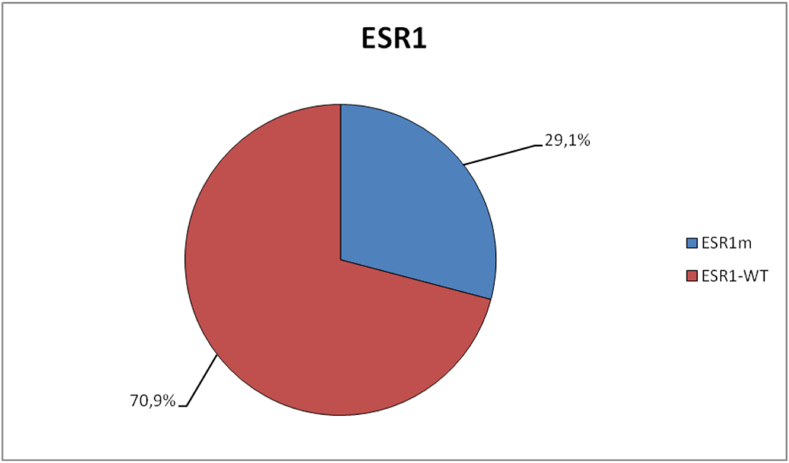 Figure 1
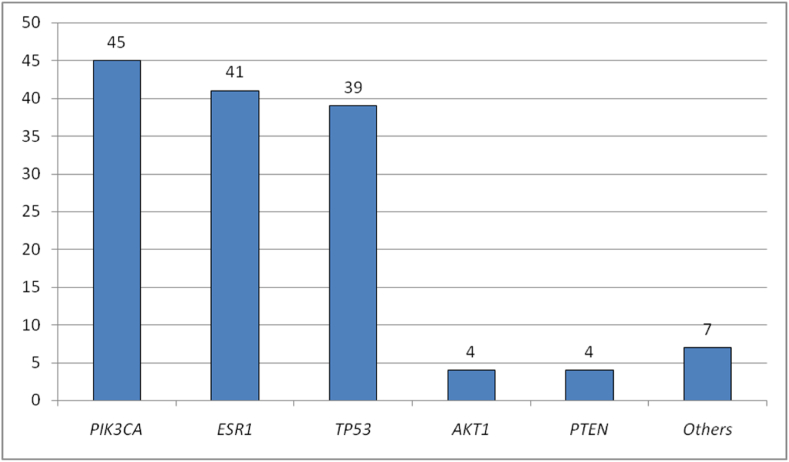 Figure 2
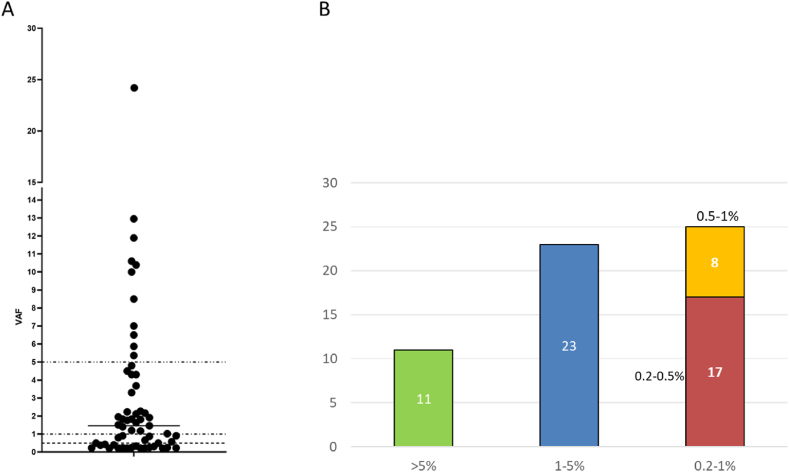 Figure 3
Peer Reviews
No public reviews on file for this paper yet. If you reviewed it on a platform where reviews are public (OpenReview, ICLR, NeurIPS, ICML), you can paste yours below so the community can read it here.
Videos
No videos yet. Explain this paper in a talk, walkthrough, or lecture? Add one.
Taxonomy
TopicsCancer Genomics and Diagnostics · Gene expression and cancer classification · BRCA gene mutations in cancer