Molecular chaperone effects on recombinant yield and binding characteristics of an ABA-specific scFv in Escherichia coli
Shimiao Chen, Bin Shan, Yican Luo, Ganhui Mo, Usman Rasheed, Lilan Lv, Xinyu Yang, Qinyu Lu

TL;DR
This paper shows how using specific molecular chaperones in E. coli can improve the production and function of ABA-specific antibodies, which could help in making cheaper and more effective agricultural tests.
Contribution
The study demonstrates that specific chaperones like pKJE7 and pTf16 improve the yield, sensitivity, and specificity of ABA-specific scFv antibodies in E. coli.
Findings
pTf16 increased soluble scFv yield to 19.65% compared to 14.20% in the control.
pKJE7 produced the lowest IC50, indicating higher sensitivity.
pTf16-assisted scFv showed superior specificity and structural stability.
Abstract
Recombinant single‐chain variable fragments (scFvs) are promising antibody formats for cost‐effective and scalable production. However, their soluble expression in Escherichia coli is often limited by misfolding and aggregation, particularly for scFvs targeting small molecule haptens such as abscisic acid (ABA). To address this bottleneck, molecular chaperones can be co‐expressed to enhance folding efficiency and functional yield. An ABA‐specific scFv was expressed in E. coli BL21(DE3) using five different chaperone plasmids (pG‐KJE8, pGro7, pKJE7, pG-Tf2, and pTf16). Soluble expression was quantified by His‐tag ELISA, and protein identity was confirmed by SDS‐PAGE and Western blot. Functional characterization included competitive ELISA for IC50 and specificity, while secondary structure was analyzed by FT‐IR and circular dichroism spectroscopy. Trigger Factor (pTf16) significantly…
Genes, proteins, chemicals, diseases, species, mutations and cell lines named across the full text — each resolved to its canonical identifier and authoritative record.
Click any figure to enlarge with its caption.
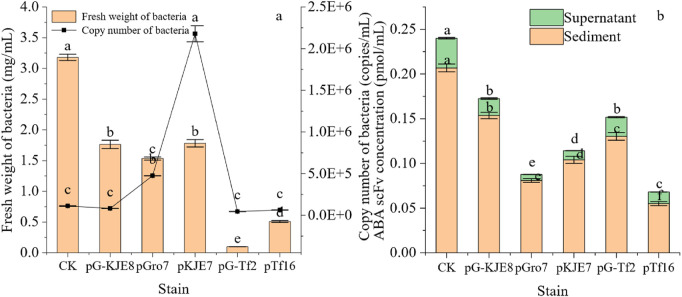 Figure 1
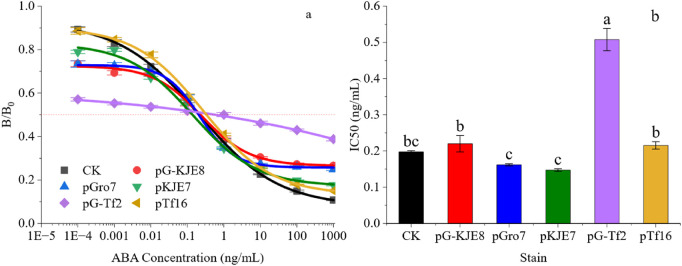 Figure 2
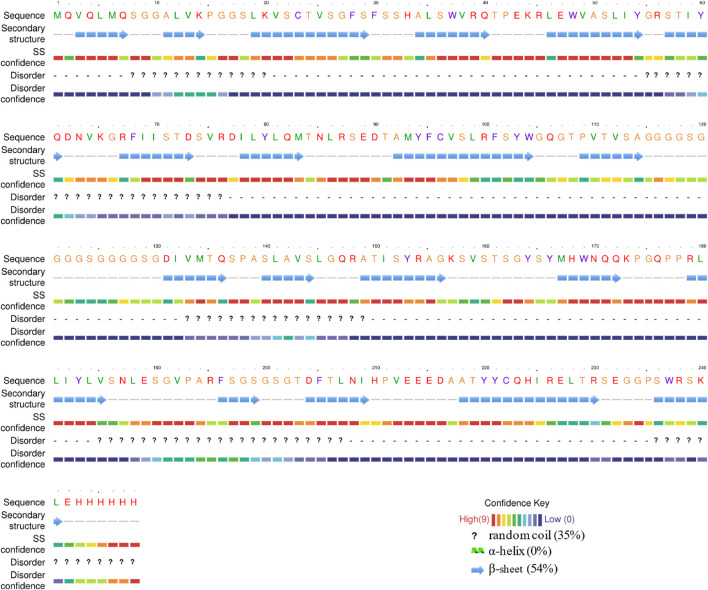 Figure 3
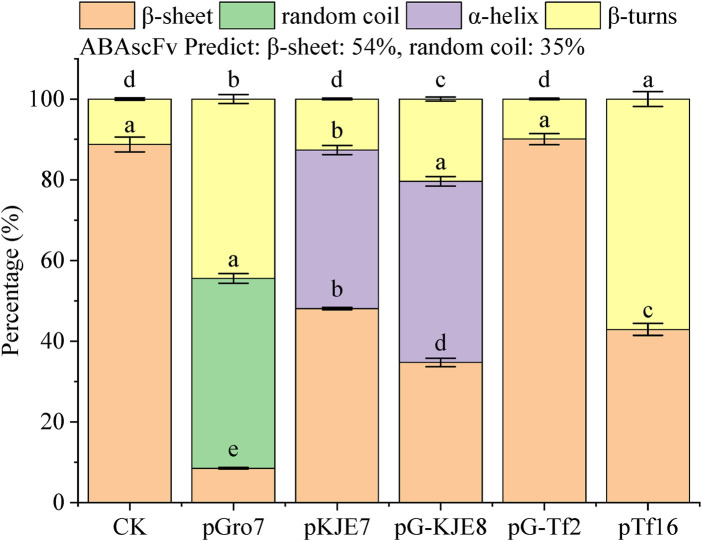 Figure 4
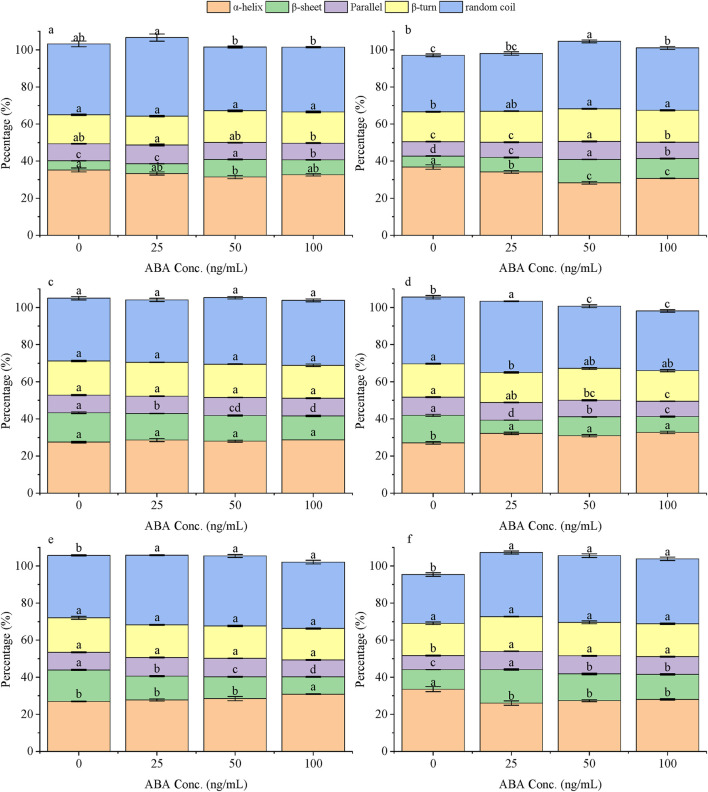 Figure 5
Peer Reviews
No public reviews on file for this paper yet. If you reviewed it on a platform where reviews are public (OpenReview, ICLR, NeurIPS, ICML), you can paste yours below so the community can read it here.
Videos
No videos yet. Explain this paper in a talk, walkthrough, or lecture? Add one.
Taxonomy
TopicsMonoclonal and Polyclonal Antibodies Research · Protein purification and stability · Bacterial Genetics and Biotechnology