A genetic transformation system for the heterotrophic diatom Nitzschia putrida (Bacillariophyceae)
Longji Deng, Yixuan Li, Yasuhiro Tanizawa, Yasukazu Nakamura, Ryoma Kamikawa, Amanda Hopes, Thomas Mock

TL;DR
Researchers developed a way to genetically modify Nitzschia putrida, a non-photosynthetic diatom, to study its evolution and potential for reverse engineering photosynthesis.
Contribution
The novel contribution is a functional genetic transformation system for the heterotrophic diatom Nitzschia putrida using biolistic methods and Golden Gate Cloning.
Findings
A biolistic transformation system was successfully developed for Nitzschia putrida.
The NADH-ubiquinone reductase complex 1 promoter effectively drives transgene expression.
Transformed cells expressed eGFP and retained wild-type growth characteristics.
Abstract
Diatoms are important primary producers in aquatic ecosystems. Most of them are photoautotrophs and have evolved to thrive under diverse environmental conditions from the poles to the tropics. However, some diatom species such as Nitzschia putrida have lost photosynthesis and have therefore become free‐living secondary heterotrophs. Thus, these diatoms provide unique opportunities to study the evolutionary processes required to thrive without photosynthesis and independent of a resource‐providing host. They may also provide a chassis for reverse engineering photosynthesis in eukaryotic organisms. Here, we have developed a genetic transformation system for N. putrida using a biolistic approach. By leveraging genome and transcriptome data, we identified the nicotinamide adenine dinucleotide hydride (NADH)‐ubiquinone reductase complex 1 promoter as a robust candidate for driving transgene…
Genes, proteins, chemicals, diseases, species, mutations and cell lines named across the full text — each resolved to its canonical identifier and authoritative record.
Click any figure to enlarge with its caption.
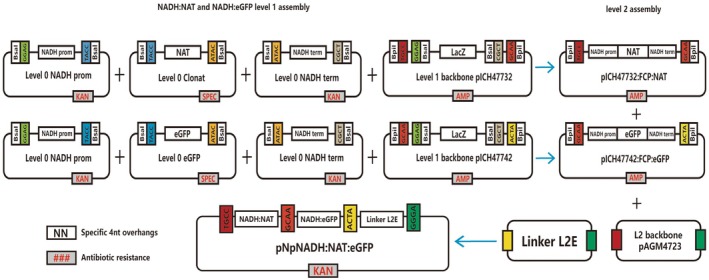 Figure 1
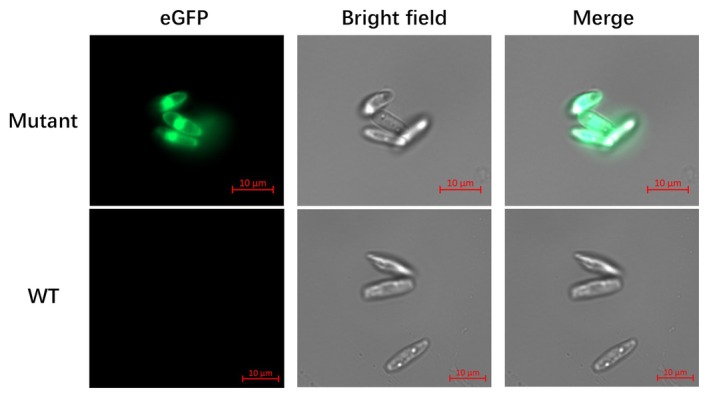 Figure 2
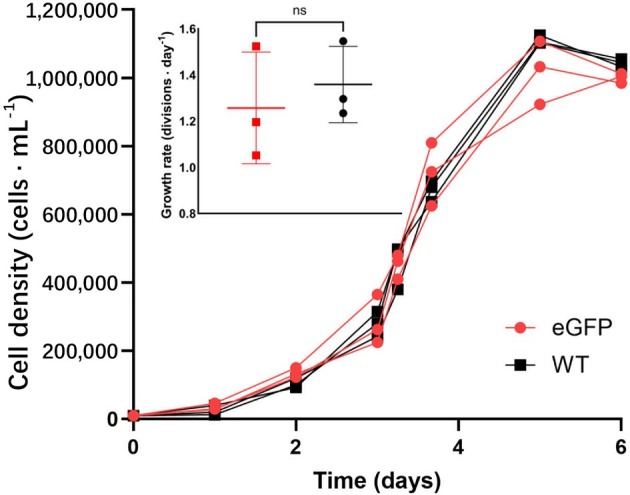 Figure 3
Peer Reviews
No public reviews on file for this paper yet. If you reviewed it on a platform where reviews are public (OpenReview, ICLR, NeurIPS, ICML), you can paste yours below so the community can read it here.
Videos
No videos yet. Explain this paper in a talk, walkthrough, or lecture? Add one.
Taxonomy
TopicsDiatoms and Algae Research · Microbial Community Ecology and Physiology · Protist diversity and phylogeny