Ectrodactyly, Cleft Lip/Palate, and Urinary Anomalies With a Tumor Protein p63 (TP63) Mutation: A Case Report and Literature Review
Rayan H Mohamed, Haydy M Khalifa, Hisham Y Hassan, Eman Shajira, Fahad A Al-Qashar

TL;DR
A rare genetic mutation in TP63 causes EEC syndrome, leading to limb, facial, and urinary defects, as shown in a case involving an infant and his father.
Contribution
This case report confirms the clinical significance of the TP63 p.His247Arg mutation in EEC syndrome and highlights variable expression in family members.
Findings
An infant with EEC syndrome had TP63 p.His247Arg mutation inherited from his father.
The father showed milder symptoms despite carrying the same mutation.
Early genetic diagnosis is crucial for managing EEC syndrome and guiding family counseling.
Abstract
Heterozygous mutations in the tumor protein p63 (TP63) gene underlie a spectrum of autosomal dominant syndromes, affecting ectodermal, limb, and orofacial development. We report an infant born with ectrodactyly (split-hand/foot malformation), cleft lip and palate, and a solitary kidney with hydronephrosis. Genetic testing revealed a heterozygous TP63 missense variant, c.740A>G (p.His247Arg), inherited from his affected father, confirming Ectrodactyly-Ectodermal Dysplasia-Clefting (EEC) syndrome. This case highlighted the clinical significance of the TP63 p.His247Arg mutation, previously reported as pathogenic in EEC. The infant’s abnormalities required multidisciplinary management, including surgical, urologic, and nutritional support. Our findings emphasized the markedly variable expression associated with TP63-related disorders. The father, despite carrying the same mutation,…
Genes, proteins, chemicals, diseases, species, mutations and cell lines named across the full text — each resolved to its canonical identifier and authoritative record.
Click any figure to enlarge with its caption.
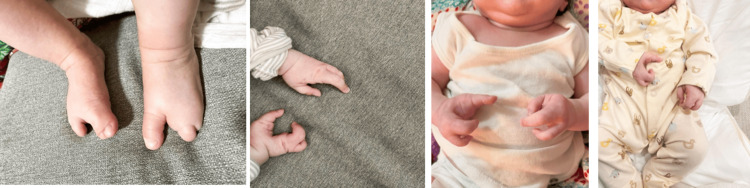 Figure 1
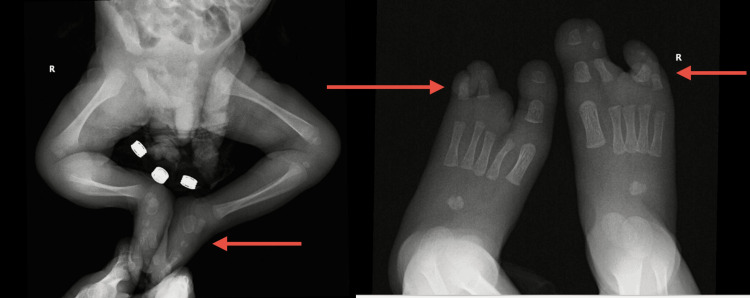 Figure 2
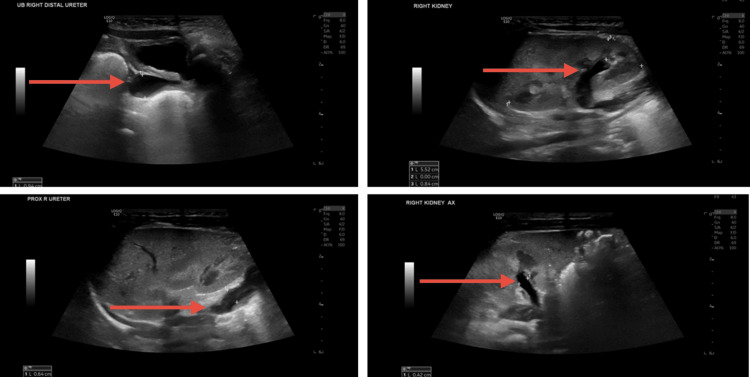 Figure 3
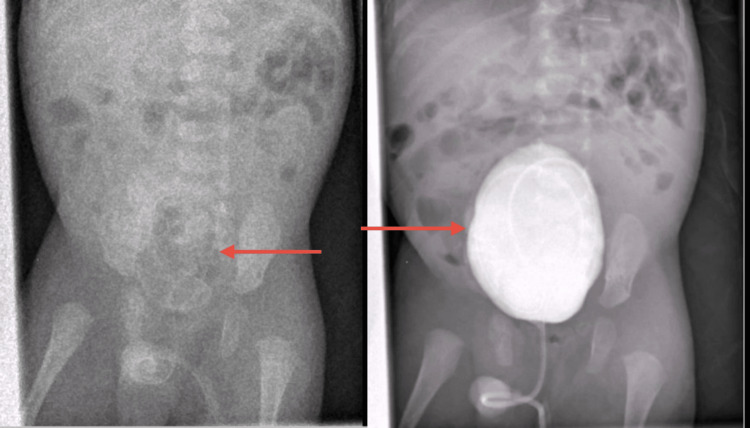 Figure 4
Peer Reviews
No public reviews on file for this paper yet. If you reviewed it on a platform where reviews are public (OpenReview, ICLR, NeurIPS, ICML), you can paste yours below so the community can read it here.
Videos
No videos yet. Explain this paper in a talk, walkthrough, or lecture? Add one.
Taxonomy
TopicsCancer-related Molecular Pathways · Hedgehog Signaling Pathway Studies · Cancer and Skin Lesions