Intensity-Modulated Proton Therapy for an Unresectable Giant Non-functioning Pituitary Adenoma: A Case Report and Literature Review
Bo Yan, Shuihua Wu, Jiwei Bai, Shikai Wu, Xijia Zhang, Yue Zou, Dongxue Zhou, Jie Wang, Zisheng Wang, Wei Wang, Zhenmin Fu, Lu Yang, Masashi Mizumoto, Hideyuki Sakurai, Shosei (Xiangxing) Shimizu (Qingshui)

TL;DR
This paper reports a successful use of proton therapy to treat a large, inoperable pituitary tumor, highlighting its benefits for complex cases.
Contribution
The paper presents a novel case of IMPT for a giant NFPA and reviews its advantages over conventional radiotherapy.
Findings
IMPT achieved significant tumor reduction and relief of critical structure compression without acute toxicity.
Proton therapy's Bragg peak property allows better dose conformity and sparing of organs at risk.
IMPT may reduce long-term risks like secondary cancers, especially in younger patients.
Abstract
Giant non-functioning pituitary adenomas (NFPAs) often extend into or compress critical structures, such as the optic nerves, brainstem, and cavernous sinus, frequently making complete surgical resection difficult or unfeasible and posing significant therapeutic challenges. Radiotherapy (RT) is crucial for unresectable or residual disease, yet conventional techniques may struggle to deliver adequate doses while sparing organs at risk (OARs). Proton beam therapy (PBT), particularly intensity-modulated proton therapy (IMPT), offers potential dosimetric advantages, such as superior conformity and OAR sparing. This report presents an IMPT case for a giant, recurrent, unresectable NFPA and reviews the PBT literature, focusing on its advantages and role in NFPA management. A 49-year-old female presented with headache and progressive visual decline, approximately six years after her second…
Genes, proteins, chemicals, diseases, species, mutations and cell lines named across the full text — each resolved to its canonical identifier and authoritative record.
Click any figure to enlarge with its caption.
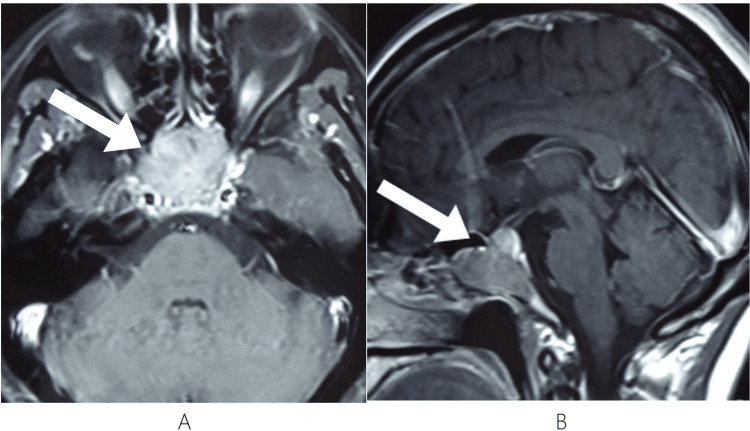 Figure 1
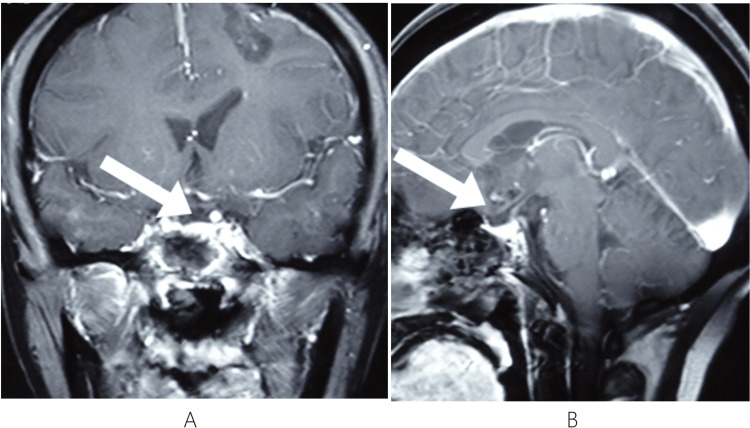 Figure 2
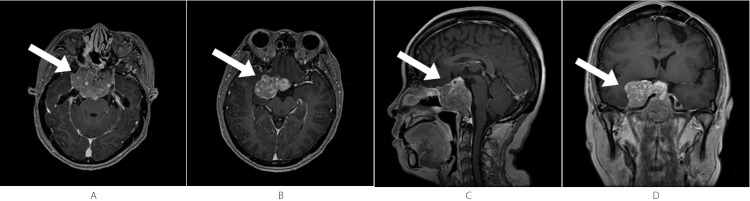 Figure 3
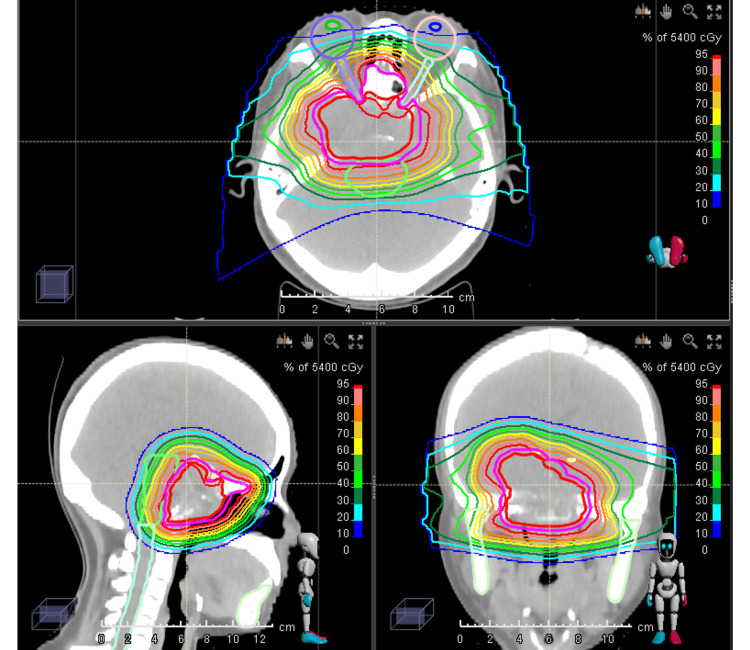 Figure 4
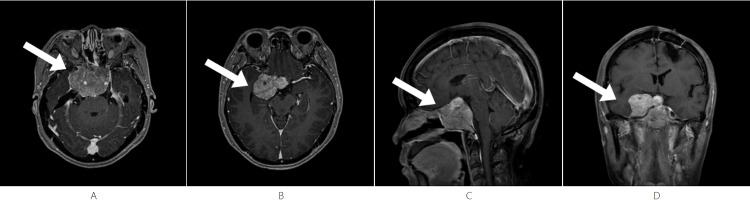 Figure 5
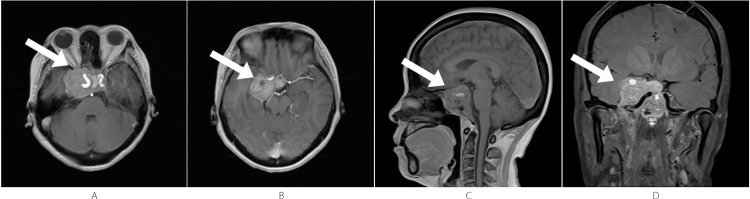 Figure 6
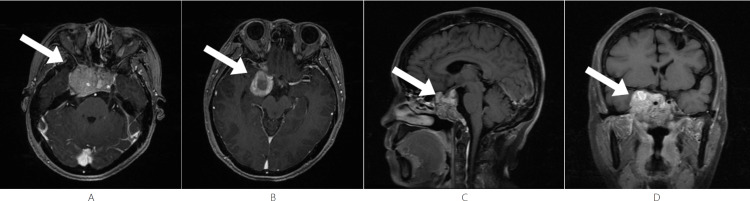 Figure 7
Peer Reviews
No public reviews on file for this paper yet. If you reviewed it on a platform where reviews are public (OpenReview, ICLR, NeurIPS, ICML), you can paste yours below so the community can read it here.
Videos
No videos yet. Explain this paper in a talk, walkthrough, or lecture? Add one.
Taxonomy
TopicsPituitary Gland Disorders and Treatments · Glioma Diagnosis and Treatment · Adrenal and Paraganglionic Tumors