Compositional Assessment of Honeys from the Central Atlantic Forest: Multielement and Physicochemical Characterization
Letícia Rosário Silveira, Jaílson Santos de Novais, Caio Silva Assis Felix, Gabriela Pereira Costa, Guilherme Piloto Santos, Allison Gonçalves Silva, Mário Marques Silva Junior

TL;DR
This study analyzes the composition of honey from Brazil's Central Atlantic Forest to assess its quality and support conservation efforts.
Contribution
The paper provides a detailed multielemental and physicochemical characterization of honey from a threatened biodiversity hotspot.
Findings
Potassium, calcium, and magnesium were the most abundant minerals in the honey samples.
Principal component analysis successfully differentiated between polyfloral and monofloral honey types.
Most honey samples met Brazilian and international quality standards.
Abstract
The ongoing rise in both consumption and exportation of Brazilian honey underscores the need for stricter authentication and traceability protocols to ensure the quality and safety of this food product. Therefore, this study characterizes the multielemental and physicochemical composition of honey samples from the Central Corridor of the Atlantic Foresta recognized yet threatened biodiversity hotspot in Brazil. Using inductively coupled plasma optical emission spectrometry and standard physical-chemical methods, 23 honey samples were analyzed for mineral content, including Al (0.0013–0.109 mg kg–1), Ca (28.9–262.49 mg kg–1), Cr (0.09–1.36 mg kg–1), Cu (0.051–0.467 mg kg–1), Fe (0.8–26.3 mg kg–1), K (83.8–1896.5 mg kg–1), Mg (20.8–349.5 mg kg–1), Mn (0.010–6.94 mg kg–1), Na (10.51–464.16 mg kg–1), Se (0.143–0.317 mg kg–1), Sr (0.003–1.429 mg kg–1), and Zn (0.142–4.276 mg kg–1), and…
Genes, proteins, chemicals, diseases, species, mutations and cell lines named across the full text — each resolved to its canonical identifier and authoritative record.
Click any figure to enlarge with its caption.
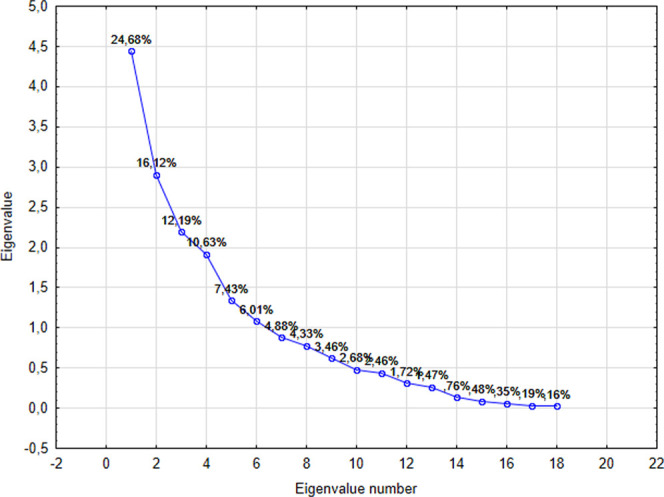 Figure 1
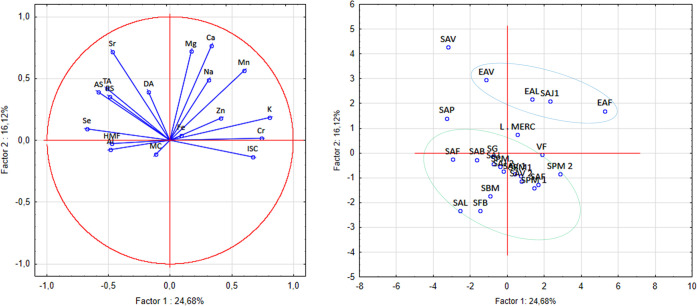 Figure 2
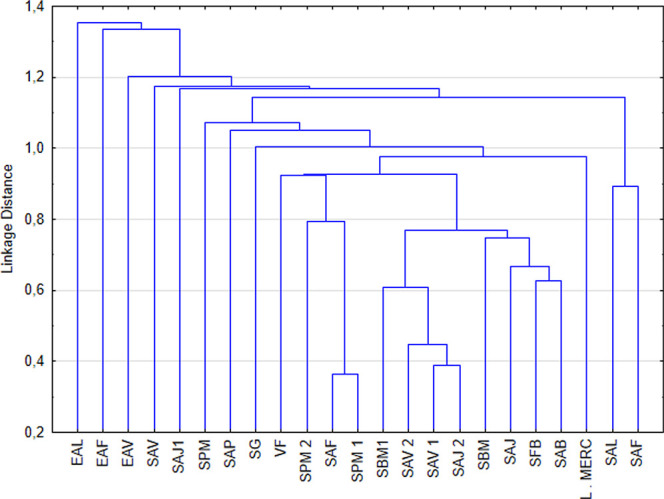 Figure 3
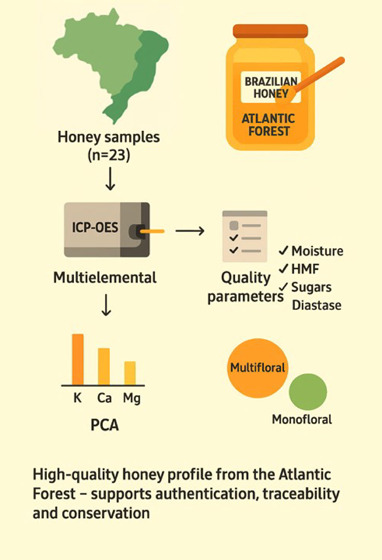 Figure 4
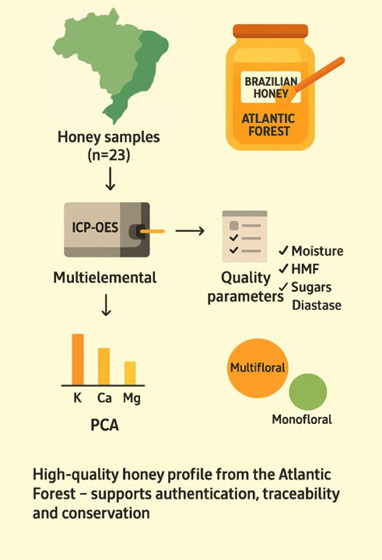 Figure 5
Peer Reviews
No public reviews on file for this paper yet. If you reviewed it on a platform where reviews are public (OpenReview, ICLR, NeurIPS, ICML), you can paste yours below so the community can read it here.
Videos
No videos yet. Explain this paper in a talk, walkthrough, or lecture? Add one.
Taxonomy
TopicsBee Products Chemical Analysis · Essential Oils and Antimicrobial Activity · Insect and Pesticide Research