Early and Noninvasive Bird Gender Identification by ATR-FTIR Spectra Coupled with a Randon Forest Algorithm
Silvano Dias PereiraNaves, Victor Fidelis Fernandes, Matheus Cicero Ribeiro, Thiago França, Giorgio S. Senesi, Simone Sanches, Cleber Galvão, Cynthia Mantovani, Cícero Cena, Bruno Marangoni

TL;DR
This paper introduces a noninvasive and cost-effective method using ATR-FTIR and machine learning to identify bird gender early in life.
Contribution
The study proposes a novel, noninvasive method for early bird gender identification using ATR-FTIR and Random Forest, avoiding DNA testing.
Findings
ATR-FTIR combined with Random Forest achieved 94.4% accuracy for Bicudo and Curio birds.
The method showed 77.8% accuracy for Cockatiel and 72.2% for Ring-necked Parakeet.
PCA and SNV preprocessing improved the performance of the ATR-FTIR data analysis.
Abstract
The early identification of sex in birds is essential for reproduction, breeding programs, and commercialization and plays a crucial role in wildlife management and environmental law enforcement. The DNA-based molecular techniques, known for their accuracy and noninvasive nature, are the primary methods for sex determination. However, these techniques are time-consuming and expensive and require specialized laboratories. This study explores the use of attenuated total reflectance Fourier transform infrared spectroscopy (ATR-FTIR) combined with the Random Forest algorithm as a noninvasive, cost-effective, and precise alternative for early gender determination in birds. Measurements were performed on the feather region, known as the vexillum, of four bird species: Oryzoborus maximiliani (Bicudo), Nymphicus hollandicus (Cockatiel), Oryzoborus angolensis (Curio), and Psittacula krameri…
Genes, proteins, chemicals, diseases, species, mutations and cell lines named across the full text — each resolved to its canonical identifier and authoritative record.
Click any figure to enlarge with its caption.
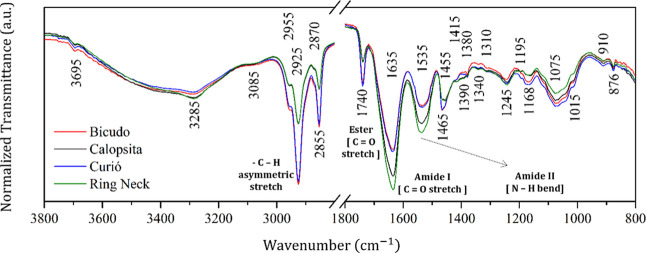 Figure 1
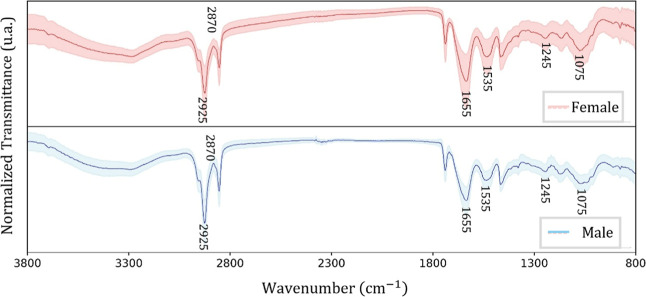 Figure 2
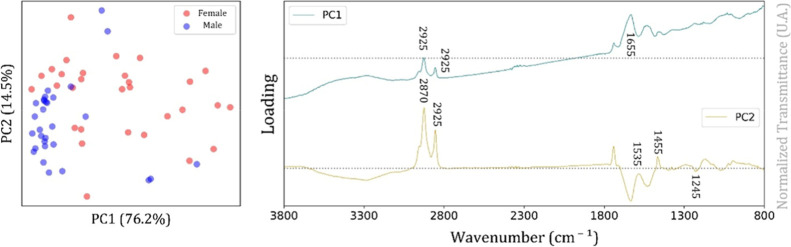 Figure 3
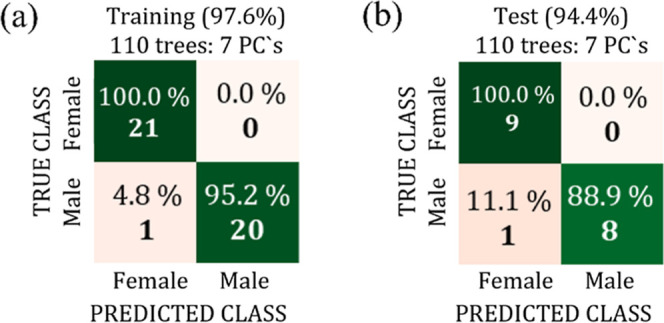 Figure 4
 Figure 5
 Figure 6
 Figure 7
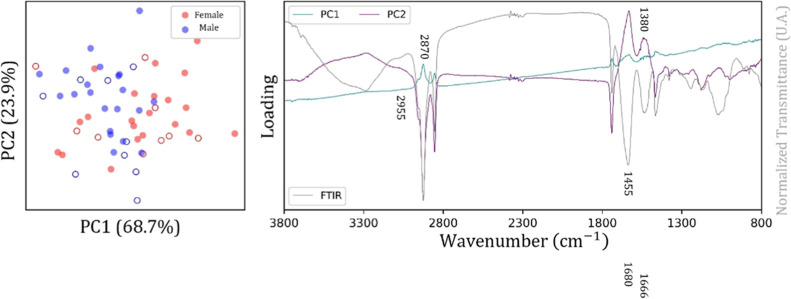 Figure 8
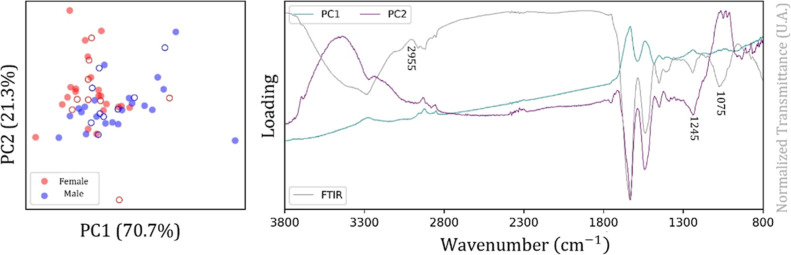 Figure 9
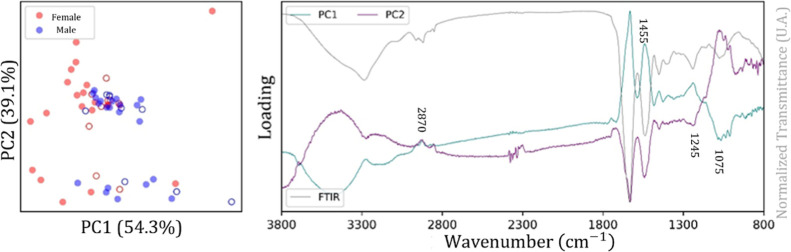 Figure 10
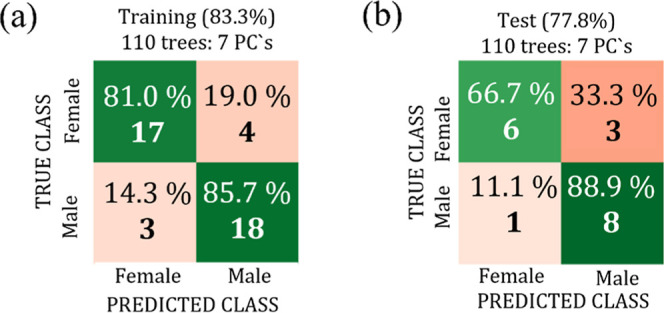 Figure 11
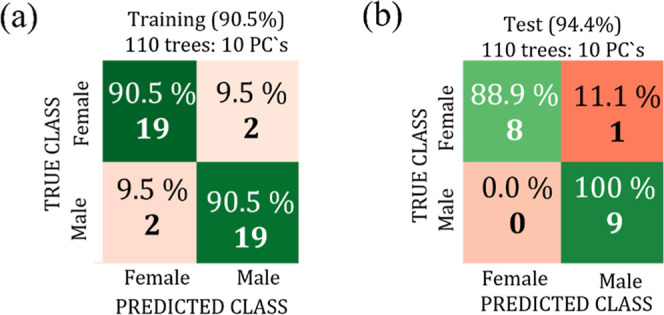 Figure 12
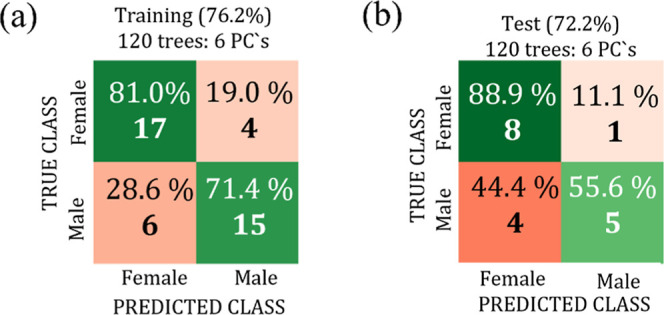 Figure 13
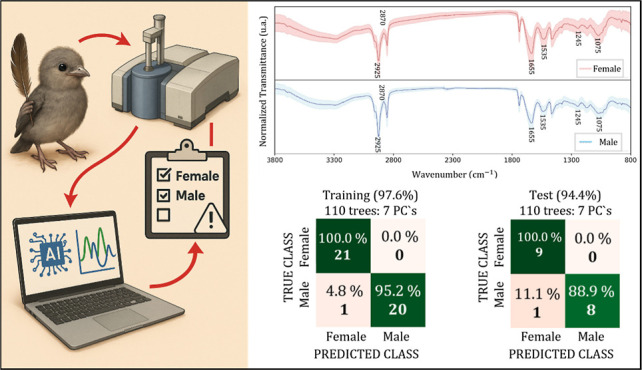 Figure 14
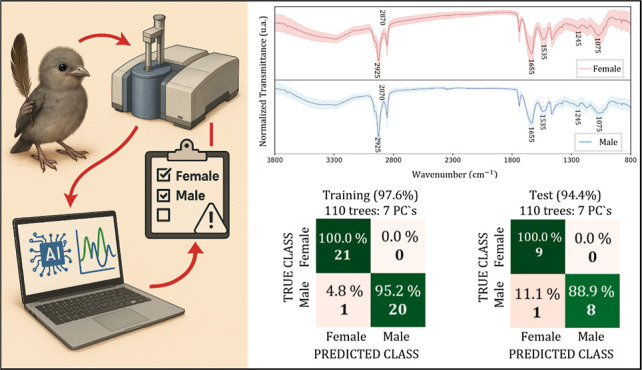 Figure 15
 Figure 16
 Figure 17
Peer Reviews
No public reviews on file for this paper yet. If you reviewed it on a platform where reviews are public (OpenReview, ICLR, NeurIPS, ICML), you can paste yours below so the community can read it here.
Videos
No videos yet. Explain this paper in a talk, walkthrough, or lecture? Add one.
Taxonomy
TopicsIdentification and Quantification in Food · Wildlife Ecology and Conservation · Marine animal studies overview